At its core, an effective electrical control system for a concrete plant's weighing function must possess features that automate accuracy adjustments, ensure operational safety, and provide clear operator control. The primary functions include automatic taring, correction for in-air material (drop), and the ability to compensate for single-material weighing deviations, all supported by robust fault detection and interlocking safety measures.
The goal is not merely to weigh ingredients, but to guarantee the precision, consistency, and reliability of every single batch. A superior control system acts as the plant's central nervous system, transforming raw inputs into a predictable, high-quality final product.
The Foundation: Core Accuracy Functions
The quality of the final concrete product depends entirely on the precise measurement of its components. The control system must have automated functions to manage the dynamic and often imperfect nature of weighing bulk materials.
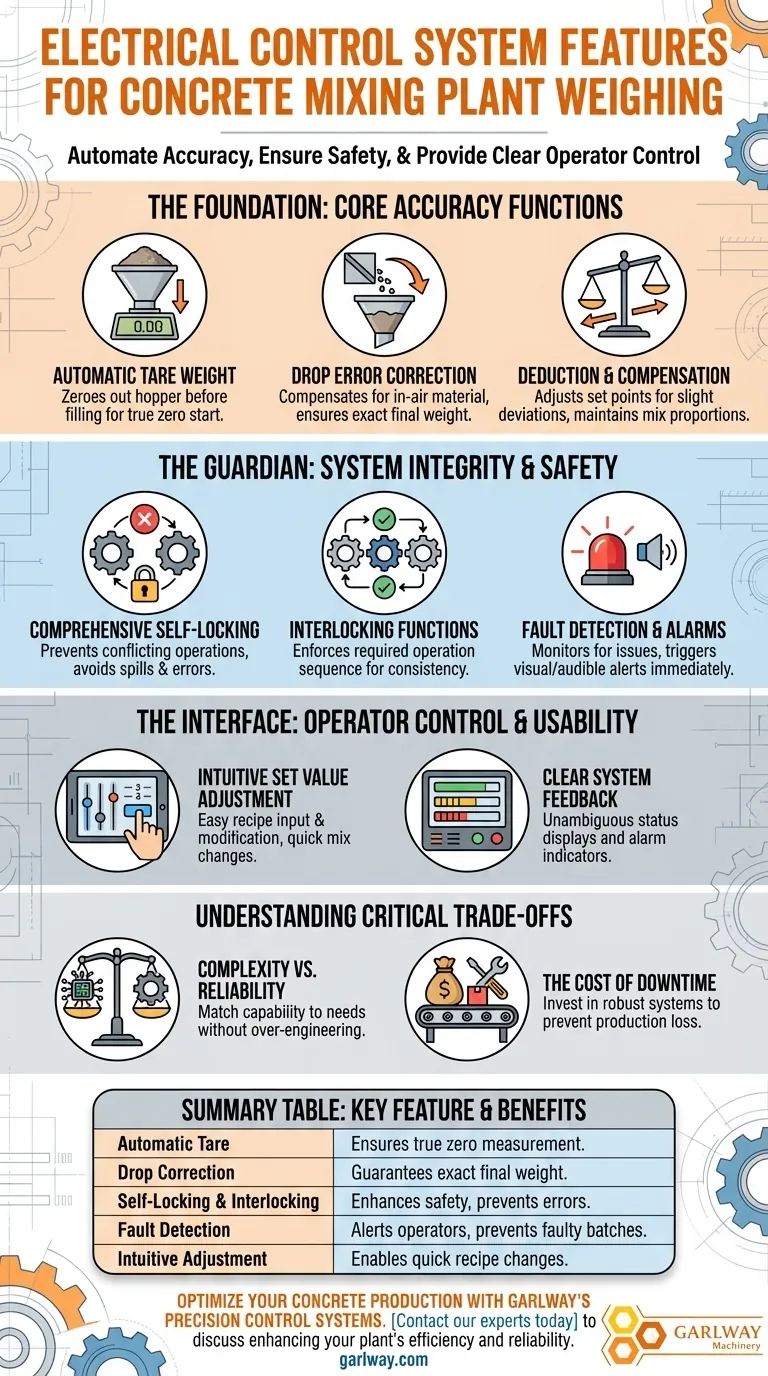
Automatic Tare Weight
This function zeroes out the weight of the weighing hopper before any material is added. It ensures that every measurement starts from a true zero point, eliminating the weight of the container from the calculation for each new batch.
Drop Error Correction
When a gate or valve closes to stop the flow of material, a certain amount is still in mid-air, falling into the hopper. The drop correction feature anticipates this in-flight material and commands the gate to close before the target weight is reached, ensuring the final weight is exact.
Deduction and Compensation
This feature provides fine-tuned control over single-material weighing. If a slight overage or underage occurs with one ingredient, the system can intelligently adjust the set points for subsequent materials to maintain the correct overall mix proportions and specifications.
The Guardian: System Integrity and Safety
A weighing system must not only be accurate but also safe and foolproof. These features prevent incorrect operations that could lead to wasted materials, equipment damage, or unsafe conditions.
Comprehensive Self-Locking
Self-locking functions prevent conflicting operations from occurring simultaneously. For example, it ensures that a discharge gate cannot open while the hopper is still being filled, preventing spills and inaccurate batches.
Interlocking Functions
Interlocking creates a required sequence of operations. The system will not allow a step to proceed until the previous, necessary step has been successfully completed. This procedural rigidity is critical for consistent production and operational safety.
Fault Detection and Alarms
The system must constantly monitor itself for common issues, such as sensor failures or mechanical jams. When a fault is detected, it should trigger a clear visual and/or audible alarm to alert the operator immediately, preventing the production of a faulty batch and allowing for quick troubleshooting.
The Interface: Operator Control and Usability
The most advanced system is ineffective if it is difficult to operate. The interface is the critical link between the operator and the machine.
Intuitive Set Value Adjustment
Operators must be able to easily input, view, and modify the target weights (set values) for each material in a recipe. This allows for quick changes between different concrete mix designs without complex reprogramming.
Clear System Feedback
The control system should provide unambiguous feedback to the operator. This includes the light alarm system mentioned, as well as clear displays showing the status of each step in the weighing and mixing process.
Understanding the Critical Trade-offs
Choosing a control system involves more than just a list of features. The reliability of the system is paramount.
Complexity vs. Reliability
As noted, system complexity varies with the size of the plant. While a larger plant requires a more sophisticated system, increasing complexity can sometimes introduce more potential points of failure. The key is to match the system's capability to the plant's needs without over-engineering.
The Cost of Downtime
A control system failure can halt the entire production line. Because these systems are often proprietary, repairs can require a specialist from the manufacturer, leading to significant and costly downtime. Investing in a robust, well-supported control system is critical insurance against production loss.
Making the Right Choice for Your Plant
Your final decision should be based on the specific operational priorities of your concrete mixing plant.
- If your primary focus is maximum precision for specialized concrete: Prioritize systems with advanced drop correction algorithms and multi-stage (fast and slow) feeding controls.
- If your primary focus is high-volume production and uptime: Emphasize robust interlocking, comprehensive fault diagnostics, and strong manufacturer support to minimize downtime.
- If your primary focus is operational flexibility with frequent mix changes: Ensure the system has an extremely user-friendly interface for creating, storing, and loading new recipes quickly.
Ultimately, the right electrical control system provides unwavering accuracy, guarantees safe operation, and empowers the operator to produce consistent results.
Summary Table:
| Key Feature | Primary Function | Benefit |
|---|---|---|
| Automatic Tare Weight | Zeroes out hopper weight before filling | Ensures measurement starts from true zero |
| Drop Error Correction | Compensates for material in mid-air | Guarantees exact final weight |
| Self-Locking & Interlocking | Prevents conflicting operations | Enhances safety and prevents errors |
| Fault Detection & Alarms | Monitors for sensor/mechanical issues | Alerts operators to prevent faulty batches |
| Intuitive Set Value Adjustment | Easy recipe input and modification | Enables quick changes between mix designs |
Optimize your concrete production with GARLWAY's precision control systems. Our robust electrical control solutions are engineered for construction companies and contractors who demand unwavering batch accuracy, operational safety, and minimal downtime. We specialize in providing reliable winches, concrete mixers, and batching plants tailored to your high-volume or specialized production needs. Contact our experts today to discuss how we can enhance your plant's efficiency and reliability.
Visual Guide
Related Products
- HZS90 Large Multiquip Concrete Mixers for Construction
- HZS120 Ready Mix Concrete Batching Plant Commercial Mud Cement Mixer
- HZS180 Ready Mix Concrete Plant for Foundations with Sand and Cement
- HZS35 Small Cement Concrete Mixing Batch Plant
- Construction Products Concrete Plant Machine Mixing Concrete Mixer
People Also Ask
- What are the types of concrete mixers used in batching plants? Choose the Right Mixer for Your Project
- What is the core component of a concrete batching plant? The Mixer Unit Defines Your Concrete Quality
- What are the different power sources for concrete mixers? Choose the Right Power for Your Project
- What are the main types of concrete mixers? A Guide to Batch, Continuous & More
- What are the main types of concrete mixers mentioned? Find the Perfect Mixer for Your Project