
At its core, the installation of electrical circuits in a concrete mixing plant must be treated as the creation of its central nervous system. A successful installation demands absolute precision, robust protection against the harsh operating environment, and seamless integration with the control system to ensure every component functions correctly, safely, and accurately from day one.
The goal is not merely to supply power, but to build a highly reliable and fault-tolerant system that guarantees the accuracy of the final product, the safety of the operators, and the overall efficiency of the plant.
Foundational Installation Principles
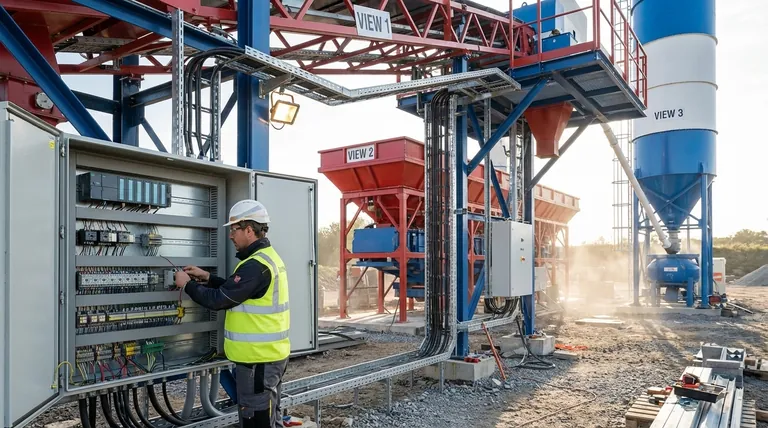
The harsh environment of a concrete mixing plant—filled with dust, moisture, and constant vibration—is uniquely hostile to electrical systems. Proper installation is the first line of defense.
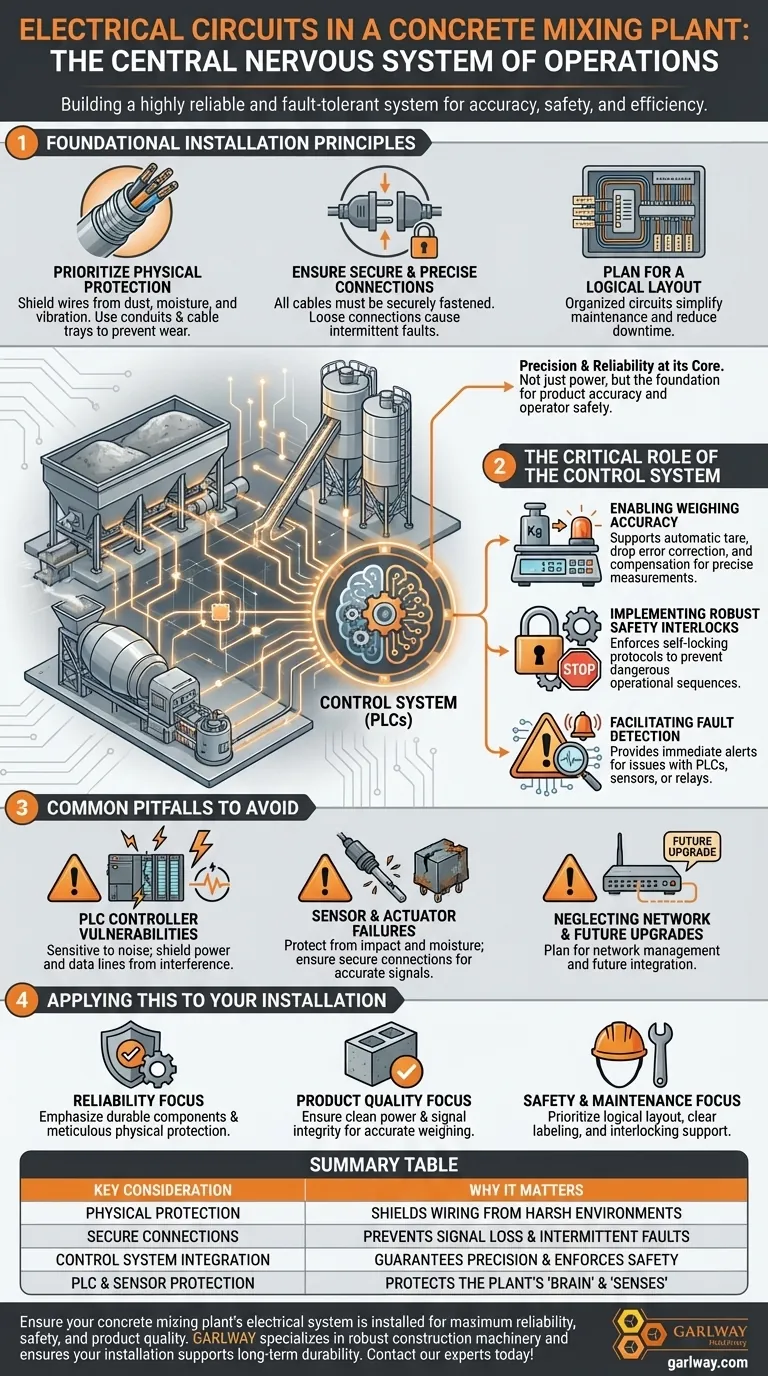
Prioritize Physical Protection
All wires, cables, and connectors must be shielded from physical damage. This means ensuring they are not exposed, worn, or frayed.
Conduits and cable trays should be used to protect wiring from abrasion, impact, and exposure to the elements, which are primary causes of premature failure.
Ensure Secure and Precise Connections
Every connection point is a potential point of failure. All cables and plugs must be securely fastened to prevent them from working loose due to machine vibration.
Loose connections can cause intermittent faults that are difficult to diagnose, leading to inaccurate measurements or unexpected equipment shutdowns.
Plan for a Logical Layout
A "reasonable and precise" layout means the circuits are organized logically and are accessible for future inspection and maintenance.
This foresight simplifies troubleshooting and reduces downtime when faults inevitably occur.
The Critical Role of the Control System
The electrical system powers the plant's brain: the control system. The installation must fully support its most critical functions, which are centered on accuracy and safety.
Enabling Weighing Accuracy
The control system's ability to produce consistent, high-quality concrete depends entirely on the electrical signals from its sensors.
The electrical installation must support features like automatic tare weight, the correction of drop errors, and compensation functions to guarantee precise material measurements. A light alarm system, also powered by this circuitry, provides immediate feedback on weighing status.
Implementing Robust Safety Interlocks
A key function of the electrical control system is enforcing safety protocols through self-locking and interlocking functions.
These mechanisms prevent dangerous operational sequences, such as running a conveyor while a maintenance hatch is open, ensuring the system operates reliably and protects personnel.
Facilitating Fault Detection
Modern plants rely on the electrical system to power comprehensive fault detection and alarm capabilities.
A properly installed system provides clear alerts for common issues, allowing operators to address problems with PLCs, sensors, or relays before they cause significant downtime or damage.
Common Pitfalls to Avoid
Understanding the most common points of failure helps focus installation efforts on the areas that matter most. These are often where precision and protection are overlooked.
PLC Controller Vulnerabilities
The PLC (Programmable Logic Controller) is the operational brain of the plant. It is highly sensitive to electrical noise and power fluctuations.
Its power supply and data lines must be properly shielded and routed away from high-power motor cables to prevent interference that can cause erratic behavior.
Sensor and Actuator Failures
Weighing sensors, intermediate relays, and mechanical actuators are the system's "senses" and "muscles." They are frequent sources of electrical faults.
These components must be protected from physical impact and moisture ingress. Their wiring requires secure connections to ensure the signals they send and receive are accurate.
Neglecting Network and Future Upgrades
In an increasingly connected world, failing to consider the plant's network management function is a critical oversight.
The electrical installation should accommodate future upgrades and integration with plant-wide management systems to avoid costly retrofitting down the road.
Applying This to Your Installation
Your installation priorities should be guided by your primary operational goals for the plant.
- If your primary focus is operational reliability: Emphasize high-quality, durable components and meticulous physical protection for all wiring to prevent failures from vibration and environmental exposure.
- If your primary focus is product quality: Ensure the electrical system provides clean, uninterrupted power and signal integrity for the weighing sensors and control system to maintain mix accuracy.
- If your primary focus is safety and maintenance: Prioritize a logical circuit layout with clear labeling and comprehensive support for the system's interlocking and alarm functions.
A meticulously planned and executed electrical installation is the foundation for a safe, accurate, and profitable concrete mixing operation.
Summary Table:
| Key Consideration | Why It Matters |
|---|---|
| Physical Protection | Shields wiring from dust, moisture, and vibration to prevent failures. |
| Secure Connections | Prevents loose connections from vibration, ensuring signal accuracy. |
| Control System Integration | Guarantees precise weighing and enforces critical safety interlocks. |
| PLC & Sensor Protection | Protects the plant's 'brain' and 'senses' from electrical interference. |
Ensure your concrete mixing plant's electrical system is installed for maximum reliability, safety, and product quality. GARLWAY specializes in providing robust construction machinery, including concrete batching plants, for contractors and construction companies globally. Our expertise ensures your electrical installation supports precise control and long-term durability. Contact our experts today to discuss your project's specific needs and how we can help you build a more efficient and profitable operation.
Visual Guide
Related Products
- Construction Products Concrete Plant Machine Mixing Concrete Mixer
- Commercial Electric Concrete Mixer Machine HZS 50 Small Batch Plant for Sale
- HZS35 Small Cement Concrete Mixing Batch Plant
- HZS120 Ready Mix Concrete Batching Plant Commercial Mud Cement Mixer
- HZS75 Concrete Batching Plant Cement Mixer Price Concrete Mixer Bunnings Mixing Plant
People Also Ask
- What factors should be considered when choosing between volumetric and traditional mixers? Optimize Your Concrete Project Strategy
- What is the difference between pan and planetary mixers? Choose the Right Mixer for Your Concrete Project
- When was the first concrete mixer developed and by whom? Discover the 1900 Breakthrough
- What is the average lifespan of a concrete mixer? Maximize Your Equipment's Lifespan & ROI
- What are the two broad types of concrete mixers? Choose the Right Mixer for Your Project



