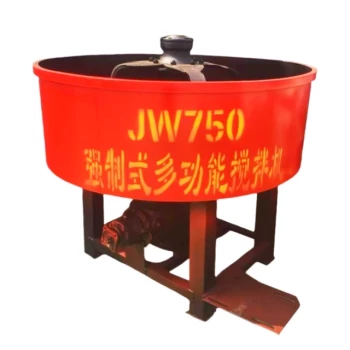
At its core, the mixing host is the central component of a concrete mixing plant responsible for combining raw materials—such as cement, sand, stone, and water—to create uniform, homogenous concrete. It is the heart of the entire operation, where the actual transformation from individual ingredients into a workable building material takes place.
The mixing host is far more than a simple container; it is the active engine that dictates the quality and type of concrete a plant can produce. The technology it uses for mixing is the most critical factor in achieving the desired strength, consistency, and performance of the final product.
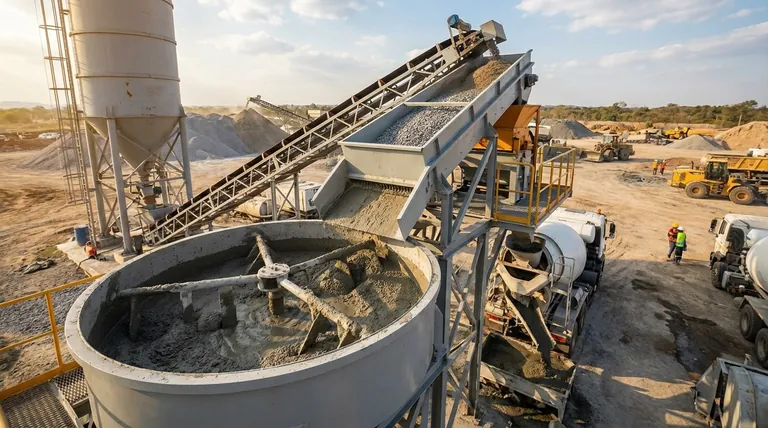
The Central Role of the Mixing Host
The mixing host sits at the functional center of the concrete plant. Its primary purpose is to ensure that every batch of concrete meets precise specifications.
From Raw Materials to Uniform Concrete
The process begins when raw materials are transferred from storage bins into a batching system, which weighs them to exact proportions. These precisely measured ingredients are then fed into the mixing host.
The host's job is to blend these components with intense, controlled action until they form a completely uniform mixture.
Ensuring Consistency and Quality
Improper mixing results in weak, unreliable concrete. The mixing host guarantees that the cement paste thoroughly coats every particle of sand and stone (aggregate), which is essential for the chemical reactions that give concrete its strength.
A high-quality host produces a consistent, homogenous mix batch after batch, which is critical for large-scale construction projects.
Key Types of Mixing Technology
While the goal is always a uniform mix, not all mixing hosts achieve it in the same way. The method of mixing is a crucial distinction.
Forced Mixing: The Industry Standard
Forced mixing is the dominant technology in modern concrete plants worldwide. These mixers use powerful, rotating paddles or blades inside a stationary drum to actively stir, shear, and fold the materials together.
This high-energy method is extremely effective and versatile, capable of producing everything from fluid and flowable concrete to very stiff, semi-hard, and hard mixes used in specialized applications.
Free-Fall Mixing: A Legacy Method
Free-fall mixers, often resembling a classic cement truck drum, operate by lifting materials with fins inside a rotating drum and then allowing them to drop. The mixing action comes from this repeated tumbling.
This method is primarily suitable for mixing very fluid concrete. Due to its limitations with stiffer mixes and lower efficiency, it is rarely used in new, high-production mixing plants.
Understanding the Trade-offs
Choosing the right mixing host is a critical decision that directly impacts a plant's capabilities and the quality of its output.
Performance vs. Application
Forced mixers are the standard for a reason: they offer superior performance and the flexibility to handle a vast range of concrete recipes. Their vigorous action ensures excellent consistency, which is mandatory for high-strength or architectural concrete.
Free-fall mixers are simpler but are severely limited in the types of concrete they can produce.
Matching the Host to the Concrete
The selection of a mixing host is driven entirely by the performance requirements of the final product. For example, demanding applications like hydraulic engineering for dams or bridges explicitly require the use of a forced mixing host.
The type of concrete needed dictates the technology required to produce it.
The "Heart" vs. the "Brain"
While the mixing host is the "heart" of the plant, doing the physical work, it relies on the control system—the "brain"—to function. The control system sends commands for the precise amounts of materials to be added and controls the mixing time.
A malfunction in the control system can halt the entire plant, proving that even the best mixer is only as effective as the system controlling it.
Making the Right Choice for Your Goal
The decision between mixing technologies comes down to the specific requirements of the concrete you need to produce.
- If your primary focus is high-performance, specialized, or varied concrete types (semi-hard, hard, etc.): A forced mixing host is non-negotiable for its superior blending power and versatility.
- If your primary focus is large volumes of standard, fluid concrete: While a free-fall mixer might seem adequate, a modern forced mixer still offers greater efficiency and quality control, making it the default choice for most new installations.
- If your primary focus is overall plant reliability and quality: Your decision must align the mixing host's capabilities with the specific engineering demands of your projects.
Ultimately, understanding the function and type of mixing host is fundamental to guaranteeing the quality and structural integrity of any concrete production operation.
Summary Table:
| Mixing Host Type | Primary Mixing Action | Best Suited For | Key Advantage |
|---|---|---|---|
| Forced Mixer | Rotating blades/paddles actively shear and fold materials | High-performance, specialized, and stiff concrete mixes | Superior consistency, versatility, and efficiency |
| Free-Fall Mixer | Tumbling action as materials are lifted and dropped | Standard, very fluid concrete mixes | Simpler design, lower initial cost |
Ensure Your Project's Success with the Right Mixing Technology
Choosing the correct mixing host is critical for producing concrete that meets the precise strength and consistency requirements of your construction projects. GARLWAY specializes in providing robust and reliable construction machinery, including advanced forced mixing hosts, concrete mixers, and complete batching plants.
Our solutions are engineered for construction companies and contractors who demand efficiency, durability, and superior quality control in their concrete production.
Let's build something strong together. Contact our experts today to discuss the ideal mixing solution for your operational needs!
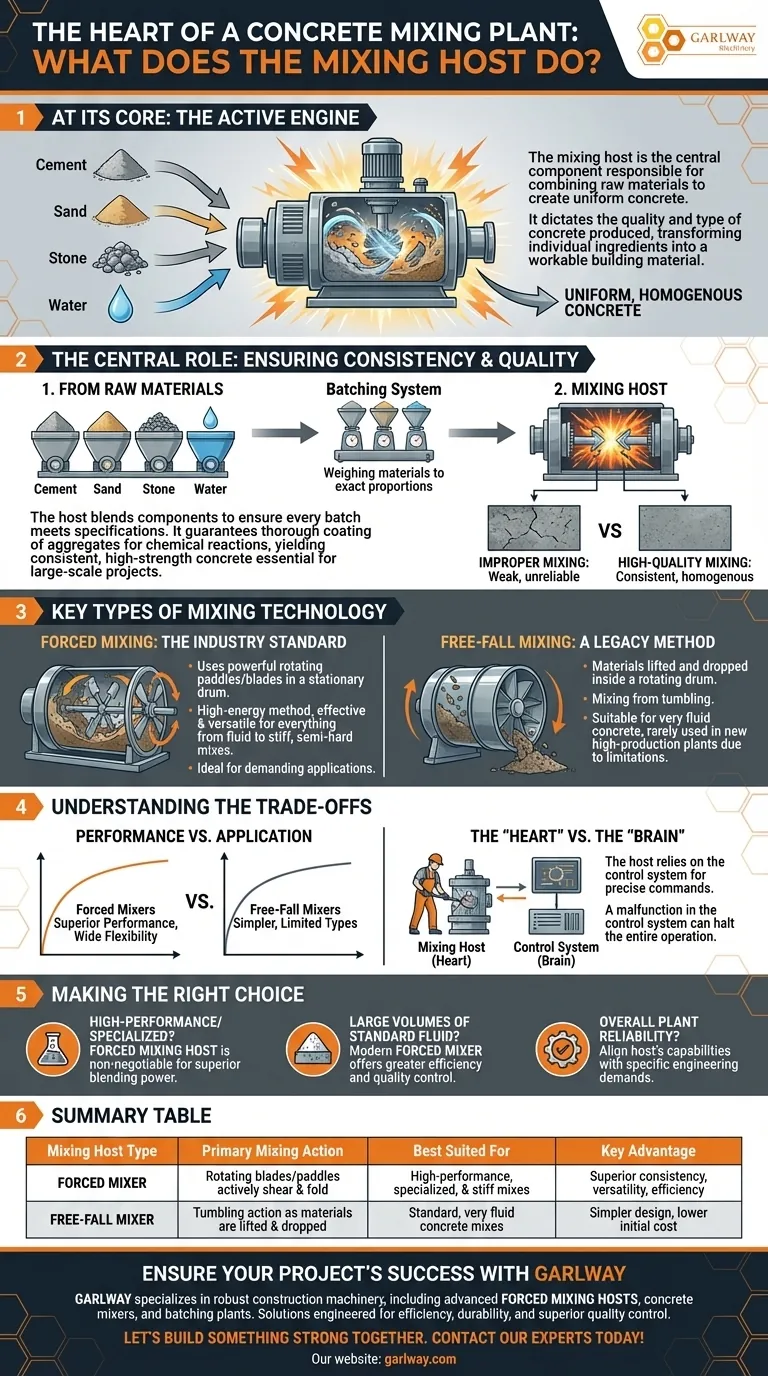
Visual Guide
Related Products
- HZS35 Small Cement Concrete Mixing Batch Plant
- HZS75 Concrete Batching Plant Cement Mixer Price Concrete Mixer Bunnings Mixing Plant
- Commercial Electric Concrete Mixer Machine HZS 50 Small Batch Plant for Sale
- Portable Concrete Mixer Machine Equipment for Mixing Concrete
- Construction Products Concrete Plant Machine Mixing Concrete Mixer
People Also Ask
- Why buy concrete batch plant parts only from the manufacturer? Protect Your Investment and Maximize Uptime
- Why is proper maintenance important for a concrete batch mix plant? Maximize Uptime & Profitability
- What is the advantage of a mobile concrete batching plant? Achieve On-Site Production & Total Control
- What are the advantages and disadvantages of concrete batching plants? Maximize Quality & Efficiency
- What are the two methods of material charging in a concrete mixing station? Single vs. Multiple Charging Explained