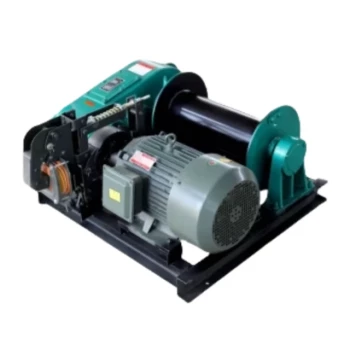
In most heavy-duty applications, a hydraulic winch uses a roller stator hydraulic motor. This design is a specific type of gerotor motor, engineered to deliver the high torque and precise control required for demanding winching operations.
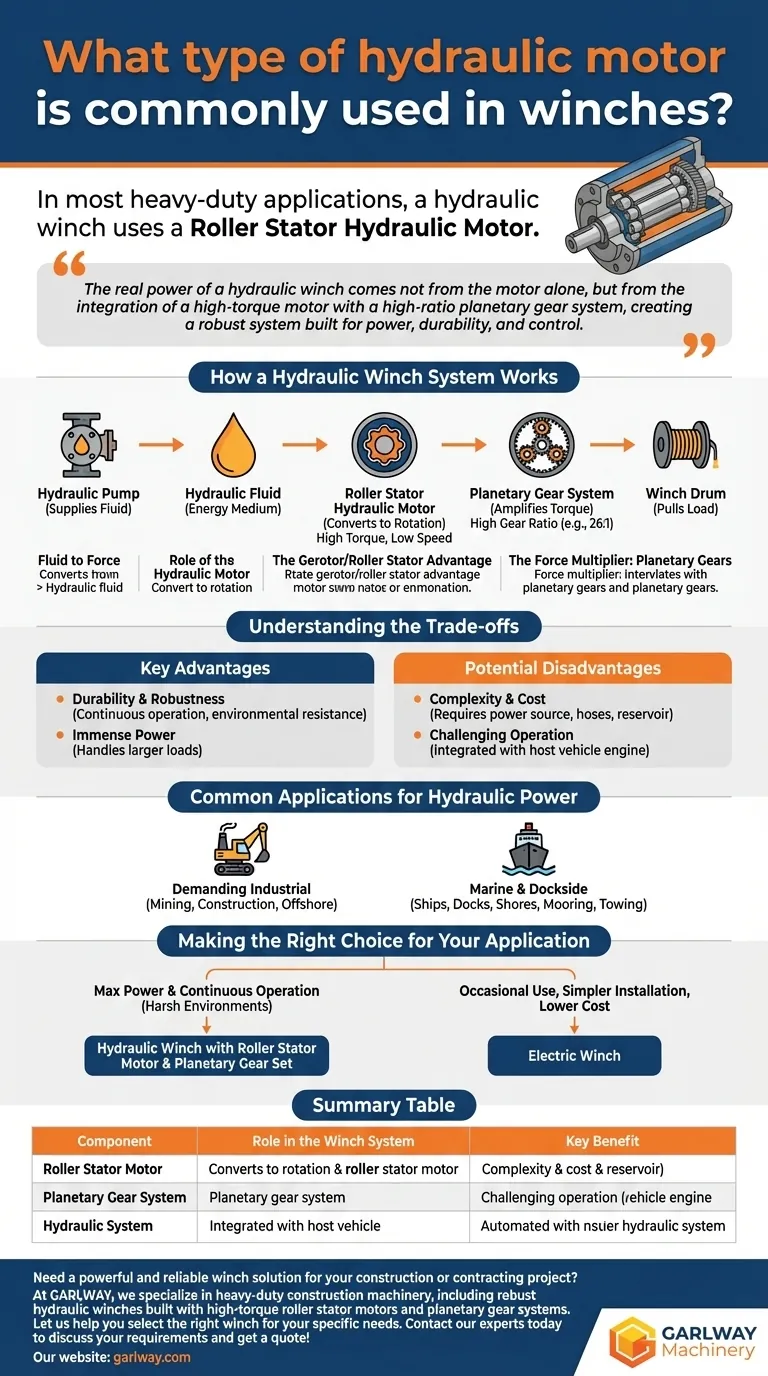
The real power of a hydraulic winch comes not from the motor alone, but from the integration of a high-torque motor with a high-ratio planetary gear system, creating a robust system built for power, durability, and control.
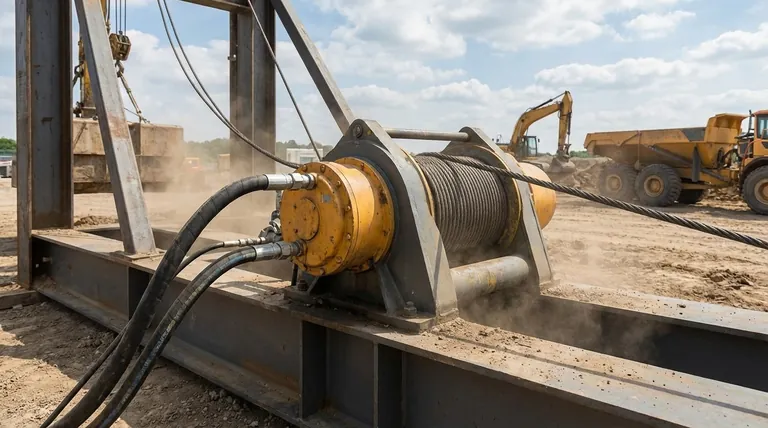
How a Hydraulic Winch System Works
A hydraulic winch is a system of components working together to convert fluid pressure into immense mechanical force. Understanding this system is key to appreciating why specific components are chosen.
The Core Principle: Fluid to Force
The entire system operates by moving pressurized hydraulic fluid. This fluid, supplied by a pump, acts as the energy transfer medium that powers the winch's operation.
The Role of the Hydraulic Motor
The hydraulic motor is the heart of the conversion process. It takes the incoming flow and pressure from the hydraulic fluid and transforms it into rotational mechanical energy. This rotation is what drives the winch drum.
The Gerotor/Roller Stator Advantage
The roller stator motor design is favored for its ability to produce high torque at low speeds. This characteristic is ideal for a winch, which needs immense starting power and fine control to move heavy loads safely, rather than high rotational speed.
The Force Multiplier: Planetary Gears
The motor's power is amplified by a planetary gear system. With high gear ratios (often 26:1 or more), this system multiplies the torque generated by the motor, providing the final pulling power at the drum. It also crucially helps prevent the load from dangerously pulling line back out when the motor is stopped.
Understanding the Trade-offs
While powerful, hydraulic winches are a specific tool for specific jobs. Their design comes with a clear set of advantages and disadvantages compared to alternatives like electric winches.
Key Advantages
Hydraulic systems are renowned for their durability and robustness. They can run for long periods without overheating and are generally better sealed against water, mud, and other environmental contaminants, making them ideal for harsh conditions.
Their primary benefit is immense power. They can handle significantly larger rated loads than comparably sized electric winches, making them the standard for industrial, marine, and recovery applications.
Potential Disadvantages
The main drawback is complexity and cost. A hydraulic winch requires a power source (a hydraulic pump, typically driven by the vehicle's engine), hoses, and a fluid reservoir. This makes installation more involved and the initial purchase price higher.
Operation can also be more challenging for novices, as the system is integrated with the host vehicle's engine, which must be running for the winch to operate.
Common Applications for Hydraulic Power
The trade-offs of hydraulic winches make them the superior choice for specific, demanding fields where power and reliability are non-negotiable.
Demanding Industrial Environments
You will find hydraulic winches in mining, construction, and offshore oil/gas operations. In these sectors, equipment failure is not an option, and the loads are consistently heavy.
Marine and Dockside Operations
Due to their large load capacities and resistance to the elements, hydraulic winches are a fixture on ships, docks, and shores. They are used for mooring, towing, and material handling where reliability is paramount.
Making the Right Choice for Your Application
Choosing the right winch means matching the technology to the task.
- If your primary focus is maximum power and continuous operation in harsh environments: A hydraulic winch with a roller stator motor and planetary gear set is the definitive choice.
- If your primary focus is occasional use, simpler installation, and lower initial cost: An electric winch is likely the more practical and cost-effective solution for your needs.
Ultimately, understanding the complete system—from motor to gearing—empowers you to select the right tool for the job.
Summary Table:
| Component | Role in the Winch System | Key Benefit |
|---|---|---|
| Roller Stator Motor | Converts hydraulic fluid pressure into rotational force. | High torque at low speeds for safe, controlled pulling. |
| Planetary Gear System | Amplifies the motor's torque before it reaches the drum. | Multiplies force (e.g., 26:1 ratio) and provides load-holding security. |
| Hydraulic System | Supplies pressurized fluid from a pump to power the motor. | Enables continuous operation without overheating, ideal for harsh conditions. |
Need a powerful and reliable winch solution for your construction or contracting project?
At GARLWAY, we specialize in heavy-duty construction machinery, including robust hydraulic winches built with high-torque roller stator motors and planetary gear systems. Our equipment is engineered for maximum power, durability, and precise control in the toughest environments—from mining and construction sites to marine operations.
Let us help you select the right winch for your specific needs. Contact our experts today to discuss your requirements and get a quote!
Visual Guide
Related Products
- Hydraulic Winding Engine Harbor Freight Winch
- Electric and Hydraulic Winch for Heavy Duty Applications
People Also Ask
- What role does hydraulic fluid play in hydraulic winches? It's the Lifeblood of Your Heavy-Duty Pulling Power
- What vehicles commonly use hydraulic winches? For Industrial Trucks Needing Unmatched Power
- What are the features of hydraulic winches? Unmatched Power and Continuous Duty for Heavy Loads
- What preventive measures can be taken to avoid oil leakage in hydraulic winches? Ensure Long-Term Reliability
- What does 'power out' mean in a hydraulic winch? Achieve Absolute Control When Lowering Heavy Loads