
At its core, a winch is a tool for controlled pulling. The top scenarios for its use fall into three primary categories: vehicle recovery for off-roading, loading heavy objects like boats or cars onto trailers, and a vast range of professional applications in industries from construction and logging to marine operations.
A winch is the definitive solution for any task that requires immense pulling force with precision and control, making it indispensable for both recreational recovery and heavy industrial work.
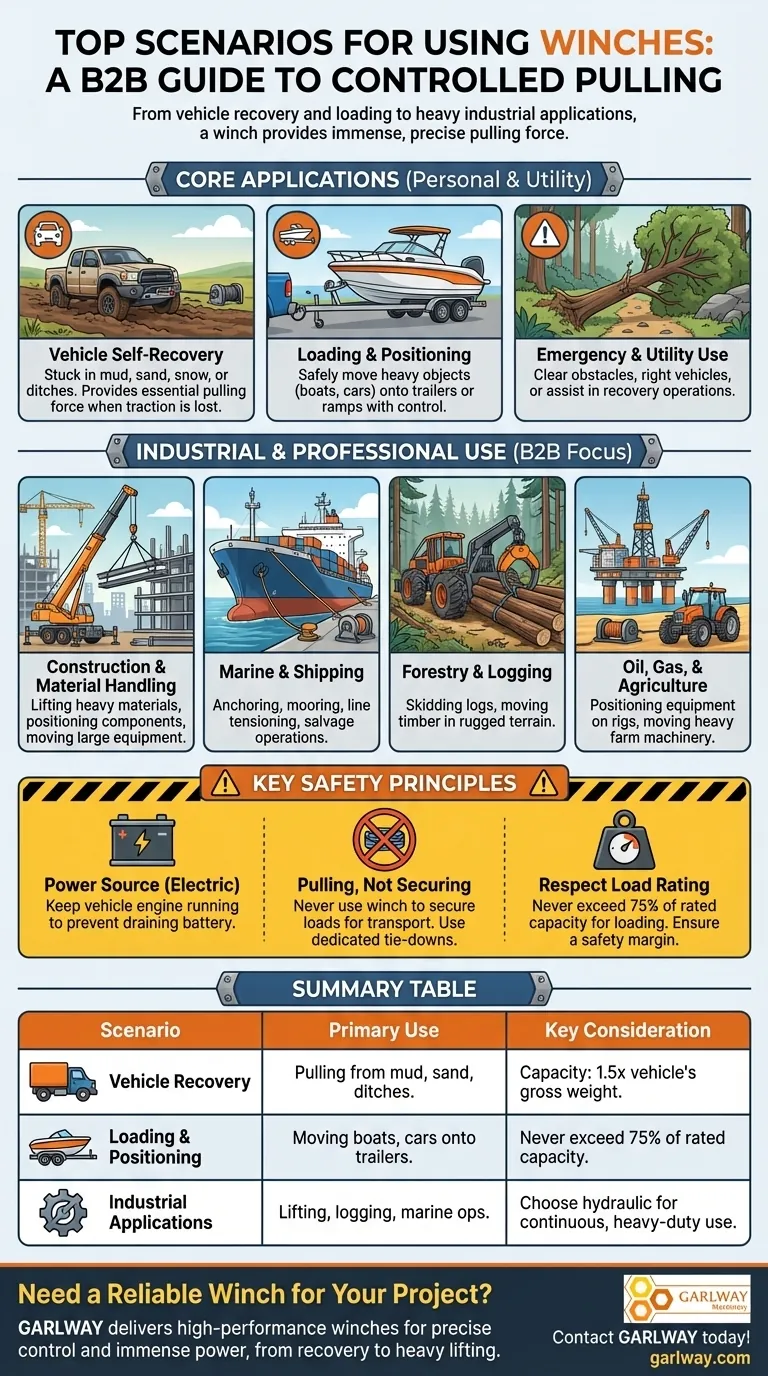
The Core Applications of a Winch
While often associated with off-road trucks, the fundamental purpose of a winch—safe, mechanical pulling—applies to numerous situations.
Vehicle Self-Recovery
This is the most iconic use for a winch. It allows a vehicle to pull itself or another vehicle out of a situation where traction is lost.
Common recovery scenarios include being stuck in mud, sand, snow, or a ditch. A winch provides the necessary pulling force when the wheels can no longer provide forward momentum.
Loading and Positioning
A winch provides the control needed to safely move heavy, wheeled objects onto trailers or ramps. This is far safer and more manageable than trying to drive the object into position.
Examples include pulling a boat onto its trailer, loading a non-running project car, or moving heavy equipment into a transport vehicle.
Emergency and Utility Use
Beyond personal recovery, a winch is a powerful utility tool. It can be used to clear obstacles or provide assistance in emergency situations.
This includes tasks like removing a fallen tree from a trail, righting a rolled vehicle, or assisting in formal recovery operations by tow trucks and fire departments.
Expanding into Industrial and Professional Use
In a professional context, winches are not just for emergencies; they are fundamental tools for daily operations across dozens of industries.
Construction and Material Handling
On construction and mining sites, winches are workhorses. They are used for lifting heavy materials, positioning structural components, and moving large equipment within a confined space.
Marine and Shipping
Winches are critical in marine environments. They are used for anchoring, mooring, and adjusting the tension of lines. On a larger scale, they are used in salvage operations, such as righting capsized vessels.
Forestry and Logging
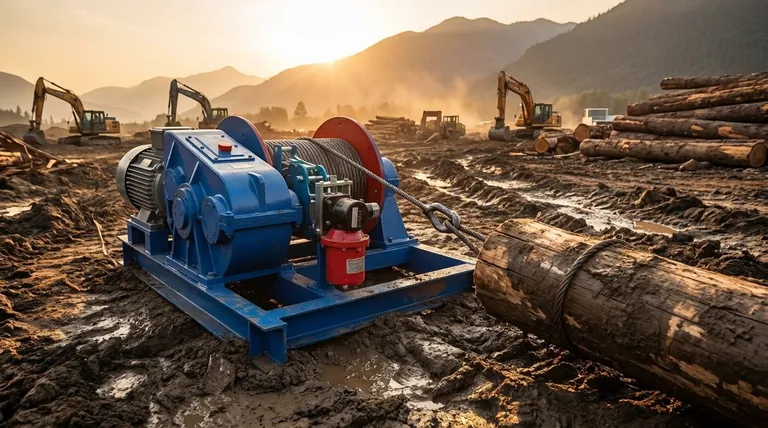
In the forestry industry, hydraulic winches are essential for skidding logs and moving heavy timber from where it was felled to a collection point.
Oil, Gas, and Agriculture
From positioning equipment on oil rigs to moving heavy machinery on a farm, winches provide the necessary power and control for tasks that are too heavy or delicate for other methods.
Understanding the Key Safety Principles
Using a winch improperly is extremely dangerous. Understanding its limitations is as important as knowing its applications.
Power Source is a Critical Factor
For electric winches, always keep the vehicle's engine running during operation. This prevents the winch from completely draining and damaging the battery.
A Winch is for Pulling, Not Securing
Never use a winch to secure a vehicle or equipment for transport. Its internal brake is not designed for the dynamic loads of a moving vehicle. Always use dedicated tie-down straps.
Respect the Load Rating
A critical safety margin is required. For applications like boat loading, the object's weight should never exceed 75% of the winch's rated capacity. Pushing a winch to its absolute limit increases the risk of catastrophic failure.
Making the Right Choice for Your Scenario
Your intended use case directly determines the type of winch and the safety protocols you must follow.
- If your primary focus is off-road recovery: You need a vehicle-mounted electric winch with a capacity rated for at least 1.5 times your vehicle's gross weight.
- If your primary focus is loading a boat or car: A smaller electric or manual winch will suffice, but you must prioritize a smooth, controlled pull and never exceed its safety-rated capacity.
- If your primary focus is industrial work: The choice between electric and hydraulic depends on the duty cycle; hydraulic winches are better suited for continuous, heavy use in professional settings.
Ultimately, a winch translates engine power or manual force into precise, formidable pulling power for any task that is too heavy to muscle.
Summary Table:
| Scenario | Primary Use | Key Consideration |
|---|---|---|
| Vehicle Recovery | Pulling vehicles from mud, sand, or ditches. | Capacity should be 1.5x vehicle's gross weight. |
| Loading & Positioning | Safely moving boats, cars, or equipment onto trailers. | Never exceed 75% of the winch's rated capacity. |
| Industrial Applications | Lifting materials, logging, marine operations, and more. | Choose hydraulic for continuous, heavy-duty use. |
Need a Reliable Winch for Your Project?
Whether you're a contractor managing a construction site or an off-road enthusiast, GARLWAY's high-performance winches deliver the precise control and immense pulling power you need. Our expertise in construction machinery ensures you get a durable, safe, and effective solution tailored to your specific scenario—from vehicle recovery to heavy industrial lifting.
Contact GARLWAY today to discuss your requirements and find the perfect winch for your application!
Visual Guide
Related Products
- Warn Winch Windlass Boat Trailer Winch
- Electric and Hydraulic Winch for Heavy Duty Applications
- Small Electric Winch 120V and 240V for Compact Applications
- Quick Windlass Portable Winch for Truck and Boat Best Boat Winch
- Hydraulic Winding Engine Harbor Freight Winch
People Also Ask
- What are the main components of a boat trailer winch? A Guide to Safe & Efficient Boat Loading
- What factors should be considered when choosing a boat trailer winch? Ensure Safe and Effortless Boat Loading
- What is the purpose of boat trailer winches? Safely and Efficiently Load Your Boat
- What are the two main types of boat trailer winches? Manual vs. Electric Explained
- How often should a boat trailer winch be replaced? Your Guide to Safety and Longevity





