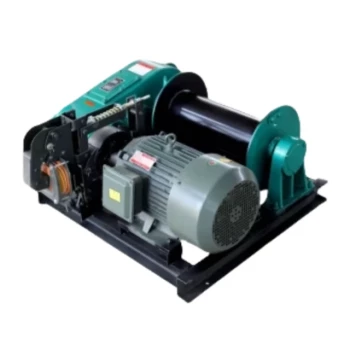
The primary advantages of a hydraulic winch are its immense power, exceptional durability, and its ability to operate continuously under heavy loads without overheating. Unlike electric winches that rely on a battery, hydraulic winches tap into a running engine's power steering pump or a dedicated hydraulic system, providing relentless pulling power for the most demanding and prolonged tasks.
The core reason to choose a hydraulic winch is for its capacity for sustained, heavy-duty work. While electric winches are excellent for intermittent pulls, hydraulic systems are engineered for continuous operation where failure is not an option.
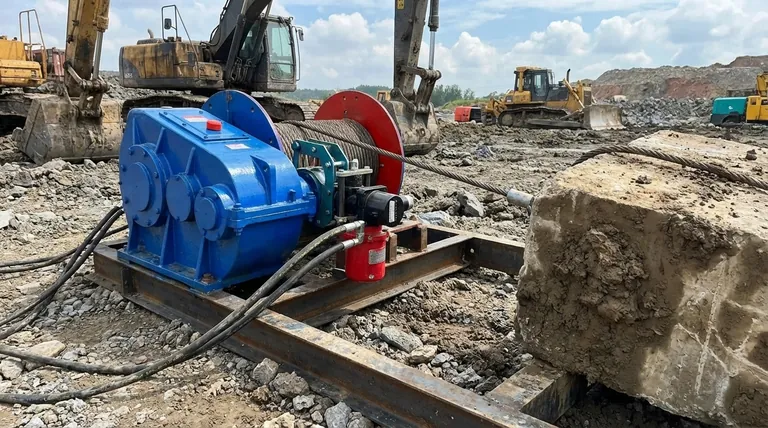
The Source of Hydraulic Strength
A hydraulic winch's advantages stem directly from its power source: pressurized hydraulic fluid. This fundamental difference in design creates a distinct performance profile compared to its electric counterparts.
How Hydraulic Power Works
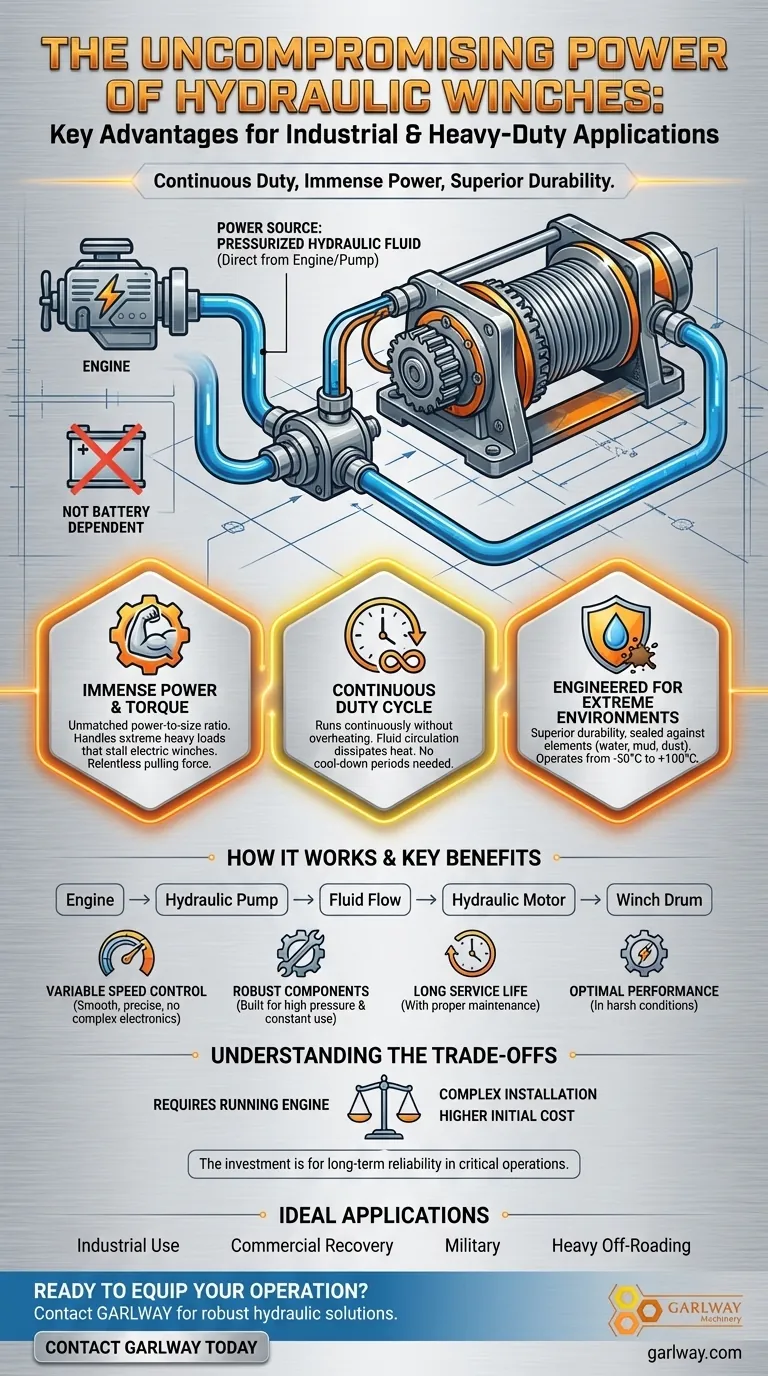
Instead of an electric motor, a hydraulic winch uses a hydraulic motor powered by fluid from a running pump, typically the vehicle's power steering pump. This means the winch's power is directly linked to the engine, not a finite battery reserve.
Unmatched Power-to-Size Ratio
Hydraulic systems are incredibly efficient at transmitting force. This allows hydraulic winches to be relatively compact while generating immense torque, enabling them to handle extremely heavy loads that would stall or damage many electric winches.
The Continuous Duty Cycle
This is arguably the most significant advantage. Because hydraulic fluid circulates and helps dissipate heat, the winch can run continuously for long durations without risk of overheating its motor. Electric winches, in contrast, require cool-down periods after heavy pulls to avoid damage.
Engineered for Extreme Environments
Hydraulic winches are the default choice for military, industrial, and commercial applications because their design is inherently more robust and resilient.
Superior Durability and Longevity
The components in a hydraulic system are built to withstand high pressure and constant use. This inherent robustness, combined with proper maintenance, gives them a very long service life even under punishing conditions.
Optimal Performance in Harsh Conditions
These systems are well-sealed against elements like water, mud, and dust. They also operate effectively across a vast temperature range (from -50° to +100° C), ensuring reliable performance in conditions that could compromise an electric motor.
Variable Speed Control
Hydraulic systems allow for smooth and precise variable speed control without the need for complex and expensive variable frequency drives (VFDs) that electric systems would require for similar functionality.
Understanding the Trade-offs
The power of a hydraulic winch comes with specific requirements and considerations that make it unsuitable for every situation.
The Dependency on a Power Source
A hydraulic winch is useless without a running engine to power the hydraulic pump. If the engine fails, the winch cannot be operated, which is a critical consideration for certain recovery scenarios.
Installation Complexity
Installation is more involved than with an electric winch. It requires tapping into the vehicle's existing hydraulic system or installing a dedicated pump, which often requires professional expertise.
Higher Initial Cost
Generally, hydraulic winches and their installation carry a higher price tag than electric winches of comparable size. The investment is in long-term reliability and continuous-duty performance.
Making the Right Choice for Your Application
Choosing between hydraulic and electric is a matter of matching the tool to the operational demand.
- If your primary focus is industrial use or commercial recovery: A hydraulic winch is the superior choice for its continuous duty cycle and reliability.
- If your primary focus is heavy off-roading with a large vehicle: A hydraulic winch provides the sustained power needed for difficult, prolonged recovery situations.
- If your primary focus is occasional recovery or utility work: An electric winch is often more practical due to its lower cost, simpler installation, and ability to operate without a running engine.
Ultimately, a hydraulic winch is an investment in uncompromising power and endurance for the most critical and sustained operations.
Summary Table:
| Advantage | Key Benefit | Ideal For |
|---|---|---|
| Immense Power | Taps into engine's hydraulic system for relentless pulling force. | Heavy loads, industrial applications. |
| Continuous Duty | Can run for long durations without overheating. | Prolonged recovery, commercial use. |
| Superior Durability | Robust components built for high pressure and harsh conditions. | Military, off-roading, extreme environments. |
| Variable Speed Control | Smooth and precise control without complex electronics. | Tasks requiring fine-tuned operation. |
Ready to equip your operation with the relentless power of a hydraulic winch?
GARLWAY specializes in heavy-duty construction machinery, providing robust and reliable hydraulic winches, concrete mixers, and batching plants for construction companies and contractors globally. Our winches are engineered for the most demanding and sustained operations, ensuring your projects stay on track.
Contact GARLWAY today to discuss your specific needs and discover how our hydraulic solutions can enhance your productivity and safety.
Visual Guide
Related Products
- Hydraulic Winding Engine Harbor Freight Winch
- Electric and Hydraulic Winch for Heavy Duty Applications
- Small Electric Winch 120V and 240V for Compact Applications
- Electric 120V Boat Winch by Badlands
- 12000 lb Electric Boat Trailer Winch with Windlass Anchor Warn
People Also Ask
- What role does hydraulic fluid play in hydraulic winches? It's the Lifeblood of Your Heavy-Duty Pulling Power
- What vehicles commonly use hydraulic winches? For Industrial Trucks Needing Unmatched Power
- What are the features of hydraulic winches? Unmatched Power and Continuous Duty for Heavy Loads
- What preventive measures can be taken to avoid oil leakage in hydraulic winches? Ensure Long-Term Reliability
- What does 'power out' mean in a hydraulic winch? Achieve Absolute Control When Lowering Heavy Loads