At its core, daily maintenance for a concrete batching machine involves a routine of inspection, cleaning, and verification. The primary tasks are to visually inspect the machine's structure, clean debris from the screen mesh and weighing components, and ensure the control system is functioning without errors.
The goal of daily maintenance is not simply to fix what is broken, but to prevent breakdowns from happening in the first place. These small, consistent actions are the most effective way to ensure batch accuracy, operational safety, and plant uptime.
The Daily Pre-Operational Checklist
A systematic check before starting operations is the foundation of a reliable batching plant. This process turns a reactive approach into a proactive one, catching small issues before they escalate into costly downtime.
Visual Inspection of the Structure
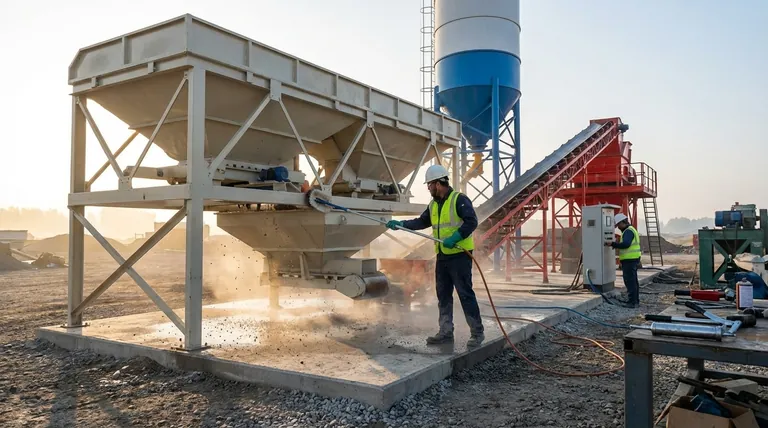
Your first step is always a walk-around inspection. Look for any signs of stress, wear, or damage that may have occurred during the previous shift.
Pay close attention to bolts, welds, and support structures. Any visible cracks or loose connections must be addressed immediately to prevent mechanical failure.
Clearing the Screen Mesh
The screen mesh above the aggregate bins prevents oversized materials from entering the system. It is critical to keep this clear.
Remove any rocks, wood, or other debris. A clogged screen can slow down loading and, more importantly, lead to inaccurate aggregate sizing in your final mix.
Checking Weighing Hoppers and Gates
The accuracy of your entire operation depends on the weighing system. Visually inspect the weigh hoppers and the discharge gates beneath them.
Ensure there is no hardened material buildup, which can throw off weight measurements. Manually cycle the gates (if possible when the system is off) to confirm they open and close smoothly without obstruction.
Verifying the Control System
Before starting a batch, check the operator’s control panel. Look for any active error messages or warning lights.
Confirm that the system is responsive and that all displays are showing logical readouts. Any electrical or software glitch should be investigated before production begins.
Monitoring and Adjustments During Operation
Maintenance doesn't stop once the plant is running. Certain components require observation and potential adjustment to maintain consistent performance throughout the day.
The Importance of Component Gaps
Some batching gates have an adjustable gap that controls the flow of material. This gap is critical for precise dosing, especially when cutting off the flow to hit a target weight.
If you notice batches are consistently over or under weight, an incorrect gap may be the cause. Check for any excessive space that could allow material to leak after the gate closes.
When to Adjust vs. When to Repair
Minor adjustments to a gate's gap are a normal part of daily operation. However, there is a limit to how much you can adjust.
If a component is worn to the point where it can no longer be properly adjusted, it requires more significant repair, such as welding. This is not a daily task and should be scheduled as a dedicated maintenance procedure.
Common Pitfalls to Avoid
Diligence is key, but it's important to understand the common failure points where teams often make mistakes, usually in the interest of saving time.
The True Cost of Skipping a Check
The most common pitfall is skipping the pre-operational check to start production faster. This is a false economy.
A five-minute inspection can prevent a multi-hour breakdown, saving far more time and money than it consumes. It shifts the focus from reactive repair to proactive reliability.
Misdiagnosing Inaccuracy
When a batch is inaccurate, operators may immediately try to adjust the batching gate gaps. However, the root cause is often simpler.
Always check for material buildup in the weigh hoppers first. Caked-on concrete is a common and easily fixed cause of inaccurate measurements that requires cleaning, not mechanical adjustment.
How to Apply This to Your Plant
Your daily maintenance routine should be directly tied to your operational priorities. A consistent checklist ensures nothing is overlooked.
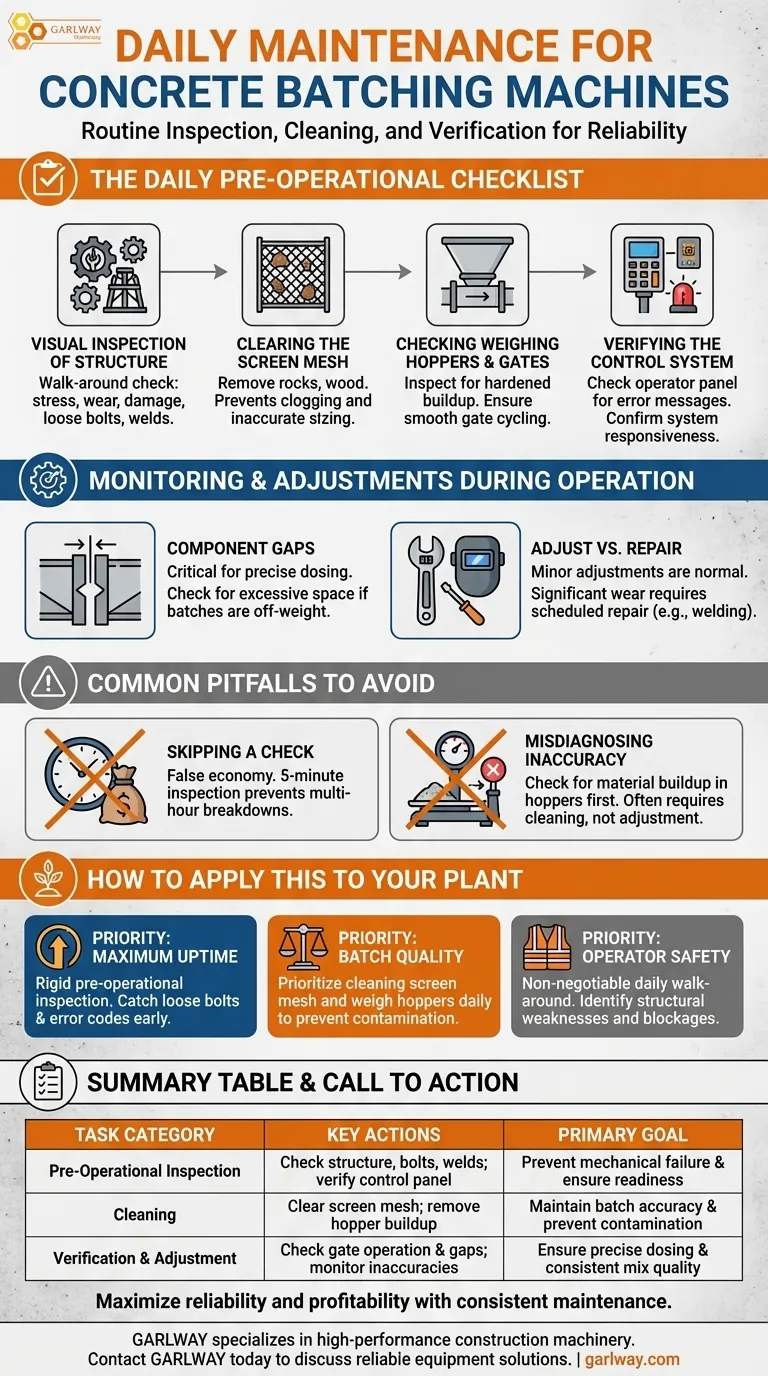
- If your primary focus is maximum uptime: Make the pre-operational structural and control system inspection your most rigid habit. Catching a loose bolt or an error code early is the key to preventing major shutdowns.
- If your primary focus is batch quality and accuracy: Prioritize cleaning the screen mesh and weigh hoppers daily. Material buildup and contamination are the most common sources of inconsistent concrete.
- If your primary focus is operator safety: The daily walk-around inspection is non-negotiable. Identifying and flagging structural weaknesses or potential blockages prevents equipment failure that could endanger personnel.
Ultimately, consistent daily maintenance transforms your batching machine from a potential liability into a reliable asset.
Summary Table:
| Task Category | Key Actions | Primary Goal |
|---|---|---|
| Pre-Operational Inspection | Check structure, bolts, welds; verify control panel | Prevent mechanical failure & ensure system readiness |
| Cleaning | Clear screen mesh debris; remove buildup from weigh hoppers | Maintain batch accuracy and prevent contamination |
| Verification & Adjustment | Check gate operation and gaps; monitor for weight inaccuracies | Ensure precise dosing and consistent mix quality |
Maximize the reliability and profitability of your concrete mixing plant.
A consistent daily maintenance routine is the first step, but having a dependable machine is the foundation. GARLWAY specializes in high-performance construction machinery, offering robust concrete batching plants, mixers, and winches designed for durability and ease of maintenance.
Our solutions help construction companies and contractors globally minimize downtime and ensure consistent, high-quality output.
Contact GARLWAY today to discuss how our equipment can become a reliable asset for your operations.
Visual Guide
Related Products
- Commercial Electric Concrete Mixer Machine HZS 50 Small Batch Plant for Sale
- HZS120 Ready Mix Concrete Batching Plant Commercial Mud Cement Mixer
- HZS90 Large Multiquip Concrete Mixers for Construction
- HZS75 Concrete Batching Plant Cement Mixer Price Concrete Mixer Bunnings Mixing Plant
- Construction Products Concrete Plant Machine Mixing Concrete Mixer
People Also Ask
- What are the types of concrete mixers used in batching plants? Choose the Right Mixer for Your Project
- What is the core component of a concrete batching plant? The Mixer Unit Defines Your Concrete Quality
- Why is proper maintenance important for a concrete batch mix plant? Maximize Uptime & Profitability
- Why buy concrete batch plant parts only from the manufacturer? Protect Your Investment and Maximize Uptime
- What are the two main types of concrete batch mixers? Choose the Right Mixer for Your Project