
To maintain a mixing station in optimal working condition, you must implement a structured maintenance program focused on two primary areas: the mechanical systems and the electrical control systems. This involves regular inspection of wear parts, systematic lubrication, and diligent oversight of all electrical components, from sensors to motors.
The core principle of effective maintenance is shifting from a reactive "fix-it-when-it-breaks" mindset to a proactive strategy. This approach ensures safety, maintains consistent product quality, and prevents the costly downtime associated with catastrophic equipment failure.
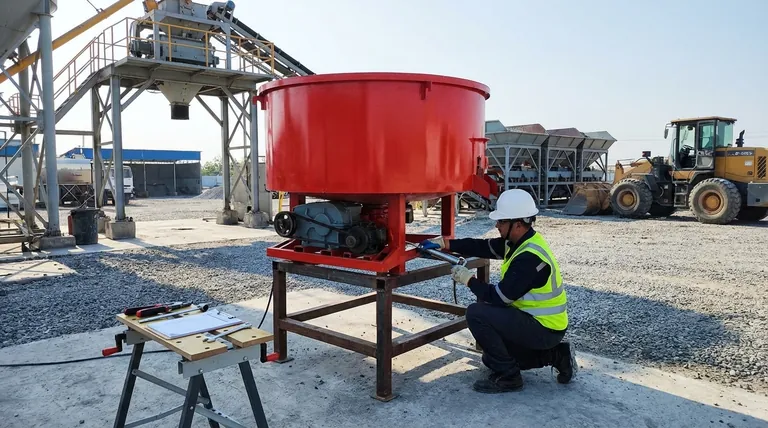
The Two Pillars of Mixing Station Maintenance
A comprehensive maintenance plan addresses every part of the station. The most effective way to structure this is by dividing tasks between the machine's physical hardware and its electronic control brain.
Pillar 1: Mechanical System Integrity
The mechanical parts of your mixing station endure the most direct physical stress. Their upkeep is fundamental to the entire operation's reliability.
Managing Wear and Tear
Key components are designed to wear out over time. Regularly inspect the internal wear-resistant parts of the mixer itself.
Also, check aggregate storage and transportation bins for signs of abrasion or damage that could impede material flow or structural integrity.
Ensuring Proper Sealing
Effective seals prevent material leakage and contamination. Pay close attention to the mixer shaft end seals and any pump shaft seals.
Leaks at discharge outlets or other connection points are a clear sign of a problem. These must be inspected and repaired promptly to prevent material loss and safety hazards.
Systematic Lubrication
Proper lubrication is critical for reducing friction and extending the life of moving parts. All transmission points require consistent attention.
Follow the manufacturer's specifications for replacing lubricants in components like reducers and air compressors. When changing oil in reservoirs or tanks, clean them thoroughly with kerosene to remove old deposits.
Pillar 2: Control System Reliability
The control system is the nerve center of your station. Its accuracy and reliability directly impact product quality and operational efficiency.
Inspecting Electrical Components
The control system manages all automated functions through its components. Regularly check the condition of motors, solenoid valves, and heating elements.
Ensure all associated electrical cables are secure, free from damage, and properly connected to avoid intermittent faults or complete failures.
Verifying Sensor Accuracy
Sensors provide the critical data for measurement and mixing. It is essential to periodically verify their accuracy.
Inaccurate sensor readings lead to incorrect batching, wasted materials, and a final product that does not meet quality specifications.
The Operator's Role in Daily Upkeep
Maintenance isn't just a task for a dedicated team; it's also a daily responsibility for the equipment operator. An observant operator is your first line of defense against minor issues becoming major problems.
Monitoring Operating Status
Operators must constantly monitor the equipment during operation. They should be trained to recognize any abnormal sounds, vibrations, or performance changes.
Adhering to Process Parameters
Maintaining quality requires strict adherence to process requirements. This includes controlling measurement accuracy and mixing time for every batch.
Operators must have the ability to adjust operating parameters as needed to ensure the production of a stable and high-quality product.
Common Pitfalls to Avoid
Even with a plan, certain oversights can undermine your efforts. Recognizing these common pitfalls is key to building a truly robust maintenance culture.
Proactive vs. Reactive Maintenance
Waiting for a part to fail before replacing it is the most expensive form of maintenance. While scheduled, proactive upkeep has an initial cost in time and parts, it prevents far more costly unscheduled shutdowns.
The Cost of Neglect
Ignoring small issues, like a minor leak or an intermittent sensor fault, is a significant risk. These small problems inevitably escalate, leading to potential safety hazards, poor product quality, and major equipment damage.
Tailoring Your Maintenance Strategy
Your maintenance priorities should align with your primary operational goals. Use these points to focus your efforts.
- If your primary focus is maximizing uptime: Prioritize systematic lubrication and the scheduled inspection and replacement of high-wear mechanical parts.
- If your primary focus is ensuring product quality: Concentrate on the regular calibration of sensors and strict operator adherence to mixing time and measurement parameters.
- If your primary focus is prioritizing safety: Emphasize the timely inspection of all electrical systems and the immediate repair of any leaks or structural faults.
Ultimately, a disciplined and consistent maintenance routine is the foundation of a safe, efficient, and profitable operation.
Summary Table:
| Maintenance Area | Key Tasks | Key Components |
|---|---|---|
| Mechanical System | Regular inspection, lubrication, seal checks | Wear-resistant parts, shaft seals, reducers, air compressors |
| Control System | Sensor calibration, electrical component checks | Motors, solenoid valves, heating elements, sensors |
| Operator Role | Daily monitoring, adherence to process parameters | Sound, vibration, measurement accuracy, mixing time |
Ensure your mixing station operates at peak performance with GARLWAY's expert solutions. As a specialist in construction machinery, we provide durable winches, concrete mixers, and batching plants tailored for construction companies and contractors globally. Our products are designed for reliability and ease of maintenance, helping you minimize downtime and maximize productivity. Contact us today to learn how GARLWAY can support your maintenance needs and boost your operational efficiency!
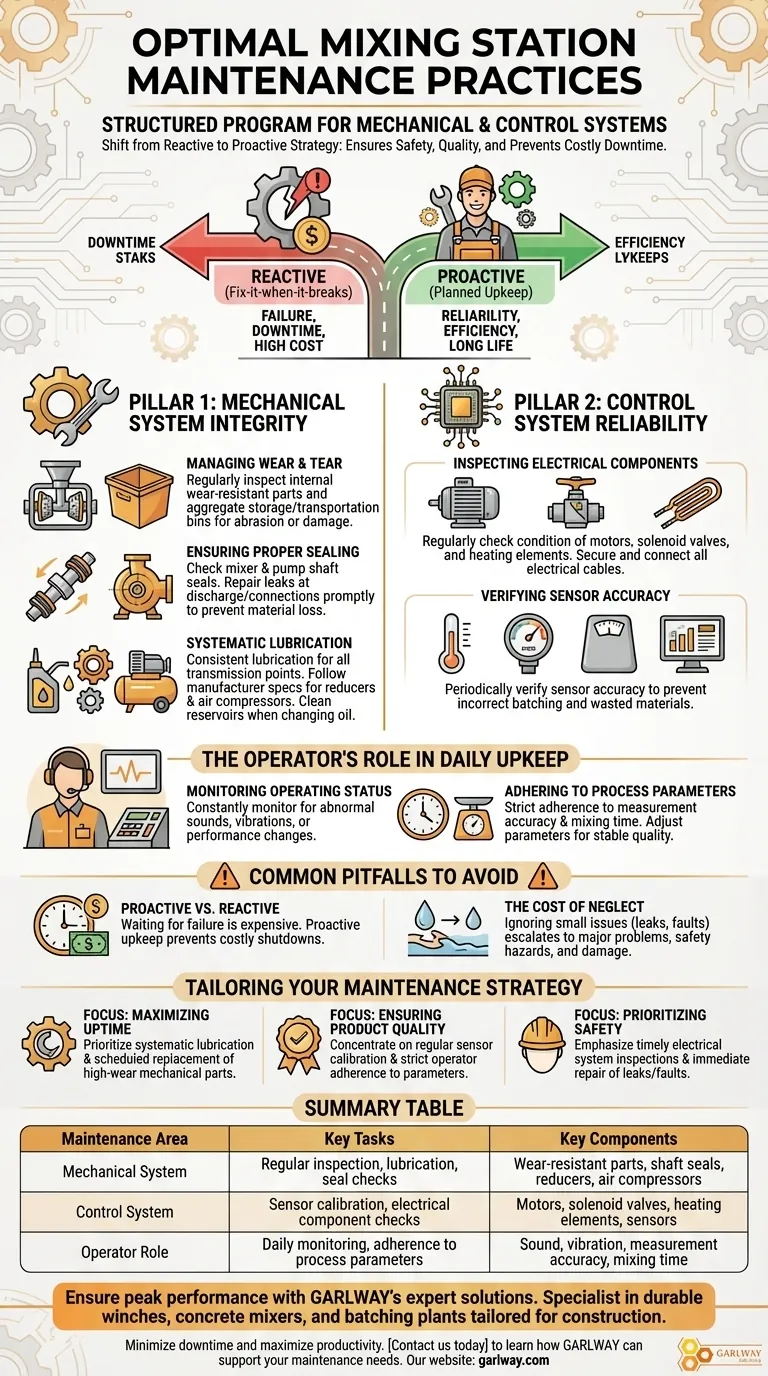
Visual Guide
Related Products
- HZS90 Large Multiquip Concrete Mixers for Construction
- HZS35 Small Cement Concrete Mixing Batch Plant
- HZS75 Concrete Batching Plant Cement Mixer Price Concrete Mixer Bunnings Mixing Plant
- Portable Concrete Mixer Machine Equipment for Mixing Concrete
- HZS120 Ready Mix Concrete Batching Plant Commercial Mud Cement Mixer
People Also Ask
- What are the types of concrete mixers used in batching plants? Choose the Right Mixer for Your Project
- What is the core component of a concrete batching plant? The Mixer Unit Defines Your Concrete Quality
- What are the different power sources for concrete mixers? Choose the Right Power for Your Project
- What are the main types of concrete mixers? A Guide to Batch, Continuous & More
- What are the main types of concrete mixers mentioned? Find the Perfect Mixer for Your Project



