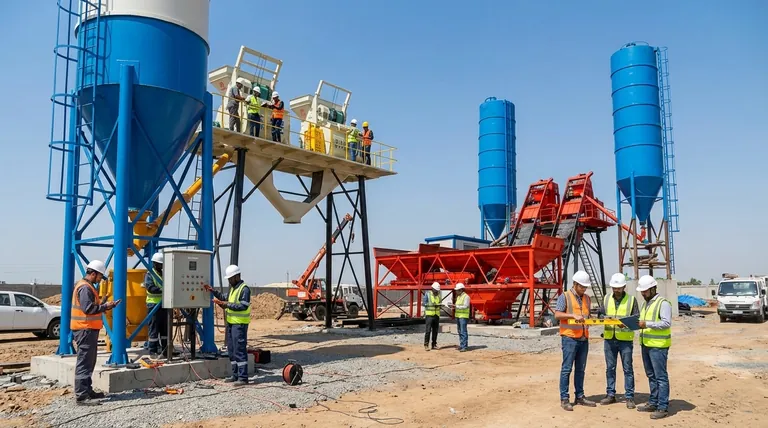
During the installation of a concrete mixing plant, you must conduct a systematic inspection covering its structural, electrical, material handling, and measurement systems. This involves verifying that all components are securely fastened, electrical circuits and grounding are up to standard, and that the transmission and measurement systems operate smoothly, accurately, and without defect.
The core objective of an installation inspection is not simply to confirm assembly, but to validate the seamless integration of all systems. A thorough check ensures the plant will operate safely, produce consistent, high-quality concrete, and maintain long-term reliability.
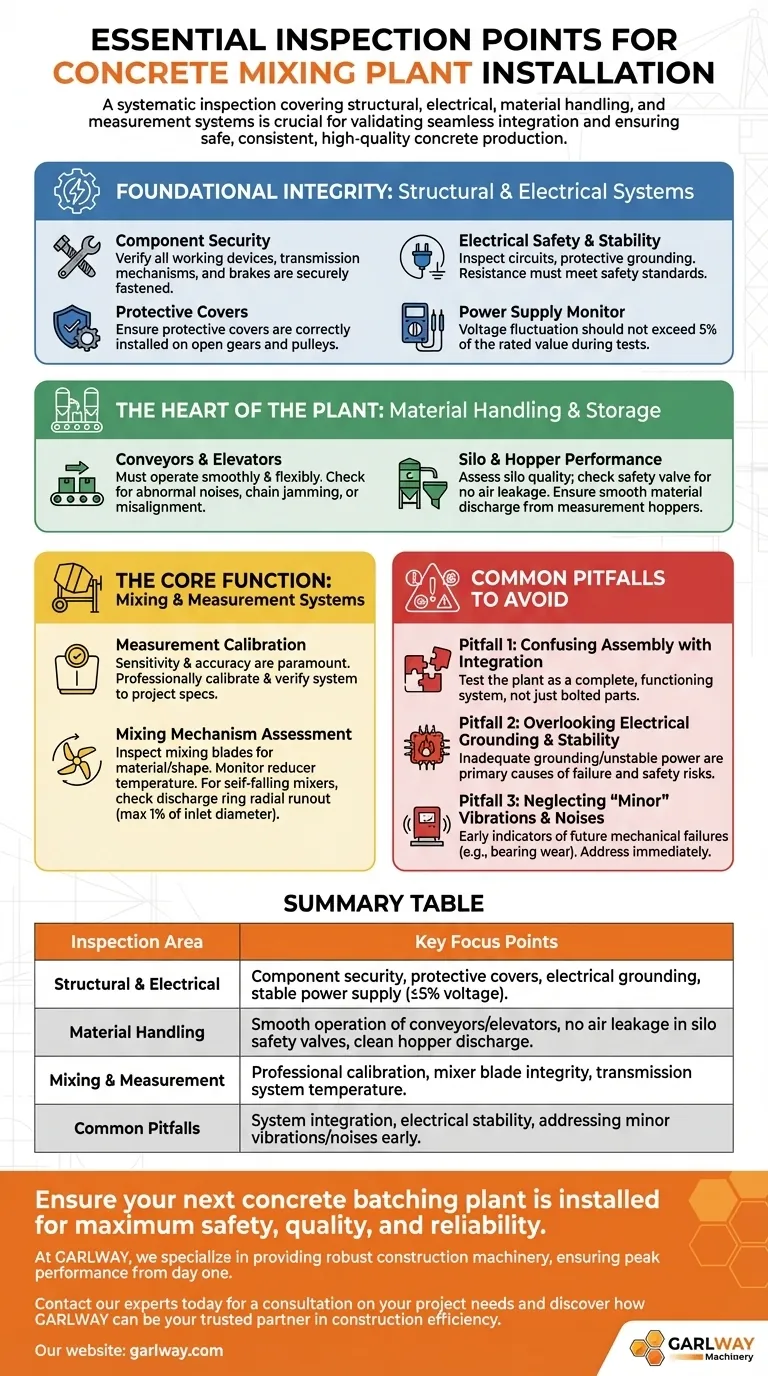
Foundational Integrity: Structural and Electrical Systems
The physical and electrical stability of the plant is the bedrock of its performance. Errors in these foundational areas can lead to catastrophic failures, significant downtime, and major safety hazards.
Verifying Component Security
All working devices, transmission mechanisms, and brakes must be securely fastened. This is a non-negotiable first step.
Also, confirm that protective covers are correctly installed on all open gears and pulleys to prevent accidents and protect the equipment from environmental debris.
Ensuring Electrical Safety and Stability
Inspect the integrity of all electrical circuits, paying special attention to the protective grounding or neutral line. The resistance must meet specified safety standards.
Monitor the power supply during initial tests. The voltage fluctuation should not exceed 5% of the rated value, as unstable power can damage sensitive electronic components and motors.
The Heart of the Plant: Material Handling and Storage
Efficient and uninterrupted material flow is critical for consistent production. Any friction or failure in the conveyance and storage systems will create a bottleneck that halts the entire operation.
Inspecting Conveyors and Elevators
Belt conveyors, bucket elevators, and scrapers must operate smoothly and flexibly. Listen for any abnormal noises or signs of chain jamming, which indicate misalignment or lubrication issues.
Validating Silo and Hopper Performance
The quality of the cement silo itself should be assessed. Critically, you must check the silo's safety valve to ensure there is no air leakage, which is essential for both safety and material preservation.
The measurement hoppers must allow for smooth material discharge. Look for any signs of material accumulation or overflow, as this directly impacts the accuracy of your mix.
The Core Function: Mixing and Measurement Systems
This is where the final product is made. The precision of the measurement system and the efficiency of the mixer directly determine the quality and strength of the concrete.
Calibrating the Measurement System
The sensitivity and accuracy of the measurement system are paramount. This system must be professionally calibrated and verified during installation to guarantee it meets project specifications.
Assessing the Mixing Mechanism
For self-falling mixers, the radial runout of the discharge ring must not exceed 1% of the inlet diameter, a key tolerance for ensuring proper function.
Inspect the mixing blades, considering their material, shape, and installation method. Finally, monitor the transmission system's reducer, ensuring its temperature remains within the manufacturer's specifications during operation.
Common Pitfalls to Avoid
A successful installation goes beyond a simple component checklist. It requires an understanding of how systems interact and where hidden risks lie.
Pitfall 1: Confusing Assembly with Integration
Simply bolting parts together is not enough. Many issues arise from poor integration, such as a misaligned conveyor causing motor strain or an uncalibrated scale leading to poor quality concrete. You must test the plant as a complete, functioning system.
Pitfall 2: Overlooking Electrical Grounding and Stability
Electrical issues are a primary cause of failure and safety incidents. Inadequate grounding or an unstable power source can seem like minor details but can lead to component burnout and pose a severe risk to personnel.
Pitfall 3: Neglecting "Minor" Vibrations and Noises
Do not dismiss small, abnormal noises or vibrations in transmission systems or conveyors. These are often the first indicators of future mechanical failures, such as bearing wear or misalignment, that are far easier and cheaper to fix during installation than after a breakdown.
A Systematic Approach to Your Final Inspection
Use your inspection to confirm the plant is not just built, but ready to perform. Your priorities during the final check should align with your primary operational goals.
- If your primary focus is operational safety: Prioritize verification of all electrical grounding, circuit integrity, and the proper installation of every safety guard and valve.
- If your primary focus is concrete quality: Concentrate on the calibration and accuracy of the measurement system and the physical integrity of the mixing blades and hoppers.
- If your primary focus is long-term reliability: Scrutinize all transmission systems, gear lubrication, and material flow paths for any signs of noise, vibration, or friction that could indicate future wear.
A meticulous and systematic inspection transforms a collection of new equipment into a reliable and high-performance production asset.
Summary Table:
| Inspection Area | Key Focus Points |
|---|---|
| Structural & Electrical | Component security, protective covers, electrical grounding, stable power supply (±5% voltage fluctuation). |
| Material Handling | Smooth operation of conveyors/elevators, no air leakage in silo safety valves, clean material discharge from hoppers. |
| Mixing & Measurement | Professional calibration of measurement system, mixer blade integrity, transmission system temperature within spec. |
| Common Pitfalls | System integration (not just assembly), electrical stability, addressing minor vibrations/noises early. |
Ensure your next concrete batching plant is installed for maximum safety, quality, and reliability.
At GARLWAY, we specialize in providing robust construction machinery, including concrete mixers and batching plants, for construction companies and contractors worldwide. Our expertise ensures your equipment is set up for peak performance from day one.
Contact our experts today for a consultation on your project needs and discover how GARLWAY can be your trusted partner in construction efficiency.
Visual Guide
Related Products
- HZS120 Ready Mix Concrete Batching Plant Commercial Mud Cement Mixer
- HZS35 Small Cement Concrete Mixing Batch Plant
- HZS75 Concrete Batching Plant Cement Mixer Price Concrete Mixer Bunnings Mixing Plant
- HZS180 Ready Mix Concrete Plant for Foundations with Sand and Cement
- Commercial Electric Concrete Mixer Machine HZS 50 Small Batch Plant for Sale
People Also Ask
- What is a ready mix concrete batching plant? The Engine of Modern Construction
- What is the name of the machine used in ready mix? Unpacking the Complete Concrete System
- What is the core component of a concrete batching plant? The Mixer Unit Defines Your Concrete Quality
- What are the types of concrete mixers used in batching plants? Choose the Right Mixer for Your Project
- What are the advantages and disadvantages of concrete batching plants? Maximize Quality & Efficiency