
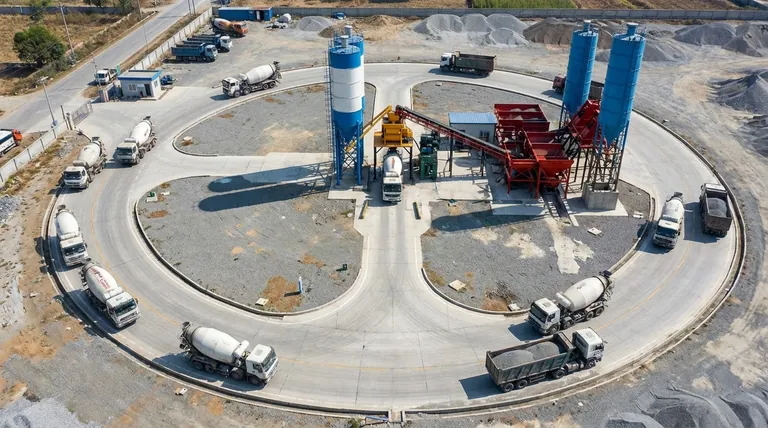
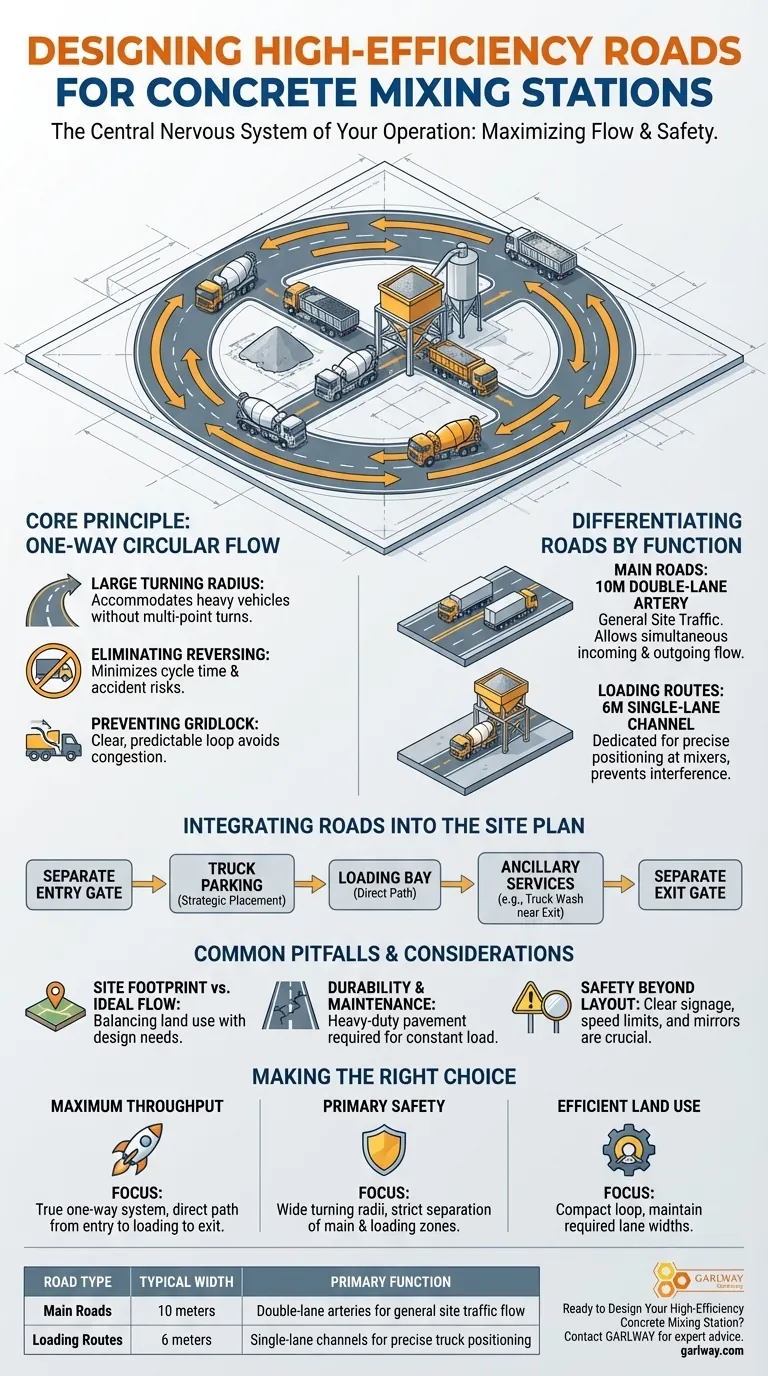
In a concrete mixing station, road design is not an afterthought; it is the central nervous system of the entire operation. Roads are specifically engineered in a circular pattern to accommodate the large turning radius of heavy vehicles. The main traffic arteries are typically 10-meter double lanes, while dedicated loading routes are 6-meter single lanes to streamline the flow of trucks.
The road layout within a concrete mixing station is engineered for a single purpose: maximizing the safe and continuous flow of heavy vehicles. The circular pattern and specific lane widths are deliberate choices to eliminate bottlenecks, prevent time-consuming reversing, and ensure operational efficiency.
The Core Principle: A One-Way Circular Flow
The fundamental goal of the road network is to keep vehicles moving forward in a predictable, efficient loop. This design directly addresses the physical limitations and operational demands of a high-volume industrial site.
Why a Circular Pattern is Essential
Large vehicles like cement mixers and aggregate transport trucks have a very large turning radius. A circular, or ring-road, design allows these vehicles to navigate the site without needing to stop and perform difficult multi-point turns or reverse maneuvers.
Eliminating Reversing
Reversing a heavy truck is slow, inefficient, and significantly increases the risk of accidents. The circular layout is designed to position vehicles so they can pull directly into loading bays and drive straight out, minimizing cycle time for each truck.
Preventing Gridlock
By establishing a clear, one-way flow, the layout prevents the possibility of head-on encounters between vehicles. This is critical for avoiding congestion and maintaining a steady pace of production, especially during peak hours.
Differentiating Roads by Function
Not all roads within the station serve the same purpose. The design intelligently separates traffic based on the specific task being performed, using different widths to manage flow and ensure safety.
Main Roads: The 10m Double-Lane Artery
The 10-meter double-lane roads act as the site's main arteries. This width is crucial to allow two vehicles to pass each other safely, accommodating both incoming material trucks and outgoing concrete mixers simultaneously.
Loading Routes: The 6m Single-Lane Channel
The 6-meter single-lane roads are dedicated channels that lead directly to and from the primary loading points under the mixer. This narrower width ensures precise positioning of the mixer truck for loading and prevents other site traffic from interfering with this critical, time-sensitive task.
Integrating Roads into the Broader Site Plan
The road network does not exist in isolation. Its design is deeply intertwined with the placement of all other critical station components to create a seamless operational sequence.
The Value of Separate Entrances
An optimal layout includes two separate gates: one for entry and one for exit. This reinforces the one-way system, preventing bottlenecks and collisions at the site's most vulnerable points where it interfaces with public roads.
Strategic Placement of Parking and Services
The mixer truck parking area is often located so that trucks can pull straight into the loading bay without any complex maneuvering. Similarly, ancillary services like the truck wash bay are typically placed near the exit, allowing vehicles to be cleaned before leaving without disrupting the central production loop.
Common Pitfalls and Considerations
While the principles are straightforward, implementation requires balancing ideal design with real-world constraints.
Site Footprint vs. Ideal Flow
A perfect circular road with wide, sweeping turns requires a significant amount of land. The final design is often a compromise, creating a compact layout that still adheres to the core principles of one-way flow and adequate lane width.
Durability and Maintenance
The roads must be constructed to withstand the immense weight of fully loaded trucks on a continuous basis. The cost of building and maintaining this heavy-duty pavement is a significant factor in the overall station design and budget.
Safety Beyond Layout
While a good layout is the foundation of safety, it must be supported by clear signage, designated speed limits, and potentially mirrors at blind corners. The design minimizes hazards, but operational protocols ensure it stays safe.
Making the Right Choice for Your Goal
When planning or evaluating a mixing station, your road design should reflect your primary operational priority.
- If your primary focus is maximum throughput: Prioritize a true one-way system with separate entry and exit points, ensuring the path from parking to loading to the exit is as direct as possible.
- If your primary focus is safety: Emphasize wide turning radii in the circular design and maintain strict separation between the 10m main arteries and the 6m single-lane loading zones.
- If your primary focus is efficient land use: The circular pattern remains essential, but the loop can be designed more compactly while strictly maintaining the required lane widths to fit vehicles.
Ultimately, a well-designed road network transforms a concrete plant from a collection of equipment into a highly efficient and safe production system.
Summary Table:
| Road Type | Typical Width | Primary Function |
|---|---|---|
| Main Roads | 10 meters | Double-lane arteries for general site traffic flow |
| Loading Routes | 6 meters | Single-lane channels for precise truck positioning at mixers |
Ready to Design Your High-Efficiency Concrete Mixing Station?
A well-planned road network is the backbone of a safe and productive operation. GARLWAY specializes in providing robust construction machinery and expert layout advice for construction companies and contractors globally.
Our core products, including concrete batching plants, mixers, and winches, are designed to integrate seamlessly into an efficient site plan. Let us help you build a system that maximizes your throughput and minimizes risk.
Contact GARLWAY today for a consultation and discover how our solutions can power your next project.
Visual Guide
Related Products
- HZS90 Large Multiquip Concrete Mixers for Construction
- HZS75 Concrete Batching Plant Cement Mixer Price Concrete Mixer Bunnings Mixing Plant
- Portable Concrete Mixer Machine Equipment for Mixing Concrete
- Commercial Electric Concrete Mixer Machine HZS 50 Small Batch Plant for Sale
- HZS35 Small Cement Concrete Mixing Batch Plant
People Also Ask
- What are the types of concrete mixers used in batching plants? Choose the Right Mixer for Your Project
- What is the core component of a concrete batching plant? The Mixer Unit Defines Your Concrete Quality
- What are the different power sources for concrete mixers? Choose the Right Power for Your Project
- What are the main types of concrete mixers? A Guide to Batch, Continuous & More
- What are the main types of concrete mixers mentioned? Find the Perfect Mixer for Your Project





