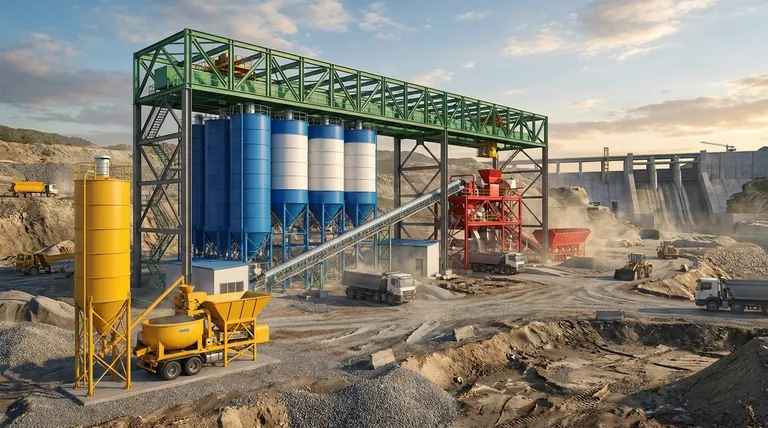
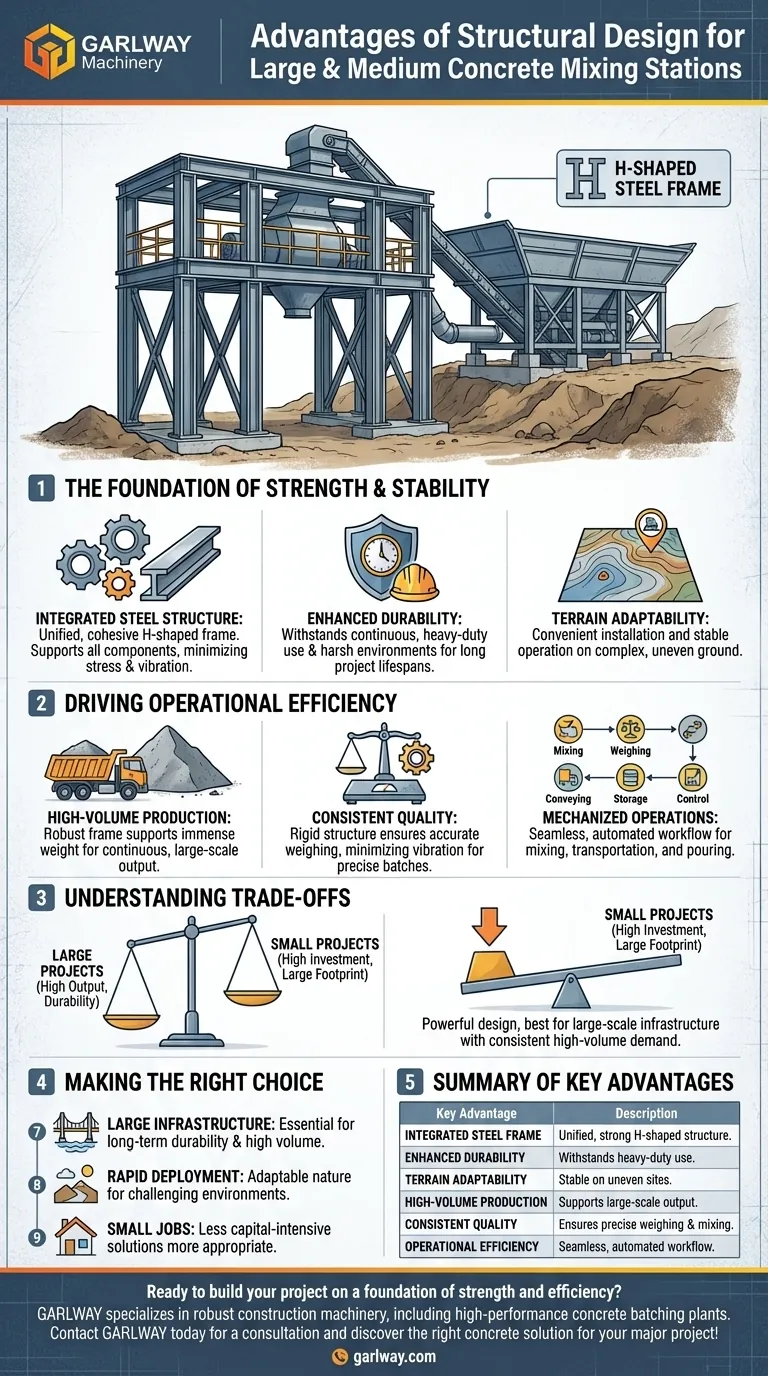
The primary advantage of the structural design for large and medium-sized concrete mixing stations lies in its fully integrated steel frame. Typically built with high-quality H-shaped steel, this design provides exceptional strength and durability, simplifies the installation process, and allows the entire station to be adapted to various complex terrains.
The robust structural design is not merely a matter of strength; it is the essential foundation that enables the high productivity, precision, and operational efficiency demanded by large-scale construction projects.
The Foundation of Strength and Stability
The physical structure of a mixing station is the backbone of its entire operation. Its design directly impacts reliability, lifespan, and suitability for the demanding environments of major construction sites.
Integrated Steel Structure
A key feature is the use of a unified, integrated frame made from high-quality H-shaped steel. This creates a single, cohesive structure rather than a simple assembly of disparate parts.
This integrated approach ensures all components—from the mixing host to the storage silos—are properly supported and aligned, minimizing stress and vibration during operation.
Enhanced Durability
Large infrastructure projects often span long periods. The structural design provides the necessary durability to withstand continuous, heavy-duty use and harsh environmental conditions.
The strength inherent in the H-shaped steel frame ensures the station maintains its structural integrity over the project's lifetime, preventing costly downtime and repairs.
Adaptability to Terrain
Major construction sites, especially for projects like bridges or dams, are rarely on perfectly flat ground.
The structural design allows for convenient installation and stable operation on complex and uneven terrains, a critical advantage that increases its versatility.
How Structural Design Drives Operational Efficiency
The physical frame is directly linked to the station's performance. A well-designed structure is what allows the complex systems within the station to function optimally.
Enabling High-Volume Production
The robust frame is engineered to support the immense weight and dynamic forces of the mixing host, material conveyors, and large storage silos. This stability is crucial for achieving the high-volume, continuous output required for major projects.
Ensuring Consistent Quality
A stable and rigid structure is fundamental for the accuracy of the material weighing system. Any flexing or excessive vibration in the frame could compromise the precision of the scales, leading to inconsistent concrete batches and wasted materials.
Facilitating Mechanized Operations
The design thoughtfully integrates the five core systems: mixing, weighing, conveying, storage, and control. This creates a seamless, automated workflow that enhances productivity and promotes mechanized joint operations for mixing, transportation, and pouring.
Understanding the Trade-offs
While powerful, this design is not universally applicable. Its advantages are most pronounced when matched with the appropriate project scale.
Initial Investment
The high-quality materials and robust engineering of these stations represent a significant upfront capital investment. This cost is higher than that for smaller, less permanent mixing solutions.
Project Scale Requirement
The benefits of high output and automation only truly materialize on large-scale projects with consistent, high-volume concrete demand. For smaller jobs, these stations can be inefficient and economically unviable.
Site Footprint
A large or medium-sized station requires a considerable amount of space for setup and operation. The logistics of transporting and assembling the components are also more complex compared to smaller plants.
Making the Right Choice for Your Project
Selecting the right mixing station hinges on aligning its capabilities with your project's specific demands.
- If your primary focus is a large-scale infrastructure project (e.g., dams, bridges): The integrated steel structure is essential for ensuring long-term durability and consistent, high-volume concrete production.
- If your primary focus is rapid deployment on varied terrain: The adaptable nature of the steel design allows for convenient and stable installation in challenging environments.
- If your primary focus is cost-effectiveness on a smaller job: A large station is likely unnecessary; a smaller, less capital-intensive solution would be a more appropriate choice.
Ultimately, the structural integrity of a concrete mixing station is the bedrock upon which project efficiency and quality are built.
Summary Table:
| Key Advantage | Description |
|---|---|
| Integrated Steel Frame | Uses H-shaped steel for a unified, strong, and stable structure. |
| Enhanced Durability | Withstands continuous heavy-duty use and harsh environmental conditions. |
| Terrain Adaptability | Allows stable installation and operation on uneven or complex sites. |
| High-Volume Production | Supports large-scale output needed for major infrastructure projects. |
| Consistent Quality | Ensures precise weighing and mixing by minimizing structural vibration. |
| Operational Efficiency | Integrates all systems for seamless, automated workflow. |
Ready to build your project on a foundation of strength and efficiency?
GARLWAY specializes in providing robust construction machinery, including high-performance concrete batching plants, mixers, and winches, designed for construction companies and contractors tackling large-scale infrastructure projects globally.
Our mixing stations feature the very integrated steel design discussed here, ensuring your operation benefits from maximum durability, terrain adaptability, and consistent high-volume production. Let us help you achieve superior project outcomes.
Contact GARLWAY today for a consultation and discover the right concrete solution for your major project!
Visual Guide
Related Products
- HZS90 Large Multiquip Concrete Mixers for Construction
- JZC500 Large Cement Mixer Machine Price for Concrete Mix
- Harbor Freight JS1500 On Site Concrete Mixing Volumetric Cement Mixer
- HZS75 Concrete Batching Plant Cement Mixer Price Concrete Mixer Bunnings Mixing Plant
- Portable Cement Mixer with Lift Concrete Machine
People Also Ask
- What are the types of concrete mixers used in batching plants? Choose the Right Mixer for Your Project
- What is the core component of a concrete batching plant? The Mixer Unit Defines Your Concrete Quality
- What are the different power sources for concrete mixers? Choose the Right Power for Your Project
- What are the main types of concrete mixers? A Guide to Batch, Continuous & More
- What are the main types of concrete mixers mentioned? Find the Perfect Mixer for Your Project