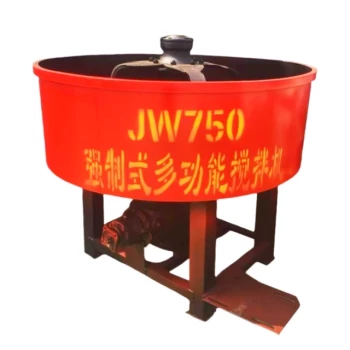
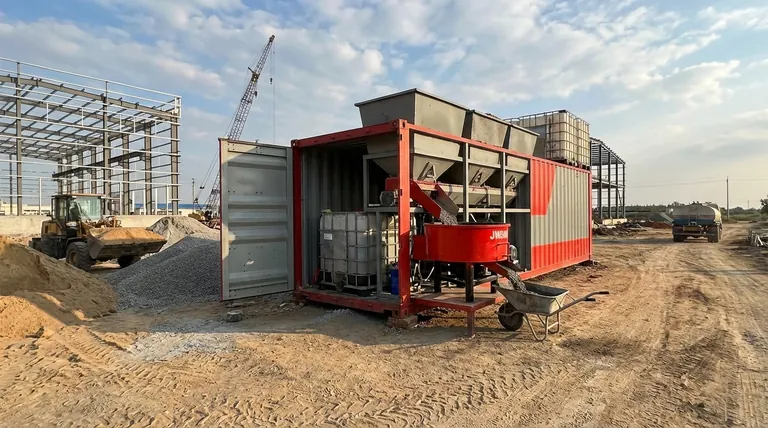
At its core, a concrete mixing plant container is a complete, mobile concrete batching facility engineered to fit within the standardized dimensions of a shipping container. This design allows for rapid transport, quick installation, and efficient operation directly on a construction site, providing a self-contained solution for producing concrete where it's needed most.
The true value of a containerized plant isn't just its ability to mix concrete; it's about deploying a high-efficiency production facility to your site with minimal setup, drastically reducing logistical complexity and environmental impact.
How a Containerized Plant Works
A containerized mixing plant is not just a mixer in a box; it's an integrated system designed for performance and portability. It centralizes the core functions of a traditional batching plant into a compact, transportable unit.
A Self-Contained Ecosystem
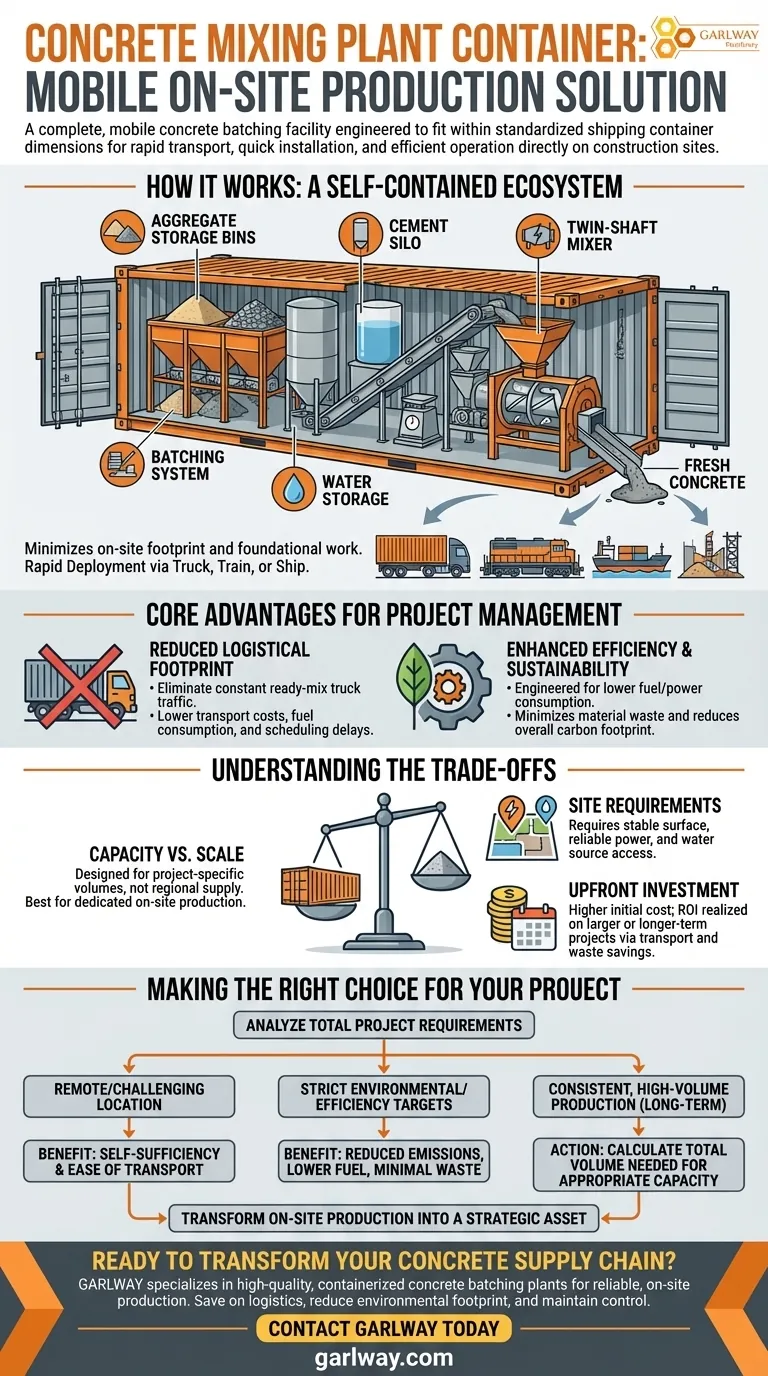
The entire system—from material storage to final mixing—is housed within the container framework. This all-in-one design minimizes the on-site footprint and the need for extensive foundational work typically associated with stationary plants.
Key Integrated Components
Inside the container, you will find dedicated storage bins for aggregates like sand and stone, as well as silos for cement. It also includes systems for water storage and a sophisticated batching system that precisely measures and feeds these materials into the mixer.
Designed for Rapid Deployment
The primary engineering principle is mobility. Because it uses a standard container frame, it can be transported via truck, train, or ship just like any other cargo. Once on-site, installation is significantly faster than building a traditional plant from scratch.
The Core Advantages for Project Management
Choosing a containerized plant over traditional concrete sourcing methods introduces several strategic benefits that directly impact project timelines, budgets, and sustainability goals.
Reduced Logistical Footprint
By producing concrete on-site, you eliminate the constant traffic of ready-mix trucks. This is especially critical for remote locations or congested urban sites, reducing transportation costs, fuel consumption, and scheduling delays.
Enhanced Efficiency and Sustainability
These plants are engineered for efficiency, often consuming less fuel and power than older, larger facilities. The self-contained design also minimizes material waste and reduces the overall carbon footprint of your project by lowering transport-related emissions.
Understanding the Trade-offs
While highly effective, containerized plants are a specific tool for specific challenges. Understanding their limitations is key to making an objective decision.
Capacity vs. Scale
A containerized plant is designed for project-specific volumes. It will not replace a massive, permanent batching plant built to supply an entire metropolitan area. Its strength lies in dedicated, on-site production, not regional supply.
Site Requirements
Despite its mobility, the plant still requires a stable, level surface for operation. It also needs reliable access to power and a water source to function, which must be factored into site planning.
Upfront Investment
The initial capital cost can be higher than simply ordering ready-mix concrete for a small project. The return on investment is realized on larger or longer-term projects where savings on transport, reduced waste, and on-demand availability outweigh the initial purchase price.
Making the Right Choice for Your Project
The decision to use a containerized mixing plant should be based on a clear analysis of your project's total requirements, not just its daily concrete needs.
- If your primary focus is a project in a remote or logistically challenging area: The plant's self-sufficiency and ease of transport provide an unmatched advantage.
- If your primary focus is meeting strict environmental or efficiency targets: The reduced emissions, lower fuel consumption, and minimal waste make this a compelling choice.
- If your primary focus is consistent, high-volume production over months or years: You must calculate the total concrete volume needed for the project's entire duration to select a plant with the appropriate capacity.
Ultimately, adopting a containerized mixing plant transforms on-site concrete production from a logistical hurdle into a strategic asset.
Summary Table:
| Feature | Benefit |
|---|---|
| Containerized Design | Rapid transport and deployment via standard shipping methods. |
| All-in-One System | Integrates storage, batching, and mixing in a single unit. |
| On-Site Production | Reduces logistical costs, delays, and environmental impact. |
| Project-Specific Capacity | Ideal for remote locations or projects with specific volume needs. |
Ready to transform your project's concrete supply chain?
GARLWAY specializes in high-quality, containerized concrete batching plants designed for construction companies and contractors who need reliable, on-site production. Our solutions help you save on logistics, reduce your environmental footprint, and maintain complete control over your concrete supply.
Contact GARLWAY today to discuss how our mobile mixing plants can be a strategic asset for your next project.
Visual Guide
Related Products
- HZS35 Small Cement Concrete Mixing Batch Plant
- HZS120 Ready Mix Concrete Batching Plant Commercial Mud Cement Mixer
- HZS75 Concrete Batching Plant Cement Mixer Price Concrete Mixer Bunnings Mixing Plant
- HZS180 Ready Mix Concrete Plant for Foundations with Sand and Cement
- Commercial Electric Concrete Mixer Machine HZS 50 Small Batch Plant for Sale
People Also Ask
- Why buy concrete batch plant parts only from the manufacturer? Protect Your Investment and Maximize Uptime
- Why is proper maintenance important for a concrete batch mix plant? Maximize Uptime & Profitability
- What is the advantage of a mobile concrete batching plant? Achieve On-Site Production & Total Control
- What are the advantages and disadvantages of concrete batching plants? Maximize Quality & Efficiency
- What are the two methods of material charging in a concrete mixing station? Single vs. Multiple Charging Explained