
In the event of a thunderstorm, all operations involving concrete mixing station equipment must cease immediately. The standard and non-negotiable safety protocol is to perform a controlled shutdown of the entire system and then completely disconnect it from the main power supply to prevent catastrophic damage from a lightning-induced power surge.
The core principle is not merely to stop working, but to physically isolate your high-value equipment from the electrical grid. A simple shutdown leaves the system vulnerable; a full disconnect is the only reliable safeguard against the immense power of a lightning strike.
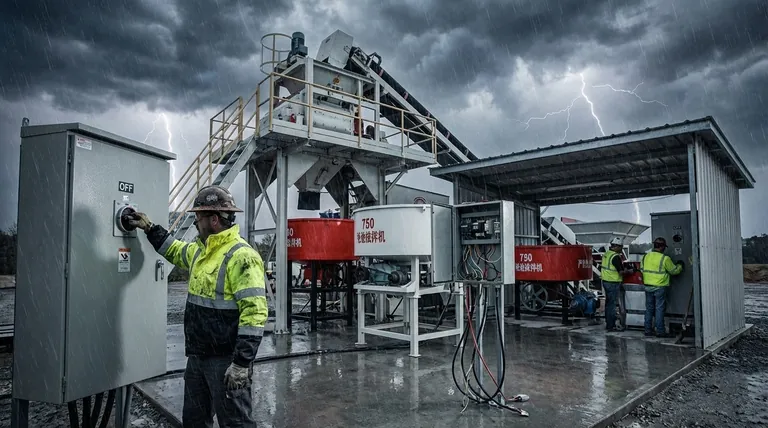
The Primary Threat: Lightning and Electrical Surges
Thunderstorms pose a significant and often underestimated threat to heavy industrial equipment. The danger extends beyond a direct lightning strike, which is often the least common form of damage.
Understanding Induced Surges
The most frequent danger comes from indirect lightning strikes. When lightning strikes the ground or power lines miles away, it can induce a massive and instantaneous power surge that travels through the electrical grid.
This surge can overwhelm the station's control systems, motors, and sensitive electronics, causing irreparable damage in a fraction of a second.
Why Your Mixing Station is a Target
Concrete mixing stations are inherently vulnerable due to their design. They are tall, metallic structures with extensive electrical wiring connecting numerous components.
This configuration effectively acts as a large antenna, making the equipment a natural pathway for the high-voltage electricity from a nearby strike seeking a path to the ground.
The Standard Safety Protocol: A Step-by-Step Guide
Following a clear, pre-defined procedure removes guesswork during a high-stress weather event. The goal is to protect both personnel and the asset.
Step 1: Cease All Operations Immediately
As soon as a thunderstorm is imminent, all mixing, loading, and batching processes should be halted. The priority is to stop the flow of work safely.
Step 2: Perform a Controlled System Shutdown
Do not simply cut the power. Use the standard shutdown sequence for your equipment. This ensures that software logs off correctly, gates and valves are in a neutral position, and mechanical stress is minimized.
Step 3: Disconnect from the Main Power Supply
This is the most critical step. After the system is properly shut down, locate the main breaker or disconnect switch that isolates the entire station from the external power grid.
Turning this off creates a physical "air gap" that a power surge cannot cross, effectively severing the pathway for damaging electrical energy.
Common Pitfalls to Avoid
In a time-sensitive construction environment, it's easy to rationalize shortcuts. These common mistakes can lead to costly consequences.
The "It's Not That Close" Fallacy
Lightning can strike many miles ahead of the main storm front. Waiting until the rain is heavy or lightning is directly overhead is waiting too long. Institute a policy based on audible thunder or meteorological alerts.
Forgetting Ancillary Systems
Ensure that all connected systems are also considered. This includes control room computers, water pumps, and any auxiliary equipment that shares the same power source. These are all susceptible to surge damage.
Believing a Surge Protector is Enough
While industrial-grade surge protectors are valuable, they are not designed to handle the sheer magnitude of a lightning-induced surge. They are a secondary line of defense, not a primary one. Physical disconnection remains the only guaranteed protection.
Making the Right Choice for Your Operation
Implementing a clear thunderstorm protocol is a management decision that balances productivity with risk mitigation. Your priority determines your action.
- If your primary focus is equipment preservation: The non-negotiable action is to always disconnect the main power supply, as this is the only way to prevent catastrophic electrical damage.
- If your primary focus is personnel safety: Ceasing operations and ensuring all staff are in a safe, grounded structure is the absolute first priority, superseding any equipment-related procedure.
- If your primary focus is operational continuity: This protocol is your best tool. Preventing damage is far faster and cheaper than repairing or replacing a complex control system after a storm passes.
A proactive safety protocol is the bedrock of a resilient and professional operation.
Summary Table:
| Thunderstorm Action | Key Purpose | Critical Detail |
|---|---|---|
| Cease Operations | Personnel Safety | Halt all mixing and batching immediately upon storm approach. |
| Controlled Shutdown | Equipment Protection | Follow the standard shutdown sequence to minimize mechanical stress. |
| Disconnect Main Power | Surge Prevention | Create a physical "air gap" by turning off the main breaker. |
Protect your high-value construction equipment with GARLWAY's expertise. As a specialist in construction machinery, including concrete batching plants, we understand the critical need for operational safety and asset protection. Don't let a thunderstorm cause catastrophic downtime and repair costs. Let our team help you establish robust safety protocols. Contact GARLWAY today to discuss how we can support your operation's resilience and productivity.
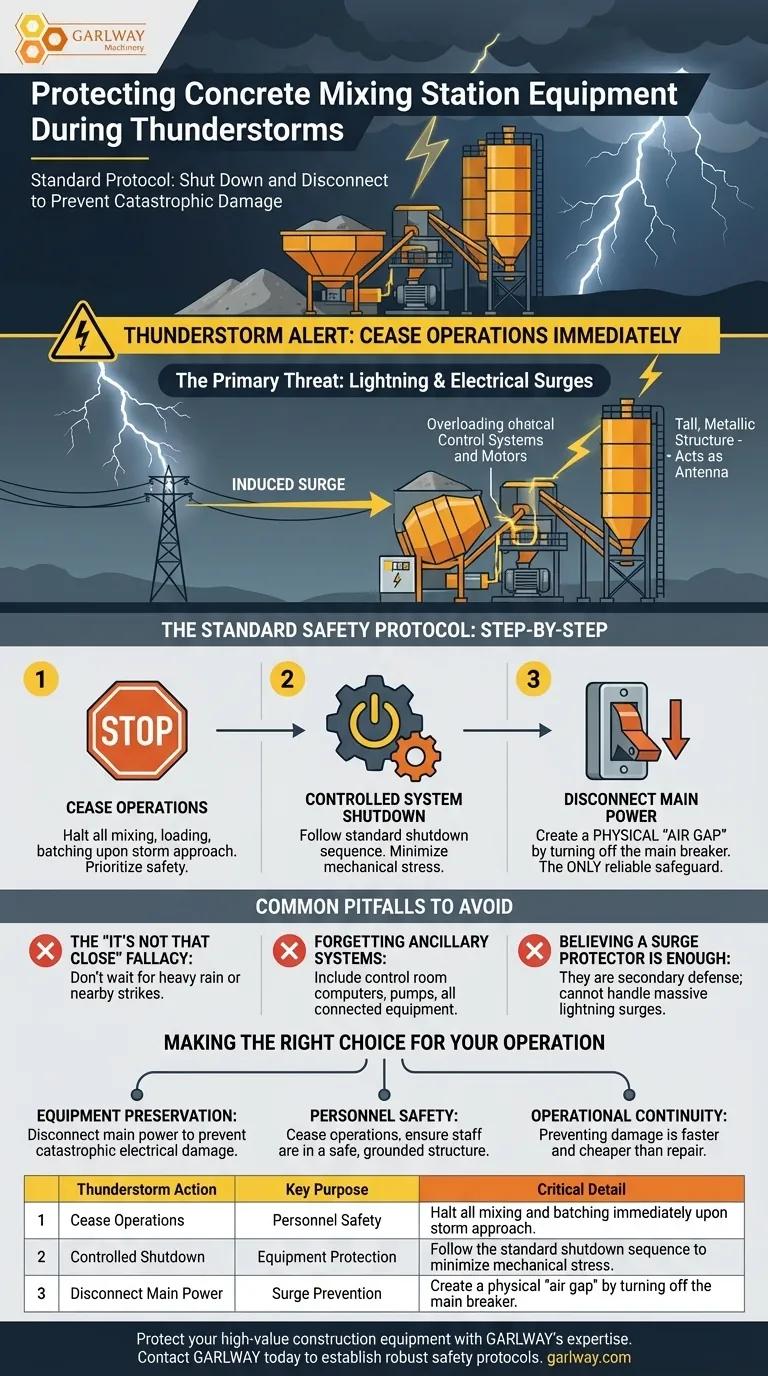
Visual Guide
Related Products
- HZS90 Large Multiquip Concrete Mixers for Construction
- HZS75 Concrete Batching Plant Cement Mixer Price Concrete Mixer Bunnings Mixing Plant
- Portable Concrete Mixer Machine Equipment for Mixing Concrete
- Commercial Electric Concrete Mixer Machine HZS 50 Small Batch Plant for Sale
- HZS35 Small Cement Concrete Mixing Batch Plant
People Also Ask
- What are the types of concrete mixers used in batching plants? Choose the Right Mixer for Your Project
- What is the core component of a concrete batching plant? The Mixer Unit Defines Your Concrete Quality
- What are the different power sources for concrete mixers? Choose the Right Power for Your Project
- What are the main types of concrete mixers? A Guide to Batch, Continuous & More
- What are the main types of concrete mixers mentioned? Find the Perfect Mixer for Your Project





