
To ensure the stable operation of a dry mortar mixing station, you must implement a disciplined program of regular equipment inspections, proactive maintenance, and skilled operator management. These three pillars work together to prevent failures, maintain product quality, and maximize the lifespan of your machinery.
The core principle for stability is shifting from a reactive "fix it when it breaks" mindset to a proactive one. True operational stability is achieved not by reacting to problems, but by creating a system where those problems are unlikely to occur in the first place.
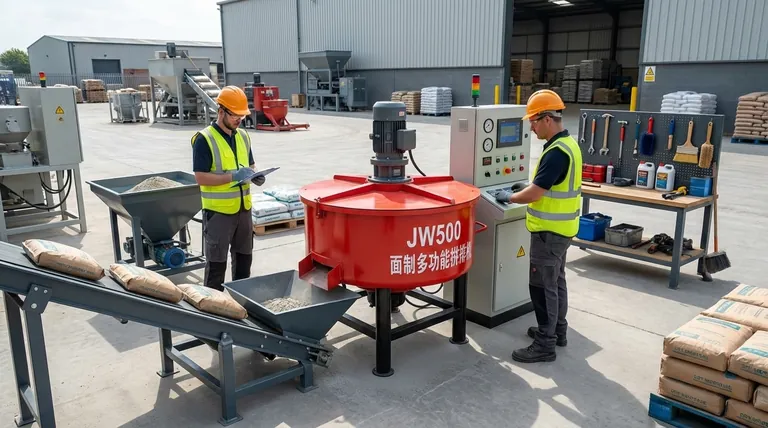
The Foundation: Equipment Health and Reliability
The physical condition of your equipment is the bedrock of stable operation. This requires a two-pronged approach focusing on regular checks and consistent upkeep.
Systematic Component Inspections
Inspections are about identifying potential failures before they happen. Your team should have a clear checklist for regularly examining critical components.
Key areas include the motor and transmission system, which are the heart of the plant, and the mixer and metering system, which directly control product quality.
You must also verify that connections, such as between the powder hopper and the mixer, are unobstructed to ensure consistent material flow and feeding times.
Finally, regularly check auxiliary parts like the butterfly valve and related electrical components to guarantee they function smoothly and do not become a point of failure.
Proactive Maintenance Routines
Maintenance is the physical work that keeps the machinery in optimal condition. This should be a scheduled, non-negotiable part of your workflow.
Daily tasks include checking lubrication levels and cleaning the equipment of all internal and external debris and dust, which can cause wear and overheating.
Periodic maintenance involves more thorough tasks like oiling critical parts and changing the oil in gearboxes and other systems to ensure all components operate as designed.
Promptly addressing any abnormalities, such as leaks at the discharge outlet, prevents small issues from escalating into major downtime events.
The Human Element: Skilled and Vigilant Operation
A perfectly maintained machine can still produce poor results or suffer damage if operated incorrectly. Empowering your operators is just as critical as maintaining the hardware.
Precise Process Control
The operator must have direct control over the core production variables to meet process requirements.
This includes strictly managing measurement accuracy to ensure correct formulations and controlling the mixing time to achieve a homogenous, high-quality final product.
Continuous Monitoring and Adjustment
A skilled operator doesn't just start the machine and walk away. They must actively monitor the operating status of the equipment throughout the production run.
This vigilance allows them to adjust operating parameters as needed in real-time, compensating for minor variations and ensuring the output remains consistently stable.
The Role of Training and Skill Enhancement
Stable operation is dependent on operator competence. Providing comprehensive training and ongoing skill enhancement is a direct investment in your plant's reliability.
Well-trained operators are better equipped to run the machinery efficiently, spot early signs of trouble, and respond to issues correctly, minimizing both downtime and safety risks.
Understanding the Inevitable Trade-offs
Achieving stability requires a commitment of time and resources, and cutting corners introduces significant risk.
The True Cost of Neglect
Deferring inspections or maintenance to save time in the short term almost always leads to greater costs later. These costs manifest as unplanned downtime, wasted raw materials from bad batches, and potentially catastrophic equipment failure.
Inconsistency from Unskilled Operation
Without proper training, operators may inadvertently run equipment outside of its optimal parameters. This not only leads to inconsistent product quality but also places unnecessary stress on mechanical components, accelerating wear and tear.
How to Apply This to Your Operation
Use these guidelines to create a tailored stability program for your mixing station.
- If your primary focus is maximizing uptime: Your priority should be creating a rigorous preventative maintenance schedule targeting the motor, transmission, and other critical wear parts.
- If your primary focus is consistent product quality: Emphasize operator training on the precise control of the metering system and strict adherence to specified mixing times.
- If your primary focus is extending asset life: Implement a holistic program that balances daily cleaning, scheduled lubrication, and skilled operation to minimize overall wear.
Ultimately, a proactive and disciplined approach to both your machinery and your people is the only reliable path to stable, long-term operation.
Summary Table:
| Requirement Pillar | Key Actions | Primary Benefit |
|---|---|---|
| Equipment Health | Regular inspections, lubrication, cleaning | Prevents mechanical failures, maximizes uptime |
| Skilled Operation | Precise process control, continuous monitoring | Ensures consistent product quality, reduces errors |
| Proactive Program | Scheduled maintenance, operator training | Extends equipment lifespan, minimizes long-term costs |
Ensure your dry mortar mixing station operates at peak stability and efficiency. Unplanned downtime and inconsistent quality are costly. GARLWAY specializes in providing robust construction machinery, including concrete batching plants and mixers, supported by expert guidance on maintenance and operation best practices.
Let our expertise help you build a proactive stability program tailored to your specific needs. Contact GARLWAY today to discuss how we can support your operation's reliability and productivity.
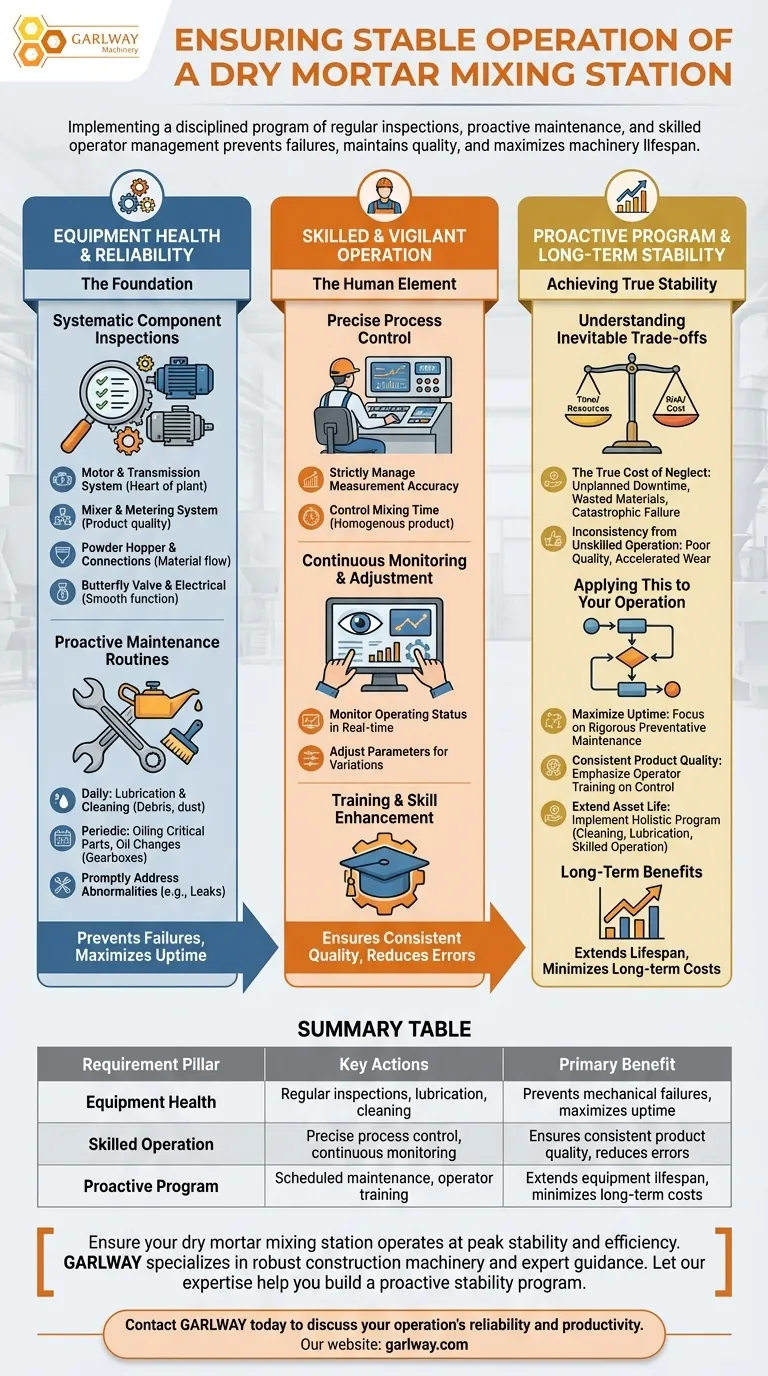
Visual Guide
Related Products
- JDC350 Small Cement Concrete Mortar Mixer
- HZS25 Best Cement Mixer for Quick Mix Concrete at Bunnings
- JDY350 Electric Hydraulic Mortar Mud Concrete Mixer
- Belle Mixer Drum Self Loading Mortar Mixers JS3000
- HZS120 Ready Mix Concrete Batching Plant Commercial Mud Cement Mixer
People Also Ask
- What are the primary uses of a small cement mixer? Boost Efficiency for Small to Medium Construction Jobs
- What are the physical benefits of using a small cement mixer? Reduce Strain and Prevent Injury
- What are the cost benefits of using a small cement mixer? Save on Labor, Materials & Time
- What makes small cement mixers easy and convenient to use? Boost Productivity on Any Job Site
- What factors should be considered before purchasing a small cement mixer? Find the Perfect Match for Your Project


