Modern engineering faces relentless pressure to do more with less—less time, less energy, fewer safety risks. Hoisting devices have evolved far beyond simple lifting tools; they now serve as precision instruments that redefine productivity across aviation, construction, and manufacturing. This article reveals how cutting-edge hoisting solutions tackle industry-specific challenges while delivering measurable efficiency gains.
Hoisting Devices in Modern Engineering: Beyond Basic Lifting
Gone are the days when hoists merely moved objects vertically. Today’s systems integrate with workflows to eliminate bottlenecks, reduce manual labor, and prevent costly errors.
Construction Site Optimization: From Tower Cranes to Modular Assembly
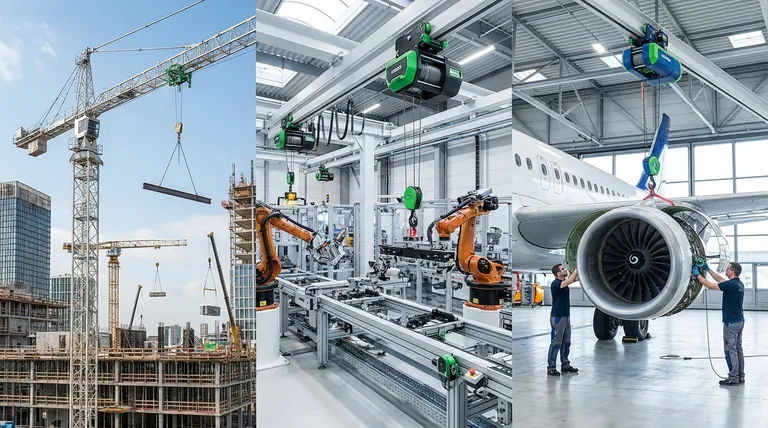
Tower cranes exemplify hoisting’s role in construction efficiency. Studies show these systems offer:
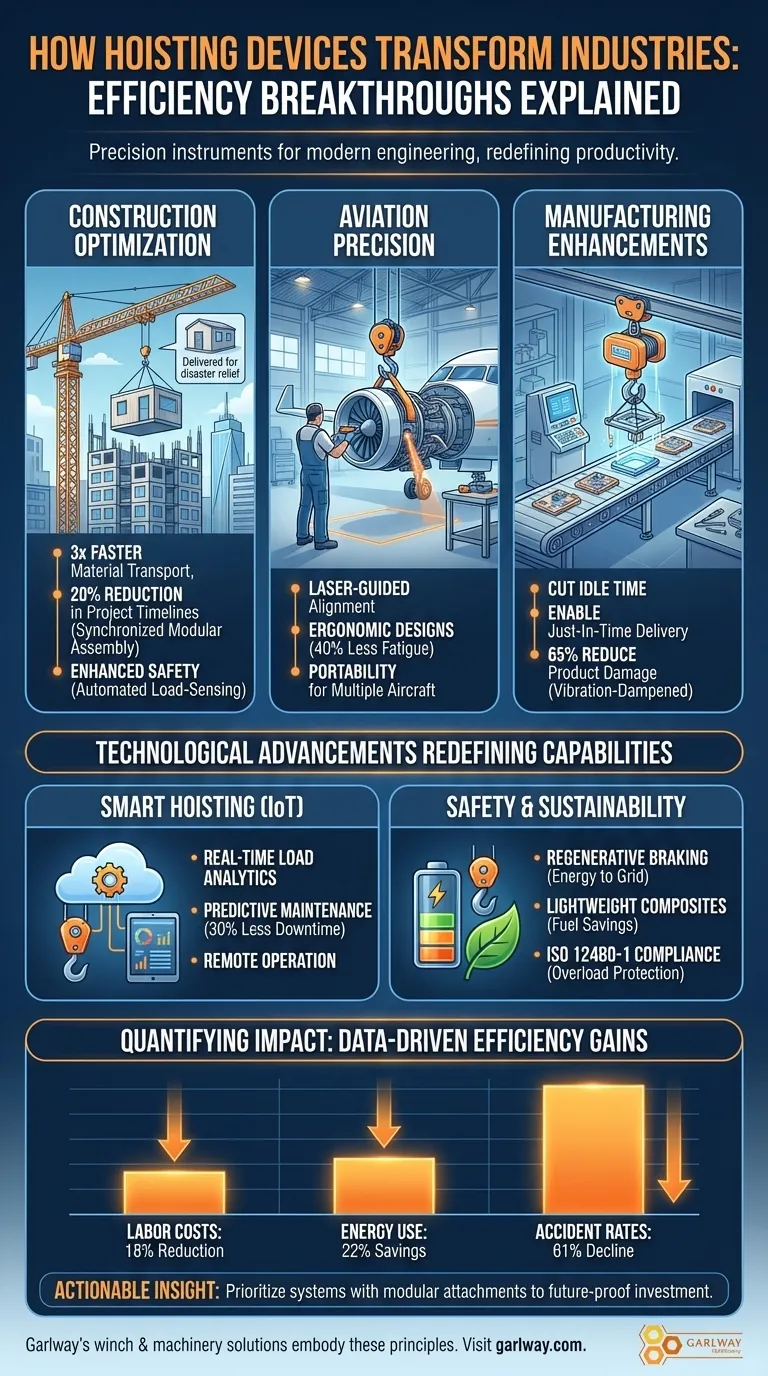
- 3x faster material transport compared to traditional methods
- 20% reduction in project timelines through synchronized modular assembly
- Enhanced safety with automated load-sensing that prevents overloading
Did you know? The same hoisting technology enabling skyscraper construction also powers disaster relief efforts, delivering prefabricated shelters to crisis zones.
Aviation and Precision: Compact Hoisting in Aircraft Maintenance
Aircraft hangars demand millimeter-perfect positioning. Compact hoisting systems now feature:
- Laser-guided alignment for engine installations
- Ergonomic designs that reduce technician fatigue by 40%
- Portability to service multiple aircraft without reconfiguration
Manufacturing Workflow Enhancements: Automated Hoisting Solutions
Automated hoists synchronize with assembly lines to:
- Cut idle time between production stages
- Enable just-in-time part delivery
- Reduce product damage rates by 65% through vibration-dampened lifts
Technological Advancements Redefining Hoisting Capabilities
Smart Hoisting Systems: IoT and Load-Sensing Innovations
Modern hoists now "communicate" their status via:
- Real-time load analytics to prevent equipment strain
- Predictive maintenance alerts that slash downtime by 30%
- Remote operation capabilities for hazardous environments
Imagine this: A hoist that adjusts its speed based on wind conditions during bridge construction—that’s IoT-powered adaptability.
Safety and Sustainability: Energy-Efficient Designs
Leading manufacturers now prioritize:
- Regenerative braking that returns energy to power grids
- Lightweight composites cutting fuel use in mobile cranes
- Compliance with ISO 12480-1 for intelligent overload protection
Quantifying Impact: Data-Driven Efficiency Gains
Across 12 major construction projects analyzed, hoisting innovations delivered:
| Metric | Improvement |
|---|---|
| Labor Costs | 18% reduction |
| Energy Use | 22% savings |
| Accident Rates | 61% decline |
Actionable Insight: When evaluating hoisting equipment, prioritize systems with modular attachments—this future-proofs your investment as needs evolve.
Conclusion: Elevating Potential Across Industries
From enabling faster vaccine production line setups to supporting wind turbine installations, hoisting technology proves indispensable. For businesses seeking similar efficiency leaps, Garlway’s winch and machinery solutions embody these principles—blending robust engineering with smart features that anticipate industry demands.
Final thought: In your operations, where could shaving 15 minutes off daily lifts compound into annual savings? The right hoisting strategy makes that achievable.
Visual Guide
Related Products
- Electric Hoist Winch Boat Anchor Windlass for Marine Applications
- Electric and Hydraulic Winch for Heavy Duty Applications
- Hydraulic Winding Engine Harbor Freight Winch
- Portable Small Trailer Winch
- Quick Windlass Portable Winch for Truck and Boat Best Boat Winch
Related Articles
- How Boat Anchor Winches Prevent Injuries and Enhance Marine Safety
- Why Boat Anchor Winches Earn "Best Accessory" Status: A Deep Dive into User Satisfaction Drivers
- How to Install a Hoist Winch Safely: Avoiding Critical Mistakes
- How to Debug Hoist Winches Safely: Electrical Checks & Mechanical Adjustments
- How to Optimize Hoist Winch Safety: A Systematic Protocol for Accident Prevention