Wearing gloves is an absolute, non-negotiable rule of winching. They are your primary line of defense against severe and permanent hand injuries. Gloves protect your hands from the sharp, needle-like wire burrs on steel cable and from the heat and abrasion of synthetic rope, preventing deep cuts, punctures, and burns during a recovery.
The core reason for wearing gloves isn't just to keep your hands clean; it's to create a critical barrier between your skin and a winch line that can easily cause debilitating injuries, whether it's a steel cable that acts like a porcupine or a synthetic rope that can burn and abrade.
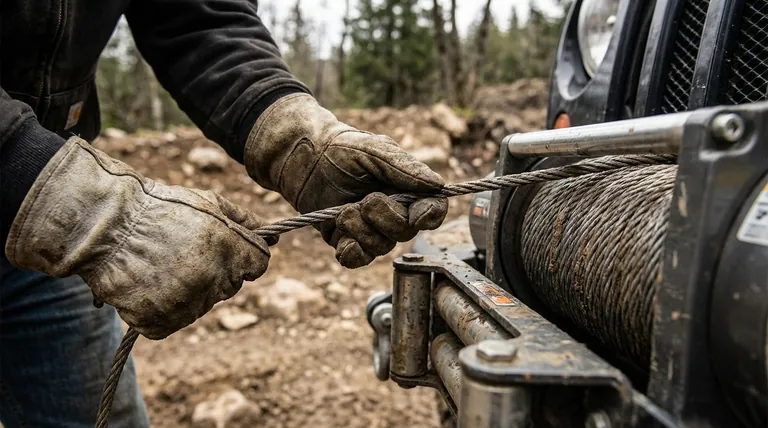
The Primary Danger: The Winch Line Itself
The most immediate threat during any winching operation comes directly from the line you are handling. The type of line dictates the specific nature of that threat.
Steel Cable: The Risk of "Fish Hooks"
A steel winch cable is made of many small wires twisted together. Over time, with use and exposure, individual wires can break.
These broken wires, often called burrs, jaggers, or "fish hooks," protrude from the cable. They are incredibly sharp and stiff.
Handling a steel cable without gloves can cause these burrs to easily puncture your skin, leading to deep, painful lacerations that can damage nerves and tendons.
Synthetic Rope: The Threat of Heat and Abrasion
While synthetic rope won't develop metal burrs, it presents its own unique set of dangers that demand protection.
Under tension and during spooling, synthetic rope can generate significant heat, enough to cause serious friction burns.
Furthermore, synthetic lines often pick up sand, dirt, and small rocks. This debris becomes embedded in the rope's fibers, turning it into a coarse, abrasive tool that can easily strip skin from your hands like sandpaper.
Understanding the Hazards of the Environment
A vehicle recovery rarely happens in a clean, sterile location. The environment itself is a source of risk that proper gloves help mitigate.
Navigating the Recovery Scene
During a recovery, you'll be handling equipment covered in mud, dirt, or snow. You may need to clear away rocks, broken sticks, or other sharp debris.
Gloves provide a crucial layer of protection against the scrapes, cuts, and bruises that can occur simply from working in a challenging off-road environment.
Preventing Contamination and Infection
Any cut or abrasion, especially one from a metal burr, is a potential site for infection. A winch line is often covered in dirt and grime.
By preventing the initial injury, gloves play a critical role in preventing tetanus and other infections that can result from a seemingly minor wound.
Common Pitfalls to Avoid
Simply wearing any pair of gloves is not enough. Understanding what to avoid is just as important as knowing what to look for.
Choosing the Wrong Type of Glove
Thin, flimsy cloth or garden gloves offer almost no protection against the puncture risk of steel cable.
Likewise, gloves with loose, dangling cuffs or straps are a serious snagging hazard. They can be pulled into the winch drum, dragging your hand with them. Always choose a snug-fitting glove.
The Myth of "Safe" Synthetic Rope
A common and dangerous mistake is believing that synthetic rope is harmless and doesn't require gloves. As mentioned, the risk of severe burns and abrasion is very real.
Never handle any winch line—steel or synthetic—without proper hand protection.
Complacency and Improper Handling
Gloves are a critical piece of Personal Protective Equipment (PPE), but they do not replace safe winching practices.
Never use your hands to guide the winch line onto the drum as it spools, even with gloves on. A snag can pull your hand into the winch mechanism instantly.
Making the Right Choice for Your Goal
Selecting the correct glove is key to ensuring your safety. Your choice should be informed by the type of winch line you use most often.
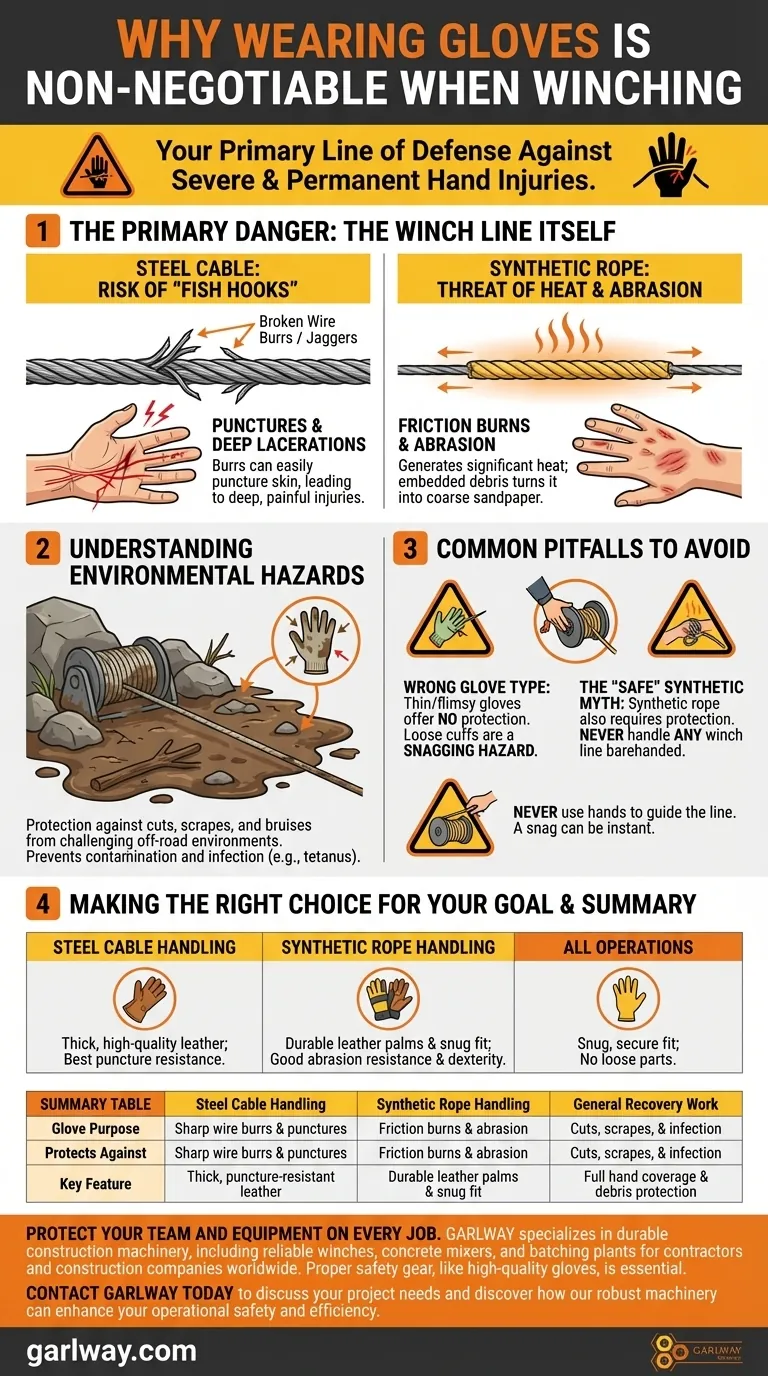
- If your primary focus is steel winch cable: Prioritize thick, high-quality leather gloves that offer the best puncture resistance against wire burrs.
- If your primary focus is synthetic winch rope: Look for durable gloves with a combination of leather palms and synthetic backings for a good balance of abrasion resistance and dexterity.
- For all winching operations: Ensure your gloves provide a snug, secure fit with no loose parts that could get caught in the winch mechanism.
Proper hand protection is the simplest and most effective step you can take to ensure every recovery operation ends safely.
Summary Table:
| Glove Purpose | Protects Against | Key Feature |
|---|---|---|
| Steel Cable Handling | Sharp wire burrs & punctures | Thick, puncture-resistant leather |
| Synthetic Rope Handling | Friction burns & abrasion | Durable leather palms & snug fit |
| General Recovery Work | Cuts, scrapes, & infection | Full hand coverage & debris protection |
Protect your team and equipment on every job.
GARLWAY specializes in durable construction machinery, including reliable winches, concrete mixers, and batching plants for contractors and construction companies worldwide. Proper safety gear, like high-quality gloves, is essential when operating our powerful equipment.
Contact GARLWAY today to discuss your project needs and discover how our robust machinery can enhance your operational safety and efficiency.
Visual Guide
Related Products
- Warn Winch Windlass Boat Trailer Winch
- Electric and Hydraulic Winch for Heavy Duty Applications
- Small Electric Winch 120V and 240V for Compact Applications
- Quick Windlass Portable Winch for Truck and Boat Best Boat Winch
- Hydraulic Winding Engine Harbor Freight Winch
People Also Ask
- What are the main components of a boat trailer winch? A Guide to Safe & Efficient Boat Loading
- What factors should be considered when choosing a boat trailer winch? Ensure Safe and Effortless Boat Loading
- What is the purpose of boat trailer winches? Safely and Efficiently Load Your Boat
- What are the two main types of boat trailer winches? Manual vs. Electric Explained
- How often should a boat trailer winch be replaced? Your Guide to Safety and Longevity