
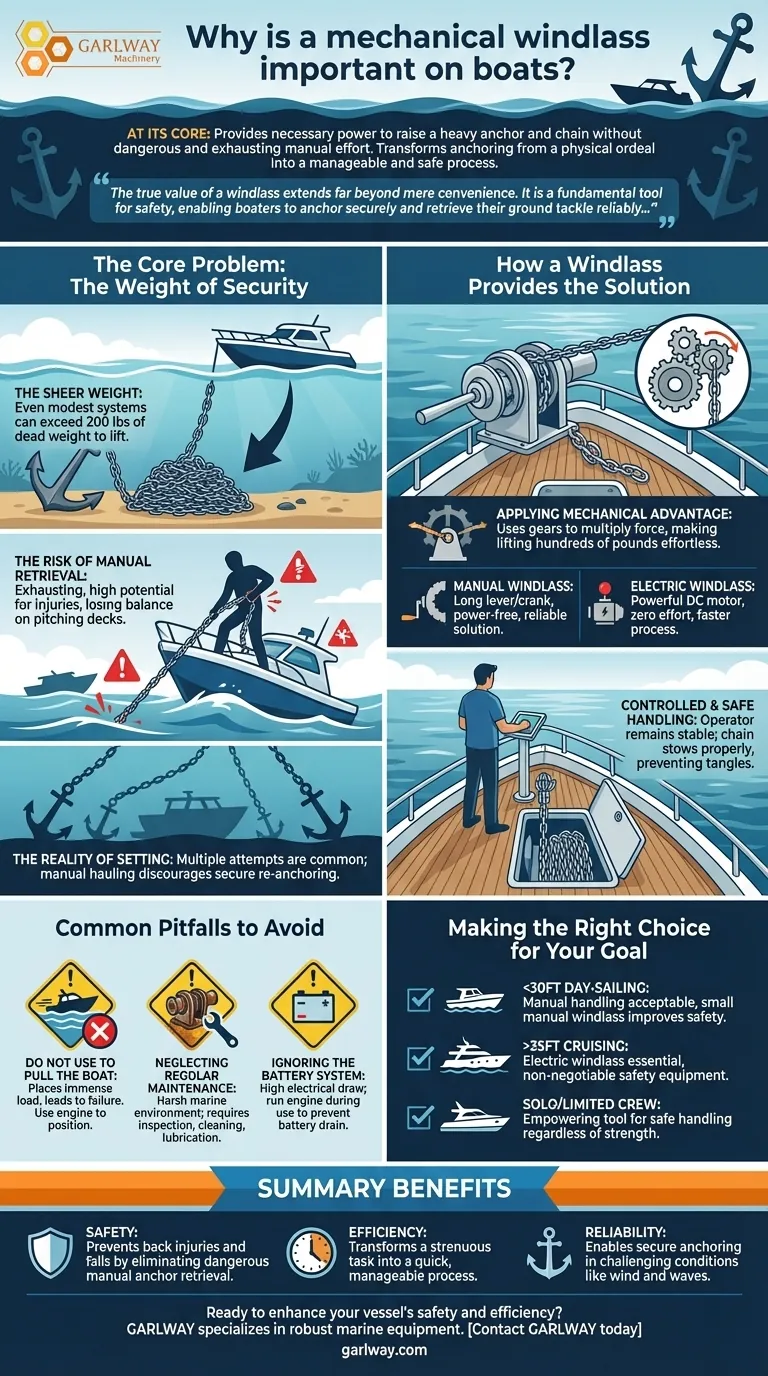
At its core, a mechanical windlass is important on boats because it provides the necessary power to raise a heavy anchor and chain without dangerous and exhausting manual effort. Whether operated with a handle or an electric motor, it transforms the critical task of anchoring from a physical ordeal into a manageable and safe process.
The true value of a windlass extends far beyond mere convenience. It is a fundamental tool for safety, enabling boaters to anchor securely and retrieve their ground tackle reliably, especially in challenging conditions or on larger vessels where manual retrieval is simply not feasible.
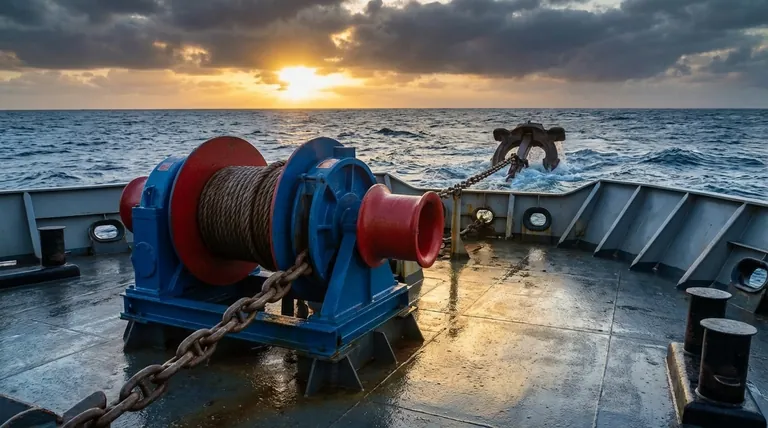
The Core Problem: The Weight of Security
To understand the role of a windlass, you must first appreciate the physics of the equipment it manages, known as ground tackle.
The Sheer Weight of Ground Tackle
An anchor system for even a modest 35-foot boat can consist of a 35-pound anchor and hundreds of feet of chain weighing over 1.5 pounds per foot. This means a boater may need to lift over 200 pounds of dead weight from the seabed.
The Risk of Manual Retrieval
Hauling this weight by hand, especially from a pitching deck in wind or waves, is not only exhausting but also a significant safety risk. It creates a high potential for back injuries, muscle strains, and losing your balance and falling overboard.
The Reality of Setting an Anchor
Anchoring is rarely successful on the first try. To ensure the anchor is securely dug into the seabed, it often requires multiple attempts. Manually hauling the anchor each time multiplies the physical strain and discourages skippers from re-anchoring until they are truly secure.
How a Windlass Provides the Solution
A windlass is a specialized winch that uses mechanical advantage to solve the problem of weight. It is not designed to pull the boat to the anchor, but rather to lift the anchor and chain once the boat has been motored over it.
Applying Mechanical Advantage
Both manual and electric windlasses use a series of gears to multiply the force applied. This allows a person to lift hundreds of pounds with either the turn of a handle or the simple push of a button.
Manual vs. Electric Operation
A manual windlass uses a long lever or crank for retrieval, offering a reliable, power-free solution. An electric windlass uses a powerful DC motor, reducing the physical effort to zero and making the process much faster.
Controlled and Safe Handling
Using a windlass allows the operator to remain in a stable, secure position in the bow. It ensures the chain is stowed properly in the anchor locker, preventing tangles and making the entire operation smoother and more predictable.
Common Pitfalls to Avoid
While invaluable, a windlass is a powerful piece of machinery that demands respect and proper use to avoid damage or failure.
Do Not Use It to Pull the Boat
A common mistake is using the windlass to pull the boat forward against wind or current. This places an immense load on the motor and gears, for which it was not designed, and can lead to burnout or mechanical failure. Always use the boat's engine to motor up to the anchor's position first.
Neglecting Regular Maintenance
The marine environment is harsh. A windlass has many moving parts, electrical connections, and seals that require regular inspection, cleaning, and lubrication to prevent corrosion and ensure it works when you need it most.
Ignoring the Battery System
An electric windlass is one of the highest-draw pieces of equipment on a boat. Operating it without the engine running can quickly drain a battery bank, leaving you without power for other critical systems.
Making the Right Choice for Your Goal
Ultimately, the need for a windlass is a function of your vessel size, your cruising style, and your crew's physical capabilities.
- If your primary focus is day-sailing a smaller boat (under 30 feet): Manually handling the anchor may be acceptable, but a small manual windlass can still significantly improve safety and ease.
- If your primary focus is cruising on a boat over 35 feet: An electric windlass should be considered essential, non-negotiable safety equipment for proper vessel management.
- If your primary focus is sailing solo or with limited crew strength: A windlass is an empowering tool that makes handling a larger boat safe and practical, regardless of your physical strength.
A windlass fundamentally transforms anchoring from a source of anxiety and strain into a controlled and reliable procedure, allowing you to boat with greater confidence and safety.
Summary Table:
| Benefit | Key Takeaway |
|---|---|
| Safety | Prevents back injuries and falls by eliminating dangerous manual anchor retrieval. |
| Efficiency | Transforms a strenuous task into a quick, manageable process, especially for larger boats. |
| Reliability | Enables secure anchoring and re-anchoring in challenging conditions like wind and waves. |
Ready to enhance your vessel's safety and efficiency?
GARLWAY specializes in robust marine equipment for commercial and recreational boaters. Our range of reliable winches and deck machinery can provide the power and durability your vessel needs for safe anchoring operations.
Contact GARLWAY today to find the perfect windlass solution for your boat!
Visual Guide
Related Products
- Electric Hoist Winch Boat Anchor Windlass for Marine Applications
- Quick Windlass Portable Winch for Truck and Boat Best Boat Winch
- Heavy Duty Electric Boat Winch Windlass Anchor
- Warn Winch Windlass Boat Trailer Winch
- 12000 lb Electric Boat Trailer Winch with Windlass Anchor Warn
People Also Ask
- How does an electric anchor winch work? Power, Safety, and Reliable Operation Explained
- What are the advantages of installing an electric anchor winch on a boat? Boost Safety & Ease for Boaters
- What are the operational differences between electric hoists and winches? A Guide to Safe Lifting vs. Pulling
- What are the main benefits of a boat anchor winch? Boost Safety & Efficiency for Your Vessel
- How does a boat anchor winch work? A Guide to Reliable Anchor Handling


