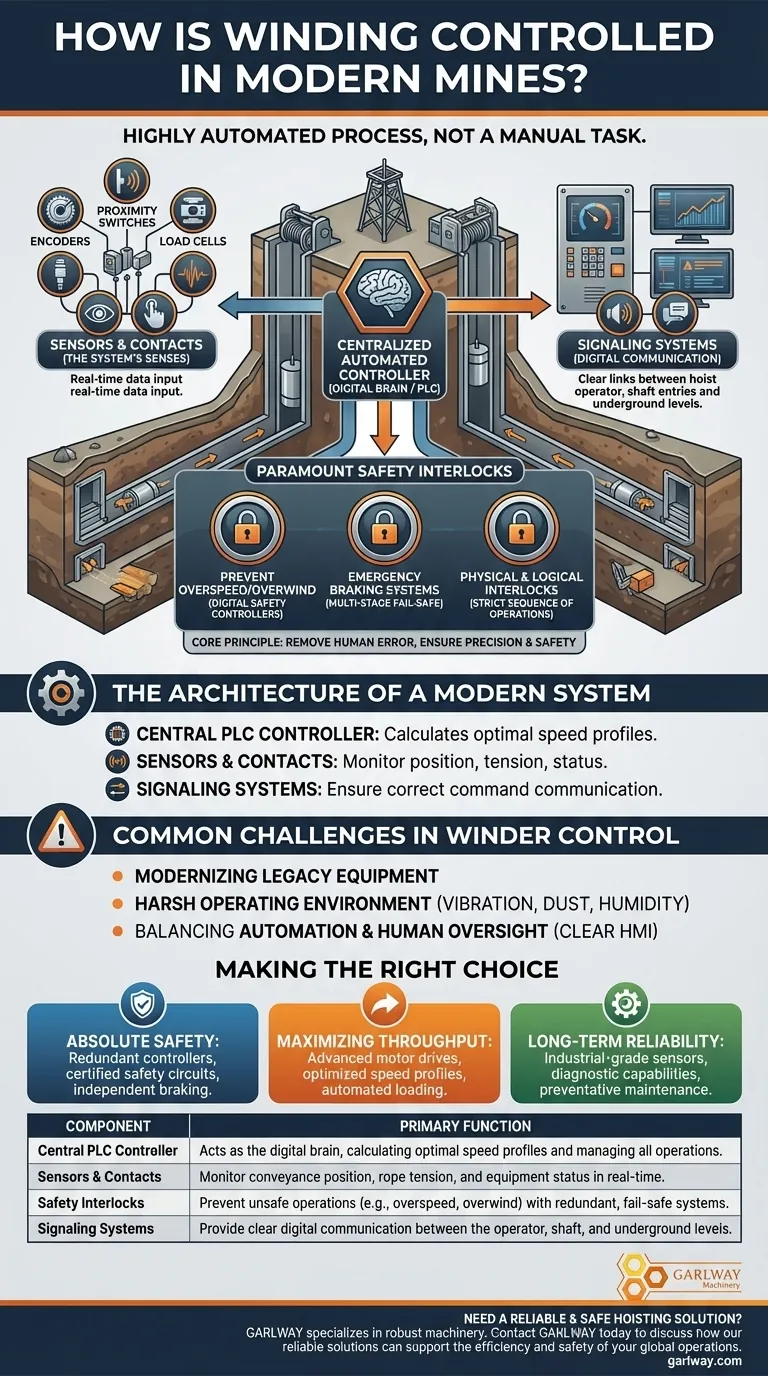
In modern mines, winding is not a manual task but a highly automated process governed by a sophisticated control system. This system uses a network of electrical sensors and contacts, integrated with clear acoustic and visual signaling, and underpinned by numerous safety devices to ensure the precise and safe movement of minerals and personnel.
The core principle of modern winder control is to remove the potential for human error from critical safety and operational functions. It achieves this by using a centralized automated controller that continuously processes real-time data to manage speed, position, and safety interlocks with extreme precision.
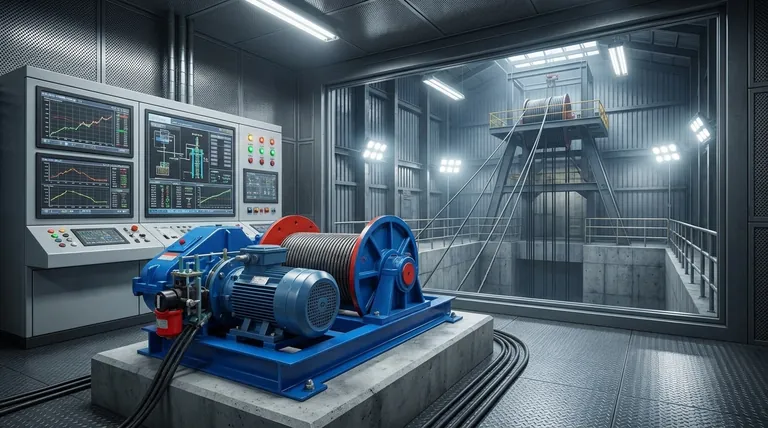
The Architecture of a Modern Winder Control System
A modern winder control system is not a single device but an integrated network of components working in unison. This system serves as the brain and nervous system for the entire hoisting operation.
The Central Controller: The Digital Brain
The heart of the system is typically a Programmable Logic Controller (PLC) or a similar industrial computer. This controller runs the complex logic that dictates the winder's every move.
It calculates optimal speed profiles for acceleration and deceleration to maximize efficiency and minimize mechanical stress on the ropes and equipment.
Sensors and Contacts: The System's Senses
The term "electrical contacts" refers to the vast array of sensors and limit switches that feed critical data to the PLC in real time.
These devices monitor everything from the exact position of the conveyance (the cage or skip) in the shaft to the tension on the ropes and the status of the loading and unloading equipment. Key sensors include encoders, proximity switches, and load cells.
Signaling Systems: Essential Communication
"Acoustic and visual signaling" has evolved beyond simple bells. Modern systems use digital communication protocols to provide a clear and unambiguous link between the hoist operator, shaft entry points, and different underground levels.
This ensures that every command is correctly sent, received, and acknowledged before any movement is initiated, forming a critical safety interlock in itself.
The Paramount Role of Safety Interlocks
Given the immense weight and speed involved in hoisting, safety is the absolute priority. The control system is designed with multiple layers of redundant and fail-safe devices to prevent catastrophic failure.
Preventing Overspeed and Overwind
A classic safety device is the Lilly controller, a mechanical governor that prevents the winder from exceeding its safe speed or traveling past its designated endpoints (overwinding). Modern systems replicate this function with highly reliable digital safety controllers that are even more precise.
Emergency Braking Systems
The control system continuously monitors all parameters. If any unsafe condition is detected—such as a loss of power, a signal fault, or a rope issue—it will automatically trigger a multi-stage emergency braking sequence to bring the hoist to a safe stop.
Physical and Logical Interlocks
The system enforces a strict sequence of operations. For example, the winder will be physically prevented from moving if a shaft gate is open or if the conveyance is not properly docked. These interlocks make it impossible to operate the system in an unsafe state.
Common Challenges in Winder Control
Implementing and maintaining these systems is not without its difficulties. Understanding these challenges is key to appreciating their complexity.
Modernizing Legacy Equipment
Many mines upgrade older, manually controlled winders with modern automated systems. Integrating new digital controls with aging mechanical infrastructure requires deep engineering expertise to ensure compatibility and reliability.
The Harsh Operating Environment
Mine shafts are hostile environments. The control system's sensors and communication hardware must be robust enough to withstand constant vibration, high humidity, dust, and temperature fluctuations without failing.
Balancing Automation and Human Oversight
While automation handles the critical functions, a human operator is still essential for oversight and handling non-standard situations. The Human-Machine Interface (HMI) must present complex information clearly and intuitively to empower the operator, not overwhelm them.
Making the Right Choice for Your Operation
The specific focus of a winder control system can be tuned based on the mine's primary goals.
- If your primary focus is absolute safety: Your investment should be in redundant controllers, certified safety circuits, and multiple independent braking systems.
- If your primary focus is maximizing throughput: Prioritize advanced motor drives and PLC logic that enable optimized speed profiles and automated loading/unloading sequences.
- If your primary focus is long-term reliability: Focus on industrial-grade, environmentally-sealed sensors and a control system with comprehensive diagnostic capabilities to guide preventative maintenance.
Ultimately, the winder control system is the invisible nerve center ensuring a mine's vertical artery operates with flawless precision and unwavering safety.
Summary Table:
| Component | Primary Function |
|---|---|
| Central PLC Controller | Acts as the digital brain, calculating optimal speed profiles and managing all operations. |
| Sensors & Contacts | Monitor conveyance position, rope tension, and equipment status in real-time. |
| Safety Interlocks | Prevent unsafe operations (e.g., overspeed, overwind) with redundant, fail-safe systems. |
| Signaling Systems | Provide clear digital communication between the operator, shaft, and underground levels. |
Need a reliable and safe hoisting solution for your mining operation?
GARLWAY specializes in robust construction and mining machinery. Our expertise in durable, high-performance equipment, including winches and concrete mixers, is built on the same principles of precision engineering and safety critical to modern winder control systems. We understand the demands of harsh industrial environments.
Contact GARLWAY today to discuss how our reliable solutions can support the efficiency and safety of your global operations.
Visual Guide
Related Products
People Also Ask
- What role does hydraulic fluid play in hydraulic winches? It's the Lifeblood of Your Heavy-Duty Pulling Power
- What vehicles commonly use hydraulic winches? For Industrial Trucks Needing Unmatched Power
- What are the features of hydraulic winches? Unmatched Power and Continuous Duty for Heavy Loads
- What preventive measures can be taken to avoid oil leakage in hydraulic winches? Ensure Long-Term Reliability
- What does 'power out' mean in a hydraulic winch? Achieve Absolute Control When Lowering Heavy Loads