
The primary benefit of a windlass with a chain gypsy is its ability to automatically handle both rope and chain without any manual intervention. This creates a seamless, efficient, and safer anchoring process by eliminating the need to manage the difficult transition between the two materials.
Manually switching from rope to chain during anchor retrieval is slow, strenuous, and a common point of failure. A chain gypsy automates this entire process, providing a critical upgrade in safety, speed, and equipment longevity for any vessel using a combination anchor rode.
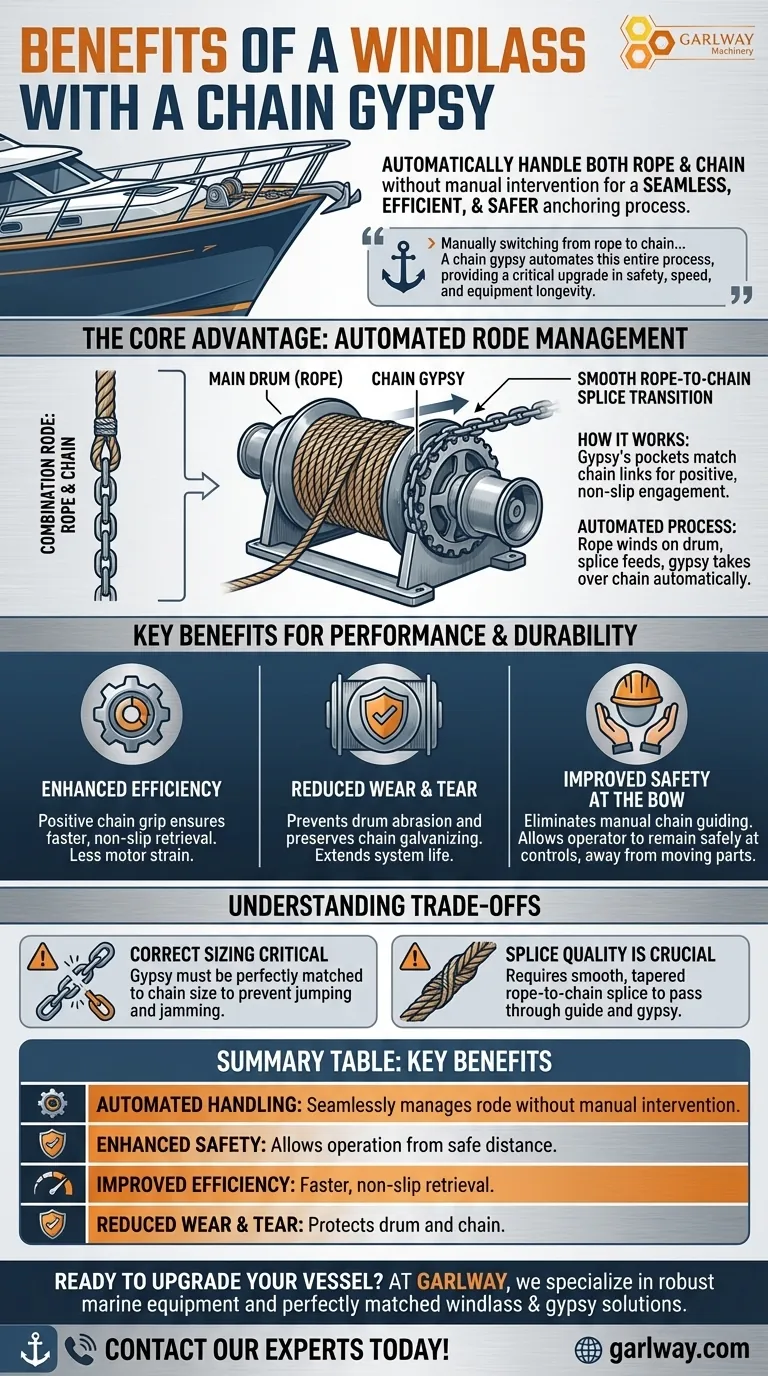
The Core Advantage: Automated Rode Management
A combination rode—using rope for most of its length and chain at the anchor end—is a popular setup. The gypsy is the specialized component that makes managing this combination effortless.
How the Gypsy Mechanism Works
A chain gypsy is a specially designed wheel on the windlass with precisely shaped pockets or teeth. These pockets are engineered to perfectly match the links of a specific size and type of anchor chain (e.g., 5/16" G4, 1/4" BBB).
This exact fit allows the gypsy to grip the chain securely, pulling it in link by link with positive, non-slip engagement.
Eliminating Manual Intervention
When retrieving the anchor, the rope portion winds onto the main drum of the windlass. As the rope-to-chain splice comes aboard, it is designed to feed smoothly through the guide and onto the gypsy.
The gypsy then takes over, automatically engaging the chain links and pulling the rest of the rode and the anchor aboard. The operator doesn't have to do anything.
Key Benefits for Performance and Durability
Automating the process delivers several tangible improvements over a simple drum winch that is not designed for chain.
Enhanced Efficiency
The positive grip of the gypsy on the chain is far more efficient than the friction-based pulling of a standard drum. There is no slippage, which means retrieval is faster and requires less power from the windlass motor.
Reduced Wear and Tear
Pulling anchor chain directly over a standard, smooth windlass drum causes significant abrasion. This quickly wears down the drum's surface and the chain's galvanizing, leading to premature failure of both.
The gypsy is a hardened component built specifically for this high-friction task, preserving the main drum and extending the life of your entire system.
Improved Safety at the Bow
Without a gypsy, a crew member must go to the bow to manually guide the chain onto the drum. This is one of the most dangerous jobs on a boat, creating a high risk of trapping fingers or hands in the machinery.
By automating the process, the gypsy allows the operator to remain safely at the helm or controls, away from moving parts.
Understanding the Trade-offs
While highly beneficial, a system with a chain gypsy requires correct setup to function properly.
The Need for Correct Sizing
The single most critical factor is that the gypsy must be perfectly matched to your chain. A mismatched gypsy and chain will cause the chain to jump, slip, and jam, which can damage the windlass and create a dangerous situation.
Splice Quality is Crucial
The system relies on a smooth, tapered rope-to-chain splice. A bulky or poorly executed splice will not pass through the windlass guide and gypsy, defeating the purpose of the automated system.
Making the Right Choice for Your Anchoring System
A chain gypsy is a significant feature, and whether it's right for you depends on your specific anchoring needs.
- If your primary focus is safety and convenience: A windlass with a combination gypsy is the definitive choice for managing a rope and chain rode.
- If you use an all-chain anchor rode: A gypsy is not just a benefit—it is an essential requirement for proper and secure anchor handling.
- If you have a very small boat with a light anchor: A drum-only winch may suffice, but you must accept the need for manual chain handling and the increased wear on your equipment.
Ultimately, a chain gypsy transforms your windlass from a simple power winch into a complete and reliable automated anchoring system.
Summary Table:
| Benefit | Description |
|---|---|
| Automated Handling | Seamlessly manages rope and chain rode without manual intervention. |
| Enhanced Safety | Reduces risk by allowing operation from a safe distance, away from moving parts. |
| Improved Efficiency | Positive chain grip ensures faster, non-slip retrieval with less motor strain. |
| Reduced Wear & Tear | Protects your windlass drum and chain from premature abrasion and damage. |
Ready to upgrade your vessel's anchoring system for maximum safety and efficiency?
At GARLWAY, we specialize in robust marine equipment, including powerful windlasses and perfectly matched chain gypsies designed for the demanding needs of commercial and recreational vessels. Our solutions ensure reliable, automated anchoring to protect your crew and equipment.
Contact our marine experts today to find the perfect windlass and gypsy combination for your boat!
Visual Guide
Related Products
- 12000 lb Electric Boat Trailer Winch with Windlass Anchor Warn
- Heavy Duty Electric Boat Winch Windlass Anchor
- Electric Hoist Winch Boat Anchor Windlass for Marine Applications
- Warn Winch Windlass Boat Trailer Winch
- Quick Windlass Portable Winch for Truck and Boat Best Boat Winch
People Also Ask
- How does an electric boat trailer winch differ from a manual one? Effort vs. Control Explained
- What size winch do I need for my boat? Get the Right Capacity for Safe Hauling
- How should a boat trailer winch be properly used? A Step-by-Step Guide for Safe Loading
- What maintenance steps are specific to boat trailer winches? Ensure Safety & Reliability at the Ramp
- How strong of a winch do I need for my boat? Get the Right Pulling Power for Trailering & Anchoring


