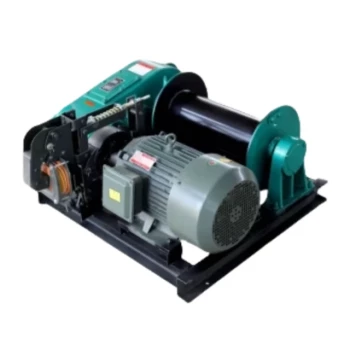
At its core, a hydraulic winch is chosen for vehicles that require immense, sustained pulling power and often already possess a hydraulic system. They are most common on industrial and commercial vehicles such as tow trucks, cranes, rescue vehicles, fire trucks, garbage trucks, and forestry or mining equipment, as well as heavily modified off-road vehicles.
The decision to use a hydraulic winch is driven by a vehicle's primary function. If a vehicle's engine is already powering a hydraulic pump for other tasks, adding a winch to that system is a logical way to achieve unparalleled power and duty cycle.
The Common Denominator: The Power Source
The key to understanding where hydraulic winches are used is to look at the vehicle's engine and transmission. Unlike electric winches that run off the battery, hydraulic winches tap into a much more robust power source.
Tapping into an Existing System
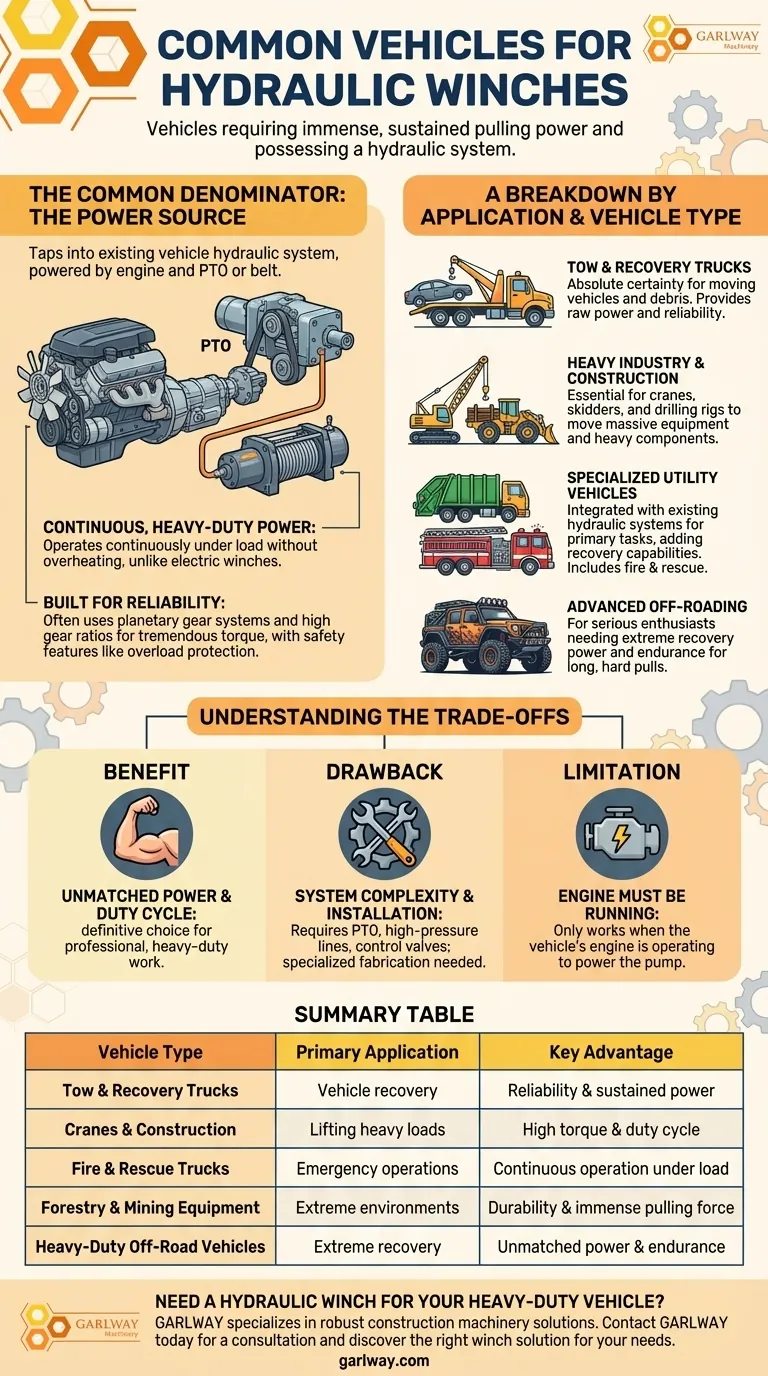
Most vehicles suited for hydraulic winches already have a hydraulic pump. This pump is typically powered by the vehicle's transmission through a Power Take-Off (PTO) unit or a belt driven directly by the engine.
This existing infrastructure makes adding a hydraulic winch an efficient, integrated solution for providing immense mechanical force.
The Need for Continuous, Heavy-Duty Power
Electric winches have a limited duty cycle; they can overheat if run for too long under a heavy load, requiring a cool-down period. This is because they place a massive strain on the vehicle's battery and electrical system.
Hydraulic winches, powered by the running engine, can operate continuously under heavy load without the risk of overheating or draining a battery. This is non-negotiable in commercial recovery and industrial settings.
Built for Reliability Under Load
These winches often use a planetary gear system with a high gear ratio. This design provides tremendous torque and also helps prevent the load from dangerously "backhauling" or slipping when the power is disengaged.
Safety features like overload protection and emergency stop systems are also common, reflecting their use in high-stakes professional environments.
A Breakdown by Application and Vehicle Type
Different industries leverage the power of hydraulic winches for specific, demanding tasks. The vehicle is simply the platform for the work that needs to be done.
Towing and Recovery
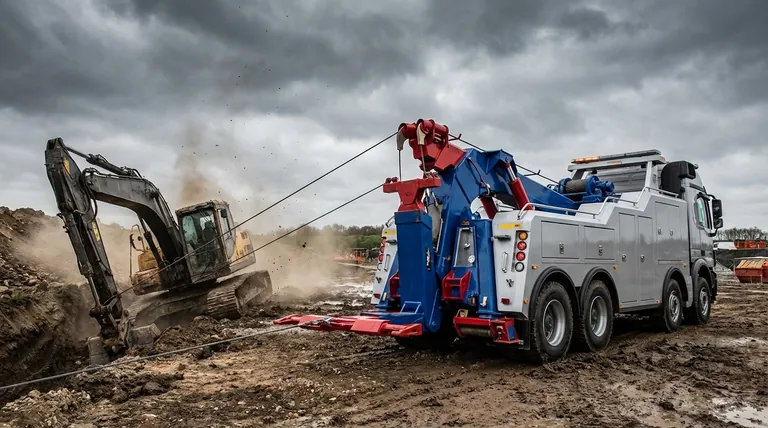
Vehicles like tow trucks, rescue trucks, and fire trucks need absolute certainty when moving other vehicles or heavy debris. A hydraulic winch provides the raw power and reliability required for safe and effective recovery operations.
Heavy Industry and Construction
In sectors like construction, forestry, mining, and oil and gas, hydraulic winches are essential. They are mounted on cranes, logging skidders, and drilling rigs to move massive equipment, pull timber, or manage heavy components.
Specialized Utility Vehicles
Utility trucks, such as garbage trucks and vacuum trucks, use hydraulics to power their primary equipment (like compactors or pumps). Adding a winch to this system is a straightforward way to add vehicle or equipment recovery capabilities.
Advanced Off-Roading
While most recreational off-roaders use electric winches, serious enthusiasts with highly modified vehicles sometimes upgrade. For extreme recovery situations requiring long, hard pulls, a hydraulic winch offers a significant advantage in power and endurance.
Understanding the Trade-offs
Choosing a hydraulic winch involves clear benefits but also specific requirements that make it unsuitable for many applications.
The Benefit: Unmatched Power and Duty Cycle
The primary advantage is clear: a hydraulic winch can pull harder and longer than any comparable electric winch. It is the definitive choice for professional, heavy-duty work.
The Drawback: System Complexity and Installation
Installing a hydraulic winch is far more complex than an electric one. It requires tapping into the power steering pump or installing a PTO, running high-pressure hydraulic lines, and mounting a control valve. This is often a job for a specialized fabricator.
The Limitation: The Engine Must Be Running
A hydraulic winch only works when the vehicle's engine is running to power the pump. An electric winch can still operate (for a limited time) off the battery, even if the engine is stalled, which can be an advantage in certain recovery scenarios.
Making the Right Choice for Your Application
Selecting the right winch means matching the technology to the task and the vehicle.
- If your primary focus is commercial recovery or industrial work: A hydraulic winch is the industry standard for its power and reliability.
- If your primary focus is extreme, competition-level off-roading: A hydraulic winch is a significant performance upgrade for those who need maximum pulling power and endurance.
- If your primary focus is occasional self-recovery for a standard 4x4 or truck: An electric winch is almost always the more practical, cost-effective, and easier-to-install solution.
Ultimately, the choice is dictated by the fundamental power system of the vehicle and the demands of the job it is built to perform.
Summary Table:
| Vehicle Type | Primary Application | Key Advantage |
|---|---|---|
| Tow & Recovery Trucks | Vehicle recovery | Reliability & sustained power |
| Cranes & Construction | Lifting heavy loads | High torque & duty cycle |
| Fire & Rescue Trucks | Emergency operations | Continuous operation under load |
| Forestry & Mining Equipment | Extreme environments | Durability & immense pulling force |
| Heavy-Duty Off-Road Vehicles | Extreme recovery | Unmatched power & endurance |
Need a Hydraulic Winch for Your Heavy-Duty Vehicle?
GARLWAY specializes in providing robust construction machinery solutions for companies and contractors globally. If your operations in towing, construction, or heavy industry demand the reliability and continuous power of a hydraulic winch, our expertise is your advantage.
We offer a range of durable winches, concrete mixers, and batching plants built for professional use. Let us help you equip your vehicle with the right tool for the job.
Contact GARLWAY today for a consultation and discover the right winch solution for your needs.
Visual Guide
Related Products
- Hydraulic Winding Engine Harbor Freight Winch
- Electric and Hydraulic Winch for Heavy Duty Applications
- Electric Hoist Winch Boat Anchor Windlass for Marine Applications
- Electric 120V Boat Winch by Badlands
- 12000 lb Electric Boat Trailer Winch with Windlass Anchor Warn
People Also Ask
- What role does hydraulic fluid play in hydraulic winches? It's the Lifeblood of Your Heavy-Duty Pulling Power
- What are the features of hydraulic winches? Unmatched Power and Continuous Duty for Heavy Loads
- What preventive measures can be taken to avoid oil leakage in hydraulic winches? Ensure Long-Term Reliability
- What does 'power out' mean in a hydraulic winch? Achieve Absolute Control When Lowering Heavy Loads
- How do hydraulic winches assist in agriculture and farming? Boost Power & Reliability for Your Farm