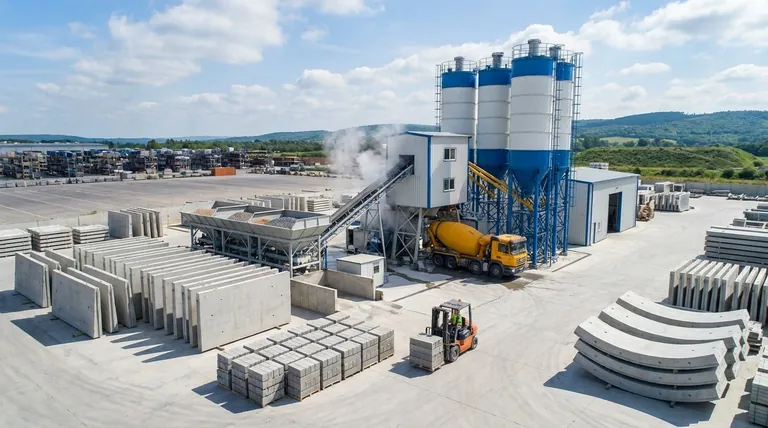
At its core, a precast concrete batching plant is designed to produce the high-quality, precisely engineered concrete mix used to manufacture a wide variety of structural and architectural components. Key products include foundational elements like pipe piles, structural components like precast panels and bridge segments, and standard units like concrete blocks.
The primary function of a precast concrete batching plant is not to create the final product, but to produce a perfectly consistent and durable concrete mix in a controlled factory setting. This precision is what enables the high-quality, off-site manufacturing of complex components.
What a Precast Batching Plant Actually Does
The Heart of the Operation: The Mixer
A precast batching plant is fundamentally a highly automated factory for making concrete. Its central component is the mixer, which blends cement, water, sand, and aggregates into a perfectly homogeneous mixture.
Ensuring Absolute Consistency
The plant's automated control system is what sets it apart. It precisely measures all raw materials, a process known as batching. Advanced systems even monitor the moisture content of the sand in real-time and automatically adjust the water levels to guarantee a consistent mix every time.
From Raw Material to Engineered Mix
The entire process is automated, from feeding aggregates and cement from silos into the batchers to conveying the final mix for transport. This ensures high productivity and eliminates the inconsistencies common with on-site mixing.
The Range of Precast Components Produced
Foundational and Infrastructure Elements
The high-strength concrete produced is ideal for critical infrastructure. This includes large-scale products like pipe piles for deep foundations and massive segments for constructing bridges.
Structural and Architectural Panels
One of the most common applications is the creation of precast panels. These can be used for building walls, facades, and other structural elements, allowing for rapid assembly on the construction site.
Standardized Building Units
The plant is also perfectly suited for mass-producing smaller, uniform items. This includes common materials like high-quality concrete blocks and pavers used in a vast range of building projects.
Understanding the Trade-offs
Advantage: Quality and Speed
Manufacturing components in a controlled factory environment leads to higher-quality, more durable products. This process also allows site preparation and component manufacturing to happen in parallel, dramatically accelerating the overall construction speed.
Advantage: Safety and Cost-Effectiveness
A factory setting is inherently safer than a dynamic construction site, reducing risks for workers. Over the long term, the efficiency, reduced waste, and faster project timelines can lead to lower overall costs.
Limitation: Initial Investment and Logistics
Precast plants represent a significant capital investment. Furthermore, transporting large, heavy precast components from the factory to the construction site can be a major logistical and financial challenge.
Limitation: Design Flexibility
The precast method thrives on standardization and repetition. Once molds are created and production begins, making on-the-fly design changes is far more difficult and costly than with traditional cast-in-place concrete.
Making the Right Choice for Your Project
Choosing a precast approach is a strategic decision based on project priorities.
- If your primary focus is speed and scalability: The ability to mass-produce components off-site while foundation work happens concurrently makes this method unparalleled for rapid construction.
- If your primary focus is quality control and consistency: The factory-controlled mixing and curing process provides a level of precision and material integrity that is difficult to achieve on a live construction site.
- If your primary focus is unique, on-site design adjustments: Traditional cast-in-place concrete may offer more flexibility for projects that require frequent or last-minute modifications.
Ultimately, a precast concrete batching plant is the engine that drives a modern, efficient approach to construction built on precision and reliability.
Summary Table:
| Component Type | Key Products |
|---|---|
| Foundational Elements | Pipe piles, bridge segments |
| Structural & Architectural | Precast panels, wall facades |
| Standardized Units | Concrete blocks, pavers |
GARLWAY specializes in construction machinery, offering reliable concrete batching plants, mixers, and winches for construction companies and contractors globally. Let us help you achieve precise, high-quality concrete production for your next project—contact our experts today to discuss your specific needs!
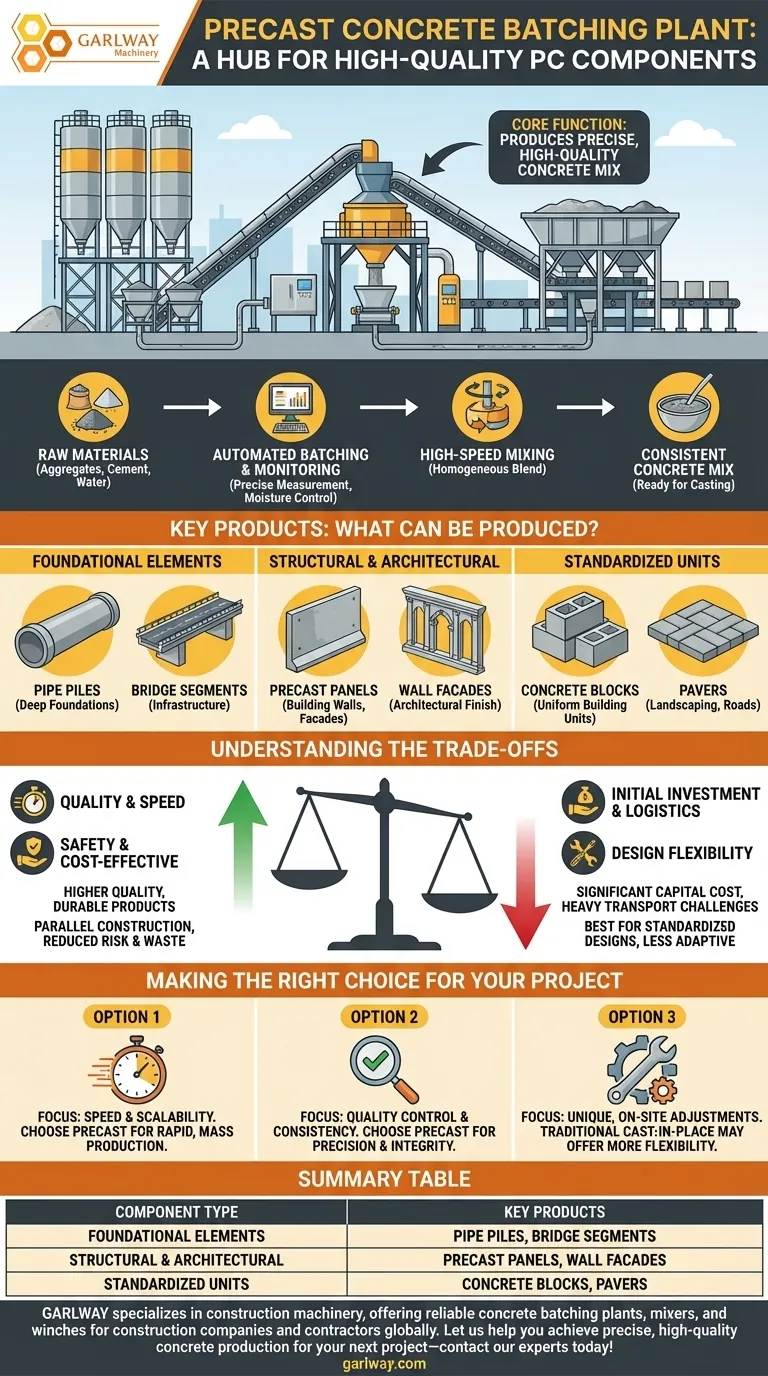
Visual Guide
Related Products
- HZS120 Ready Mix Concrete Batching Plant Commercial Mud Cement Mixer
- HZS35 Small Cement Concrete Mixing Batch Plant
- HZS180 Ready Mix Concrete Plant for Foundations with Sand and Cement
- HZS75 Concrete Batching Plant Cement Mixer Price Concrete Mixer Bunnings Mixing Plant
- Commercial Electric Concrete Mixer Machine HZS 50 Small Batch Plant for Sale
People Also Ask
- What is a ready mix concrete batching plant? The Engine of Modern Construction
- What is the name of the machine used in ready mix? Unpacking the Complete Concrete System
- What is the core component of a concrete batching plant? The Mixer Unit Defines Your Concrete Quality
- What are the types of concrete mixers used in batching plants? Choose the Right Mixer for Your Project
- What are the advantages and disadvantages of concrete batching plants? Maximize Quality & Efficiency