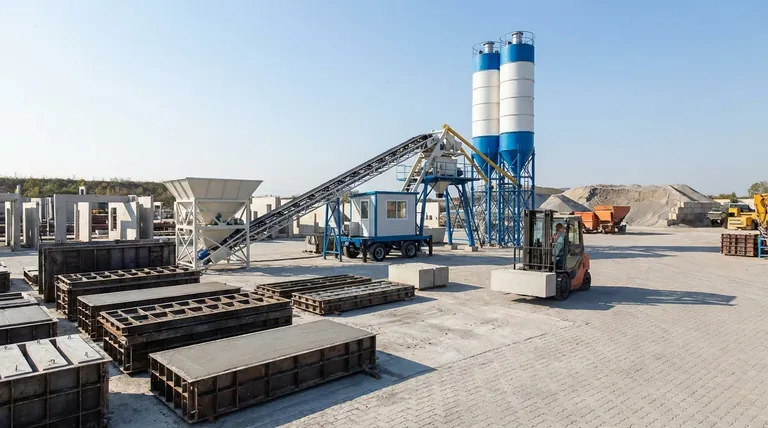
At its core, a small precast concrete batching plant is defined by its compact design, efficient production capacity, and sophisticated automation. These plants utilize a hopper-based loading system to minimize their physical footprint, making them ideal for sites with limited space while still delivering high-quality, consistent concrete mixes for precast component manufacturing.
The true value of a small precast plant isn't just its size, but its ability to bring factory-level precision and quality control directly to a project site or precast yard, streamlining the production of standardized concrete elements.
Core Design and Operational Features
The specific features of these plants are engineered to balance space, efficiency, and quality, setting them apart from large-scale commercial ready-mix operations.
Compact Footprint by Design
A defining characteristic is the use of a hopper to load aggregates like sand and stone into the mixer. This vertical loading method significantly reduces the ground area required compared to the sprawling conveyor belt systems used in larger plants.
This small footprint makes it a highly practical solution for medium-sized construction sites, bridge projects, or dedicated precast production firms where space is a premium.
Surprising Productivity
While labeled "small," these plants are designed for high productivity relative to their size. They are optimized for the consistent, repeatable batching required for precast components rather than the massive raw volume of a commercial supplier.
Their efficiency ensures a steady output of concrete, enabling a guaranteed construction speed for projects relying on precast elements.
Advanced Automation and Control
Most modern small precast plants can operate in both fully automatic and manual modes, providing flexibility for operators.
The automatic system is the key to quality. It often includes sensors for real-time monitoring of aggregate moisture content, allowing the system to automatically adjust water levels and other ingredients to ensure every batch meets precise specifications.
The Impact on Precast Production Quality
The features of the plant directly translate into higher quality precast products and more efficient project timelines. This controlled environment is the primary reason for investing in such a system.
Achieving Consistent Mix Quality
The automated control system ensures uniform mixing across every single batch. This consistency is critical for precast concrete (PC) components, where variations in strength or finish can lead to rejection and project delays.
This level of precision is nearly impossible to achieve with manual or less sophisticated mixing methods.
Versatility in Concrete Production
These plants are not limited to a single mix design. They are engineered to produce various kinds of concrete, from standard plastic concrete to more robust, thick concrete mixtures.
This adaptability allows a single plant to produce a wide range of PC components, including pipe piles, precast panels, concrete blocks, and even elements for bridges.
Understanding the Trade-offs
While highly effective, it is crucial to understand the intended application and limitations of a small precast plant.
Volume is Not the Primary Goal
The primary trade-off is output volume. A small plant cannot compete with the sheer cubic meters per hour produced by a large-scale commercial ready-mix concrete (RMC) plant designed to dispatch a continuous fleet of mixer trucks.
Optimized for Batching, Not Continuous Pour
These plants excel at producing discrete, high-quality batches for molds and forms. They are less suited for applications requiring massive, uninterrupted concrete pours, which are better served by dedicated RMC facilities.
Upfront Investment
The sophisticated automation and reliable engineering represent a significant capital investment compared to basic on-site mixing. However, this cost is often justified by reduced labor, higher quality products, and fewer material-related defects over the project's life.
Making the Right Choice for Your Operation
To determine if this is the correct solution, align the plant's capabilities with your primary project goal.
- If your primary focus is producing high-quality, standardized components (e.g., panels, blocks, piles): The plant's precision and consistency are perfectly suited for this work.
- If your primary focus is operating on a space-constrained or medium-sized project site: The small footprint and self-contained nature are its greatest advantages.
- If your primary focus is supplying the highest possible volume of concrete for large-scale civil works: A larger, commercial-grade ready-mix plant is the more appropriate choice.
Ultimately, choosing a small precast batching plant is an investment in quality control and production efficiency for specialized applications.
Summary Table:
| Feature | Benefit |
|---|---|
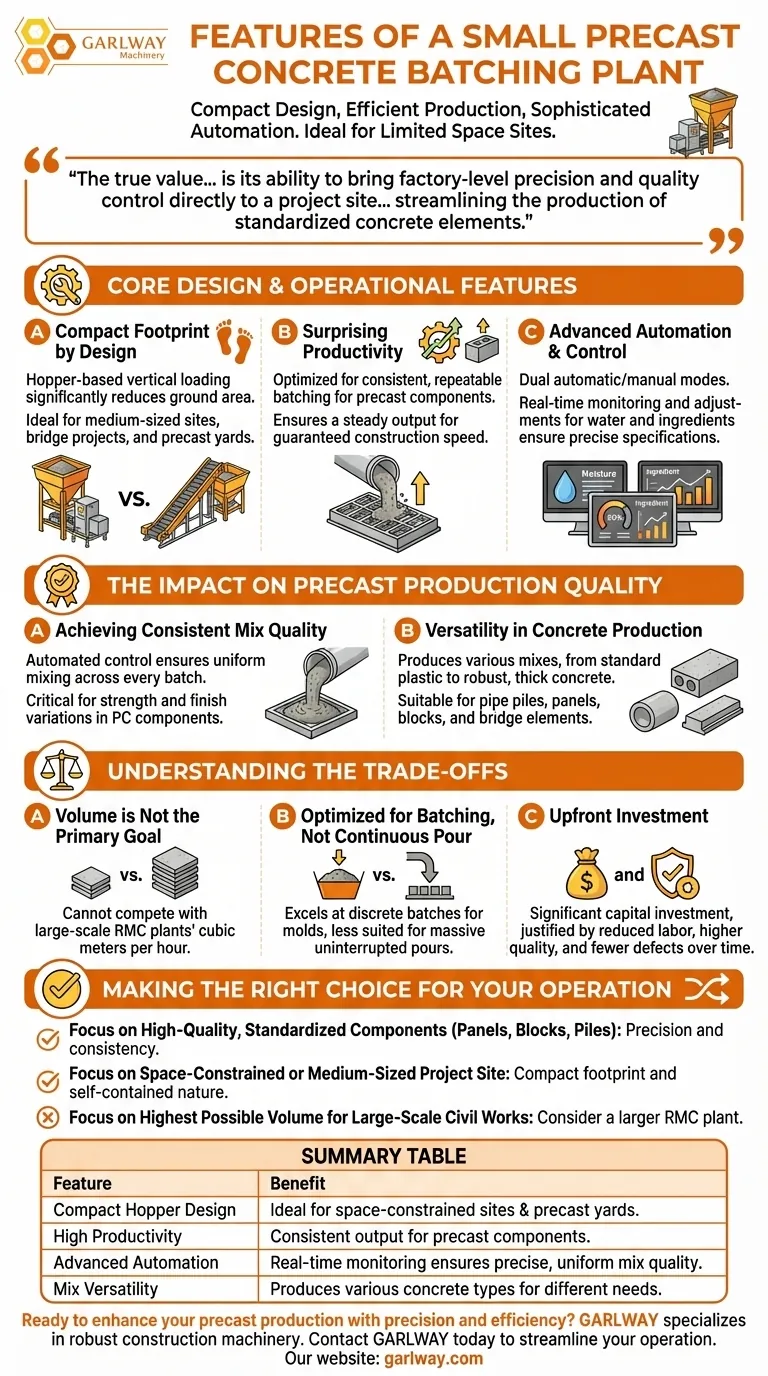
| Compact Hopper Design | Ideal for space-constrained sites and precast yards. |
| High Productivity | Consistent output for precast components like panels and piles. |
| Advanced Automation | Real-time monitoring ensures precise, uniform mix quality. |
| Mix Versatility | Produces various concrete types for different project needs. |
Ready to enhance your precast production with precision and efficiency?
GARLWAY specializes in engineering robust construction machinery, including concrete batching plants, winches, and mixers, tailored for construction companies and contractors worldwide. Our small precast plants are designed to deliver the factory-level quality control and compact efficiency your projects demand.
Contact GARLWAY today to discuss how our solutions can streamline your operation and ensure consistent, high-quality results.
Visual Guide
Related Products
- HZS35 Small Cement Concrete Mixing Batch Plant
- Commercial Electric Concrete Mixer Machine HZS 50 Small Batch Plant for Sale
- HZS120 Ready Mix Concrete Batching Plant Commercial Mud Cement Mixer
- HZS180 Ready Mix Concrete Plant for Foundations with Sand and Cement
- HZS75 Concrete Batching Plant Cement Mixer Price Concrete Mixer Bunnings Mixing Plant
People Also Ask
- Why buy concrete batch plant parts only from the manufacturer? Protect Your Investment and Maximize Uptime
- Why is proper maintenance important for a concrete batch mix plant? Maximize Uptime & Profitability
- What is the advantage of a mobile concrete batching plant? Achieve On-Site Production & Total Control
- What are the advantages and disadvantages of concrete batching plants? Maximize Quality & Efficiency
- What are the two methods of material charging in a concrete mixing station? Single vs. Multiple Charging Explained