To effectively maintain the technical condition of a commercial concrete plant, you must move beyond simple repairs and implement a holistic system. This involves establishing rigorous inspection schedules, prioritizing preventive maintenance over reactive fixes, managing repairs efficiently, and ensuring full compliance with environmental standards.
The core shift is from a reactive "fix it when it breaks" mindset to a proactive, systematic maintenance program. This approach is not a cost center; it is a fundamental investment in operational uptime, product quality, safety, and long-term profitability.
The Foundation: A Systematic Maintenance Program
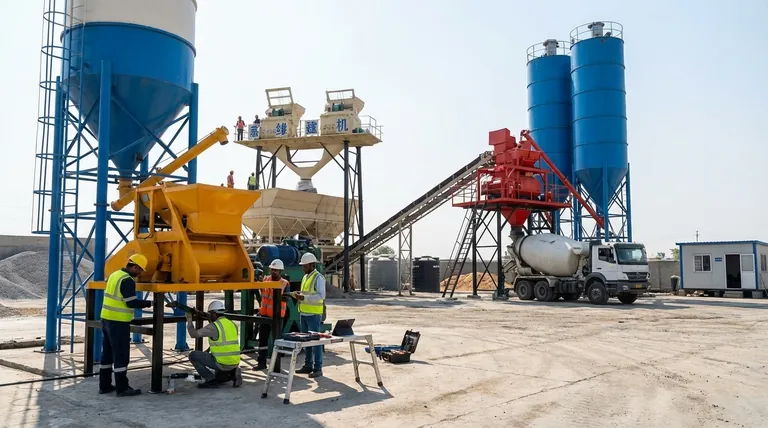
A well-running plant is not the result of luck, but of a deliberate and structured approach to equipment care. The goal is to identify and address small issues before they escalate into costly failures that halt production.
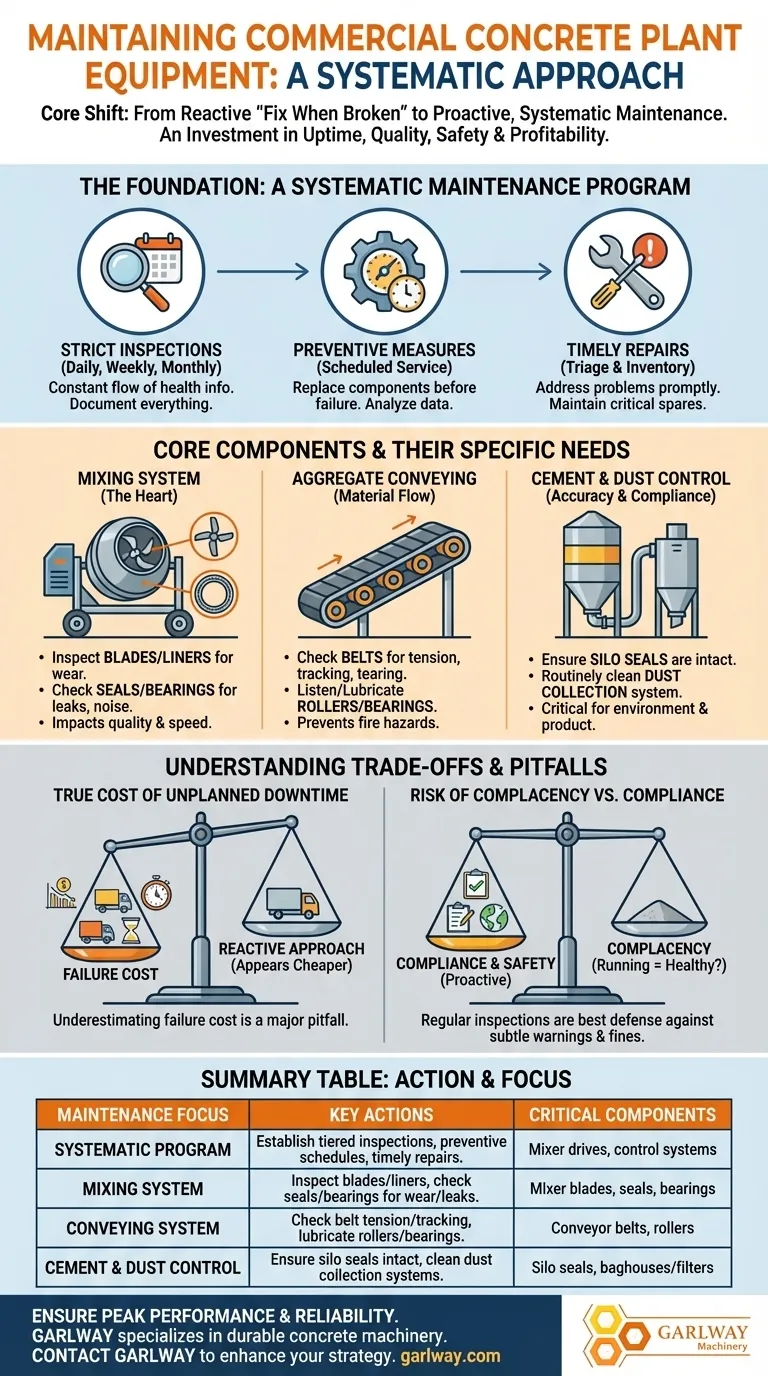
Establish Strict Inspection Systems
Your first line of defense is consistent inspection. This process turns unknown risks into manageable tasks by creating a constant flow of information about the equipment's health.
Create a tiered inspection schedule: daily (visual checks by operators), weekly (more detailed mechanical checks), and monthly/quarterly (in-depth inspections of critical systems).
Document everything. Use checklists to ensure consistency and create a historical record that can reveal recurring problems and wear patterns.
Implement Preventive Measures
Preventive maintenance is about replacing or servicing components based on a schedule, not waiting for them to fail. This is the key to maximizing uptime.
Follow the manufacturer's recommended service intervals for key components like motors, gearboxes, and compressors.
Analyze your own operational data. If a specific type of bearing or belt consistently fails after a certain number of hours, schedule its replacement before it reaches that point.
The Importance of Timely Repairs
When a problem is identified, it must be addressed promptly. Delaying minor repairs is a common mistake that leads to more significant and expensive secondary damage.
Triage repairs based on urgency. A worn mixer blade (affects quality) and a failing conveyor bearing (can stop production) require immediate attention, while a cosmetic issue can be scheduled later.
Maintain a well-organized inventory of critical spare parts. Waiting for a part to be shipped is an unacceptable cause of downtime for any essential component.
Core Components and Their Specific Needs
While the principles of maintenance are universal, their application varies across the plant's different systems. Each area has unique failure points that demand specific attention.
The Mixing System
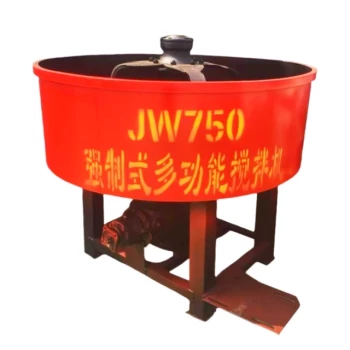
The mixer is the heart of your plant. Its condition directly impacts concrete quality and production speed.
Regularly inspect mixer blades and liners for wear. Worn components lead to inefficient mixing, longer batch times, and inconsistent product.
Check seals and bearings for leaks or unusual noise. A failed seal can lead to catastrophic damage to the mixer's drive system.
The Aggregate Conveying System
The system that moves aggregates from stockpiles to the mixer is a common source of unplanned shutdowns.
Check conveyor belts for proper tension, tracking, and signs of tearing. A mistracked belt can quickly destroy itself and damage the surrounding structure.
Listen to and lubricate rollers and bearings. A seized roller can not only stop the belt but also presents a significant fire hazard due to friction.
The Cement and Dust Control Systems
These systems are critical for product accuracy and environmental compliance.
Ensure silo seals are intact to prevent moisture contamination, which can ruin an entire silo of cement.
Routinely inspect and clean the dust collection system, including baghouses or filters. A clogged system is a safety hazard and a primary cause of environmental citations.
Understanding the Trade-offs and Pitfalls
An effective maintenance strategy is not about spending the most money; it's about making intelligent decisions that balance cost, risk, and operational necessity.
The True Cost of Unplanned Downtime
The most significant pitfall is underestimating the cost of failure. A reactive "run-to-failure" approach appears cheaper on paper until a breakdown occurs.
The cost of a failure is not just the replacement part. It includes lost production, idle trucks and drivers, potential damage to your business reputation, and overtime pay for emergency repairs.
The Risk of Complacency
Never assume that because a machine is running, it is in good health. Many critical failures, especially in electrical systems and bearings, provide subtle warnings before they become catastrophic.
Regular inspections and a culture of proactive reporting from operators are the best defense against complacency.
Environmental Compliance as a Maintenance Driver
Failing to maintain equipment can lead to violations of environmental regulations, resulting in heavy fines and forced shutdowns.
Dust emissions from worn seals or broken collectors, and spills from leaking hydraulic lines are direct consequences of deferred maintenance. Good maintenance is good compliance.
How to Apply This to Your Operation
The right maintenance strategy depends on your specific operational priorities. Use these principles to guide your focus.
- If your primary focus is maximizing uptime: Prioritize a rigorous preventive maintenance schedule for critical "single point of failure" components like mixer drives and main conveyor belts.
- If your primary focus is consistent product quality: Focus on the regular inspection, cleaning, and calibration of scales, meters, and mixer components.
- If your primary focus is safety and compliance: Ensure regular checks of all safety guards, emergency stops, and dust collection systems are central to your program.
Ultimately, a well-maintained concrete plant is the foundation of a reliable, safe, and profitable business.
Summary Table:
| Maintenance Focus | Key Actions | Critical Components |
|---|---|---|
| Systematic Program | Establish tiered inspections, preventive schedules, and timely repairs. | Mixer drives, control systems |
| Mixing System | Inspect blades/liners, check seals and bearings for wear and leaks. | Mixer blades, seals, bearings |
| Conveying System | Check belt tension/tracking, lubricate rollers and bearings. | Conveyor belts, rollers |
| Cement & Dust Control | Ensure silo seals are intact, clean dust collection systems. | Silo seals, baghouses/filters |
Ensure your concrete plant operates at peak performance and reliability. GARLWAY specializes in providing durable construction machinery, including concrete batching plants, mixers, and winches, for construction companies and contractors globally. Our equipment is designed for longevity and efficiency, backed by expert support. Contact GARLWAY today to discuss how our solutions can enhance your maintenance strategy and boost your profitability.
Visual Guide
Related Products
- Commercial Electric Concrete Mixer Machine HZS 50 Small Batch Plant for Sale
- HZS120 Ready Mix Concrete Batching Plant Commercial Mud Cement Mixer
- HZS35 Small Cement Concrete Mixing Batch Plant
- HZS180 Ready Mix Concrete Plant for Foundations with Sand and Cement
- HZS75 Concrete Batching Plant Cement Mixer Price Concrete Mixer Bunnings Mixing Plant
People Also Ask
- What are the types of concrete mixers used in batching plants? Choose the Right Mixer for Your Project
- What is the core component of a concrete batching plant? The Mixer Unit Defines Your Concrete Quality
- Why is proper maintenance important for a concrete batch mix plant? Maximize Uptime & Profitability
- Why buy concrete batch plant parts only from the manufacturer? Protect Your Investment and Maximize Uptime
- What are the two main types of concrete batch mixers? Choose the Right Mixer for Your Project