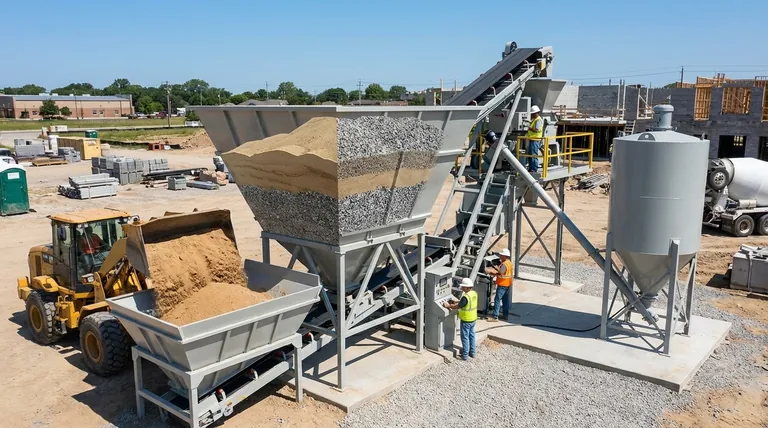
For small concrete batching plants, the standard approach for weighing aggregates like sand and stone is the superimposed weighing method. This technique involves adding each aggregate one after the other into a single weighing hopper, accumulating the total weight before discharging the materials into the mixer.
The choice of a weighing method for a concrete plant is a critical design decision. For smaller operations, the superimposed method represents a deliberate balance, prioritizing cost-effectiveness and a compact footprint over the high-speed, parallel weighing systems found in larger plants.
The Core Principle: Superimposed vs. Separate Weighing
The weighing system is the heart of a batching plant, as its accuracy directly determines the quality and consistency of the final concrete product. The fundamental choice is between weighing materials together or separately.
What is Superimposed Weighing?
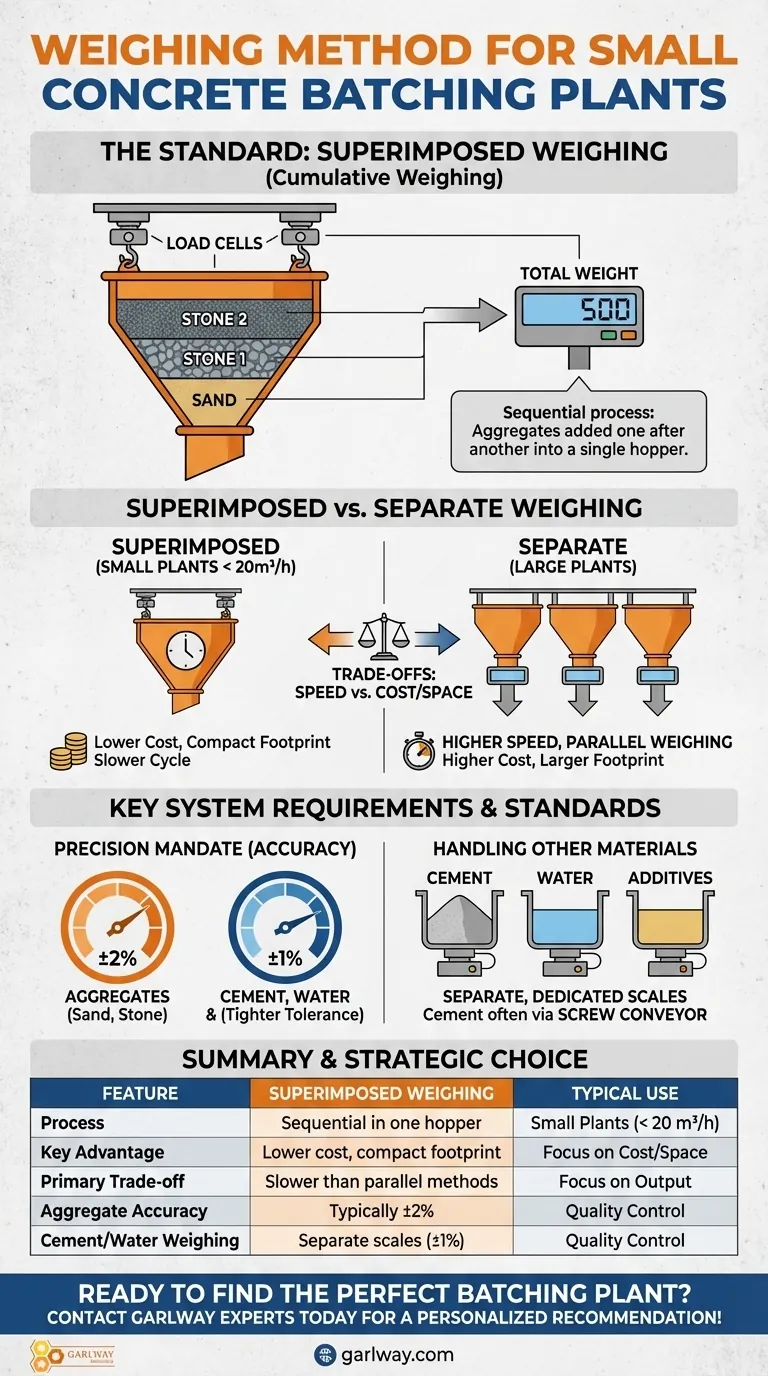
Superimposed weighing, also known as cumulative weighing, is a sequential process. All aggregates required for a batch are weighed in a single hopper that rests on a set of load cells.
First, sand is fed into the hopper until the target weight is reached. Then, without emptying the hopper, the first type of stone is added on top until the new, combined target weight is met, and so on for all aggregates.
Why This Method Suits Small Plants
This method is dominant in plants producing under 20 cubic meters per hour for several key reasons.
Its design is mechanically simpler, requiring only one set of weigh hoppers and load cells for all aggregates. This directly translates to a lower initial investment cost and a smaller physical footprint.
How Other Materials Are Handled
It is crucial to understand that the superimposed method is typically used only for aggregates.
Materials like cement, water, and chemical additives are weighed in their own separate, dedicated scales. This is done to meet the much stricter accuracy requirements for these critical components. Cement is often delivered to its weigh hopper via a screw conveyor due to its simple, reliable, and cost-effective design.
Key System Requirements and Standards
Regardless of the method used, any professional weighing system must meet established performance criteria to ensure quality concrete production.
The Mandate for Precision
Accuracy is non-negotiable. The acceptable error tolerances in batching are strictly defined by construction standards.
A typical precision requirement is an error of no more than ±2% for coarse and fine aggregates. For cement and water, the tolerance is much tighter at ±1%.
The Need for Speed
The entire weighing cycle must be completed quickly. The weighing system's capacity must outpace the mixer's demand for materials to ensure the mixer is never waiting idle, which would cripple the plant's overall output.
Flexibility for Different Mixes
Modern projects require various grades of concrete. The weighing system must allow operators to quickly and easily adjust the target weights for each material to produce different batch formulas on demand.
Understanding the Trade-offs
Choosing the superimposed weighing method is a strategic decision based on balancing competing priorities.
Speed vs. Cost
The primary trade-off is speed. Because it is a sequential process, superimposed weighing is inherently slower than using separate weigh hoppers for each aggregate, where all materials can be weighed simultaneously.
However, the cost savings from a simpler design with fewer components are significant, making it the ideal choice for smaller-scale operations where high-volume output is not the main goal.
Footprint vs. Throughput
A single aggregate hopper requires significantly less vertical and horizontal space than a system with multiple hoppers. This compact footprint is a major advantage for small or mobile plants where space is at a premium.
The compromise is a lower maximum throughput, as the plant's production capacity is limited by the speed of its sequential weighing cycle.
Making the Right Choice for Your Goal
The weighing system must align with the operational and financial goals of the facility.
- If your primary focus is minimizing initial cost and footprint: The superimposed weighing method is the industry standard for small plants and the most logical choice.
- If your primary focus is consistent quality control: Ensure any system, regardless of method, is calibrated to meet the standard precision targets (±2% for aggregates, ±1% for cement/water).
- If your primary focus is maximizing output on a smaller scale: You may need to evaluate whether the throughput of a superimposed system is sufficient or if an investment in a plant with separate weighers is justified.
Ultimately, understanding these technical trade-offs empowers you to select a batching plant that is perfectly matched to your specific production needs.
Summary Table:
| Feature | Superimposed Weighing |
|---|---|
| Typical Use | Small plants (< 20 m³/h) |
| Process | Aggregates weighed sequentially in one hopper |
| Key Advantage | Lower cost, compact footprint |
| Primary Trade-off | Slower than parallel weighing methods |
| Aggregate Accuracy | Typically within ±2% |
| Cement/Water Weighing | Separate, dedicated scales (±1% accuracy) |
Ready to find the perfect batching plant for your project's scale and budget?
At GARLWAY, we specialize in engineering reliable construction machinery, including concrete batching plants designed with the optimal weighing systems for contractors and construction companies. Whether you need the cost-effective simplicity of a superimposed weighing system or a higher-capacity solution, we can help you achieve consistent, high-quality concrete production.
Contact our experts today to discuss your requirements and get a personalized recommendation!
Visual Guide
Related Products
- HZS35 Small Cement Concrete Mixing Batch Plant
- Commercial Electric Concrete Mixer Machine HZS 50 Small Batch Plant for Sale
- HZS120 Ready Mix Concrete Batching Plant Commercial Mud Cement Mixer
- HZS180 Ready Mix Concrete Plant for Foundations with Sand and Cement
- HZS75 Concrete Batching Plant Cement Mixer Price Concrete Mixer Bunnings Mixing Plant
People Also Ask
- Why buy concrete batch plant parts only from the manufacturer? Protect Your Investment and Maximize Uptime
- Why is proper maintenance important for a concrete batch mix plant? Maximize Uptime & Profitability
- What is the advantage of a mobile concrete batching plant? Achieve On-Site Production & Total Control
- What are the advantages and disadvantages of concrete batching plants? Maximize Quality & Efficiency
- What are the two methods of material charging in a concrete mixing station? Single vs. Multiple Charging Explained