
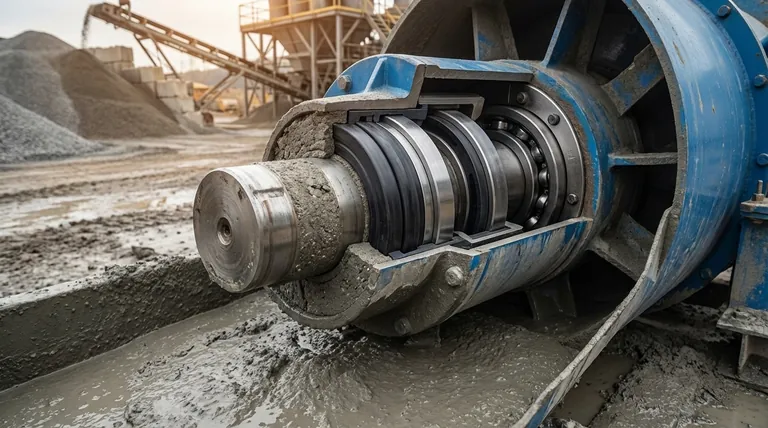
In concrete mixing stations, the shaft end is protected by a specialized assembly, not a single component. It uses a combined sealing system that consists of multiple, distinct layers. This design integrates both flexible rubber seals and durable steel seals to provide the necessary protection against the highly abrasive concrete slurry.
The core challenge isn't just stopping leaks; it's protecting the critical mixer bearings from premature failure. A multi-layered combined seal is the industry standard because a single type of seal would inevitably be overwhelmed by the harsh, high-pressure environment.
Why a Simple Seal Isn't Enough
The shaft end of a concrete mixer is one of the most mechanically stressed points in the entire plant. The sealing system must contend with unique and severe challenges that make a simple, single-layer seal inadequate.
The Abrasive Environment
The concrete mix—a slurry of cement, sand, and aggregate—is intensely abrasive. It acts like liquid sandpaper, rapidly wearing down any single material it comes into contact with.
Constant Rotational Pressure
The mixing action creates significant pressure, constantly forcing this abrasive slurry directly against the seal. This pressure will exploit any weakness, pushing grit and moisture toward the bearings.
The High Cost of Failure
A failed shaft end seal has one catastrophic consequence: bearing failure. Once the seal is breached, the slurry contaminates the bearing lubrication, destroying the bearing. This leads to major downtime, costly repairs, and significant production loss.
Anatomy of the Combined Seal
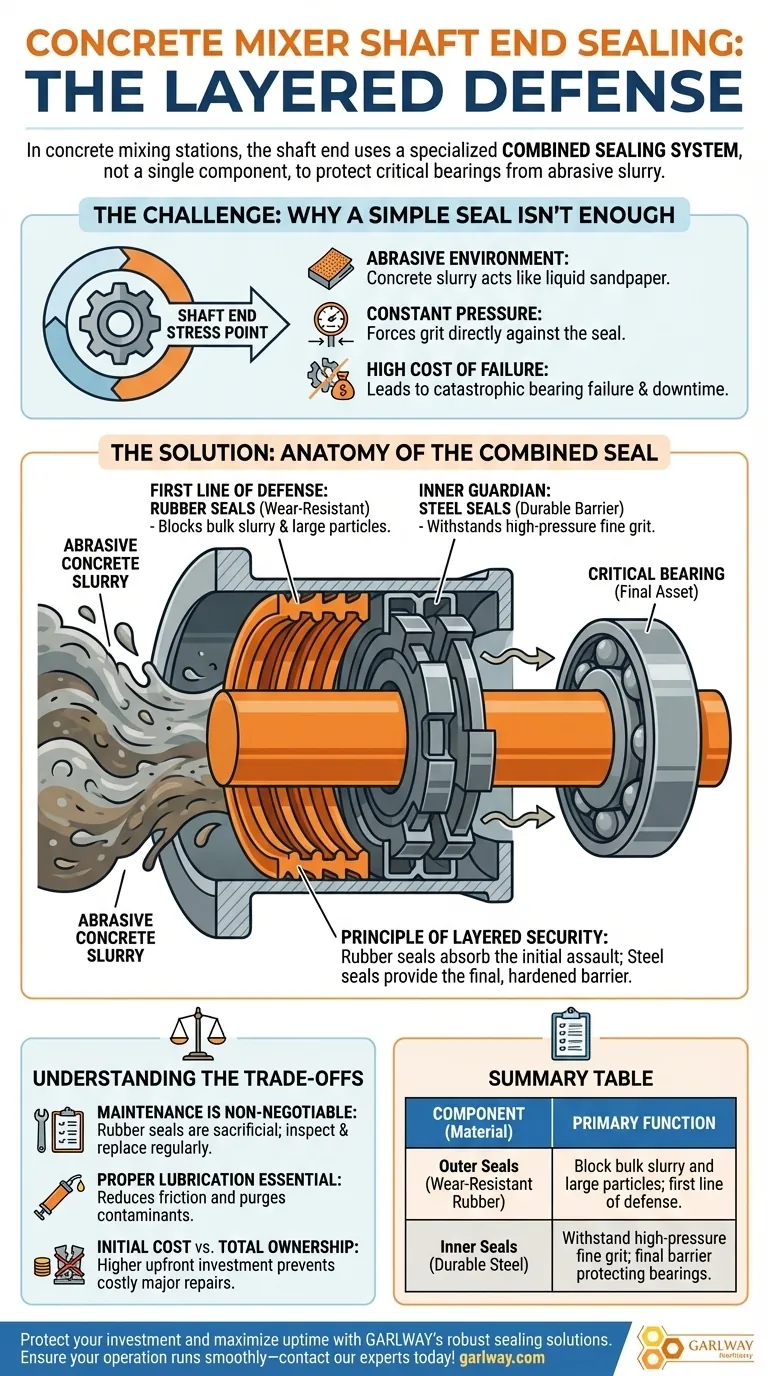
The combined, or multi-seal, system works on the principle of layered defense. Each component is designed to handle a different aspect of the threat, ensuring the final line of defense—the bearing—remains pristine.
First Line of Defense: Rubber Seals
The outermost seals are typically made of durable, wear-resistant rubber. Their flexibility allows them to maintain a tight seal against the shaft, even with minor misalignments. They are designed to block the bulk of the wet slurry and larger particles.
The Inner Guardian: Steel Seals
Behind the primary rubber seals lies a more robust set of steel seals, often in a labyrinth or floating configuration. These components provide a hard, durable barrier that can withstand the high-pressure fine particles and grit that may have worked past the outer rubber layers.
The Principle of Layered Security
Think of this system like a castle's defenses. The rubber seals are the outer moat and wall, absorbing the initial, heavy assault. The steel seals are the inner keep, a final, hardened barrier protecting the most valuable asset: the bearing assembly.
Understanding the Trade-offs
While highly effective, this system is not a "set and forget" solution. Its complexity introduces specific operational requirements that are critical for its success.
Maintenance is Non-Negotiable
Combined seals are wear items. The outer rubber seals are, in effect, sacrificial. They must be inspected regularly and replaced as part of a preventative maintenance schedule. Ignoring this leads directly to the failure of the more expensive inner seals and, eventually, the bearings.
Proper Lubrication is Essential
These sealing systems are designed to work in conjunction with a lubrication system, typically involving grease. Regular greasing serves two purposes: it lubricates the seal components to reduce friction and wear, and it purges contaminants that may have gotten past the outer seal layer.
Initial Cost vs. Total Cost of Ownership
A multi-stage sealing system is more complex and has a higher upfront cost than a simpler design. However, this initial investment prevents the far greater expense associated with unplanned downtime and the complete replacement of a main shaft bearing assembly.
Making the Right Choice for Your Operation
Understanding the function of your mixer's shaft end seal is key to running a reliable and profitable plant.
- If your primary focus is maximizing uptime: Implement a strict, preventative maintenance schedule for inspecting, lubricating, and replacing the shaft end seals based on the manufacturer's recommendations.
- If your primary focus is reducing long-term costs: Always use high-quality, OEM-spec seal kits. The marginal savings from a cheaper seal are insignificant compared to the cost of a bearing failure.
- If your primary focus is daily troubleshooting: Treat any visible leakage from the shaft end as an urgent warning. It signifies that the outer seals have failed and the inner seals are now under attack.
Viewing the shaft end seal as a critical, engineered system is the foundation of a reliable concrete mixing operation.
Summary Table:
| Sealing Component | Material | Primary Function |
|---|---|---|
| Outer Seals | Wear-Resistant Rubber | Block bulk slurry and large particles; first line of defense. |
| Inner Seals | Durable Steel | Withstand high-pressure fine grit; final barrier protecting bearings. |
Protect your investment and maximize uptime with GARLWAY's robust sealing solutions.
As a specialist in construction machinery, GARLWAY understands the critical role a reliable shaft end seal plays in the performance of your concrete batching plants and mixers. Our high-quality, OEM-spec seal kits are engineered to withstand the harshest conditions, helping construction companies and contractors globally avoid costly downtime and bearing failures.
Ensure your operation runs smoothly—contact our experts today to discuss the right sealing solution for your equipment!
Visual Guide
Related Products
- Shaft Mixer Machine for Cement and Regular Concrete Mixing
- HZS90 Large Multiquip Concrete Mixers for Construction
- JS500 Electric Cement Concrete Mixer for Sale
People Also Ask
- How do cement mixers enhance safety on construction sites? Reduce Strain, Hazards, and Accidents
- What are the key benefits of using a cement mixer on a construction site? Boost Efficiency, Quality & Safety
- What are the efficiency advantages of cement mixers? Boost Project Speed, Quality, and ROI
- How does cleaning a cement mixer after use benefit its performance? Maximize Lifespan and Mix Quality
- Can a cement mixer be used for mixing mortar? Understanding the Risks and Best Practices


