
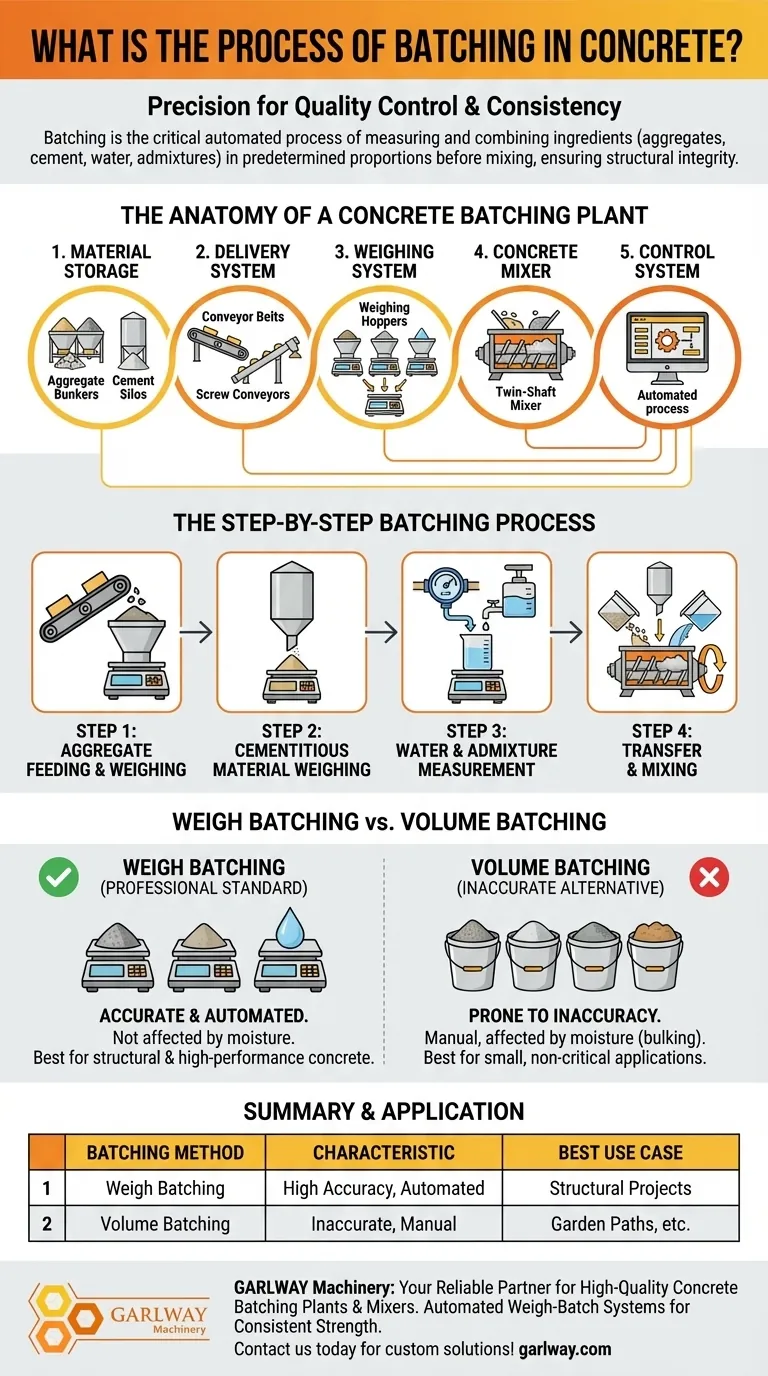
In concrete production, batching is the critical process of measuring and combining all the necessary ingredients—aggregates, cement, water, and any admixtures—in their predetermined proportions before mixing. This precision is not merely about mixing; it is the foundation of quality control, ensuring every batch of concrete meets its specified strength and durability requirements.
The core principle of modern concrete batching is a shift from simple mixing to a precise, automated manufacturing process. It's about guaranteeing consistency and quality through the accurate weighing of each component, transforming raw materials into a reliable and predictable engineering product.
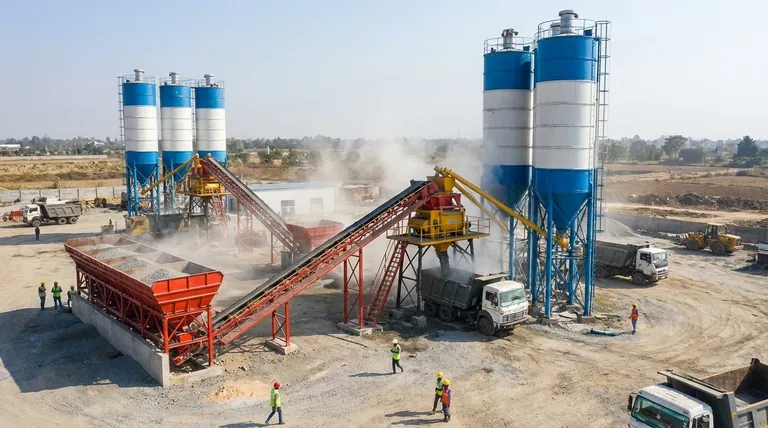
The Anatomy of a Concrete Batching Plant
To understand the process, you must first understand the system. A concrete batching plant isn't a single machine but an integrated system of five main components working in unison.
The Material Storage System
This is the starting point. Aggregates like sand and stone are stored in large containers called aggregate bunkers. Powders, such as cement and fly ash, are kept in tall, weather-proof cement silos to protect them from moisture.
The Material Delivery System
This system moves the raw materials from storage to be measured. Conveyor belts or radial stackers typically transport aggregates from the bunkers, while powders are moved from silos using screw conveyors.
The Material Weighing System
This is the heart of the batching operation. Materials are not mixed directly from storage. Instead, they are first discharged into separate weighing hoppers or scales, ensuring each ingredient is measured with high accuracy according to the specific mix design.
The Concrete Mixer
Once all ingredients are weighed, they are discharged into the central mixer. A twin-shaft mixer is commonly used for its efficiency and ability to produce a homogenous concrete mix quickly.
The Control System
This is the brain of the plant. A computerized control system manages the entire process, from opening gates to release aggregates onto the scales to discharging the final mix. This automation ensures repeatability and precision for every single batch.
The Step-by-Step Batching Process
The sequence of operations is methodical and designed to ensure accuracy and consistency.
Step 1: Aggregate Feeding and Weighing
The process begins with the aggregates. The control system sends a signal to move the required amounts of sand and different-sized stones from their respective bunkers, via conveyor belt, into an aggregate weighing hopper.
Step 2: Cementitious Material Weighing
Simultaneously, the system draws cement and any other powders (like fly ash) from their silos. These are weighed in a separate, dedicated powder weighing system to prevent contamination and ensure precision.
Step 3: Water and Admixture Measurement
Water is also carefully measured, either by weight in its own scale or by a highly accurate volumetric flow meter. Any chemical admixtures, which are used in very small quantities, are measured in a separate, precise dispensing system.
Step 4: Transfer and Mixing
Once the control system verifies that all components have been weighed to the exact required amounts, they are discharged into the mixing unit. The components are typically added in a specific sequence to optimize the mixing process and ensure all cement particles are properly hydrated.
Understanding the Key Distinction: Weigh Batching vs. Volume Batching
The method of measurement is the single most important factor determining concrete quality. The professional standard is fundamentally different from what might be used on very small, informal job sites.
Weigh Batching: The Standard for Quality
Modern batching plants exclusively use weigh batching. Measuring ingredients by weight is highly accurate and is not affected by factors like material compaction or moisture content. This is the only method that can reliably produce concrete that meets strict engineering specifications.
Volume Batching: The Inaccurate Alternative
Volume batching involves measuring ingredients by volume (e.g., using buckets or boxes). This method is prone to significant inaccuracies. For example, the volume of sand can increase by up to 25% due to moisture ("bulking"), which would drastically throw off the critical water-to-cement ratio if not accounted for. It is therefore unsuitable for any structural or high-performance concrete.
Applying This to Your Project
Your approach to batching should be dictated entirely by the performance requirements of the final product.
- If your primary focus is structural integrity, consistency, and guaranteed strength: You must specify and verify the use of a plant that uses an automated weigh batching system.
- If your primary focus is a small, non-critical application (e.g., a garden path): Simple volume batching may be sufficient, but you must be aware of its inherent inconsistencies.
Ultimately, understanding the batching process is understanding that quality concrete is not accidental; it is manufactured with precision.
Summary Table:
| Batching Method | Key Characteristic | Best Use Case |
|---|---|---|
| Weigh Batching | High accuracy, automated, not affected by moisture | Structural projects, high-performance concrete |
| Volume Batching | Prone to inaccuracies, manual measurement | Small, non-critical applications (e.g., garden paths) |
Need a reliable concrete batching plant for your construction project?
GARLWAY specializes in providing high-quality construction machinery, including robust concrete batching plants, concrete mixers, and winches, designed for construction companies and contractors worldwide. Our automated, weigh-batch systems guarantee the consistency and strength your projects demand.
Contact GARLWAY today to discuss your specific needs and get a customized solution!
Visual Guide
Related Products
- HZS120 Ready Mix Concrete Batching Plant Commercial Mud Cement Mixer
- HZS35 Small Cement Concrete Mixing Batch Plant
- HZS75 Concrete Batching Plant Cement Mixer Price Concrete Mixer Bunnings Mixing Plant
- HZS180 Ready Mix Concrete Plant for Foundations with Sand and Cement
- Commercial Electric Concrete Mixer Machine HZS 50 Small Batch Plant for Sale
People Also Ask
- What is a ready mix concrete batching plant? The Engine of Modern Construction
- What is the name of the machine used in ready mix? Unpacking the Complete Concrete System
- What is the core component of a concrete batching plant? The Mixer Unit Defines Your Concrete Quality
- What are the types of concrete mixers used in batching plants? Choose the Right Mixer for Your Project
- What are the advantages and disadvantages of concrete batching plants? Maximize Quality & Efficiency





