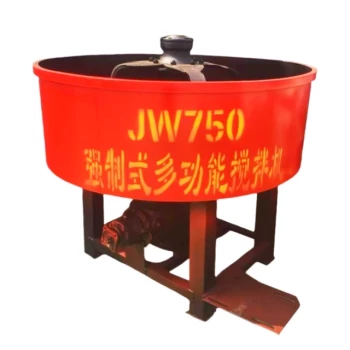
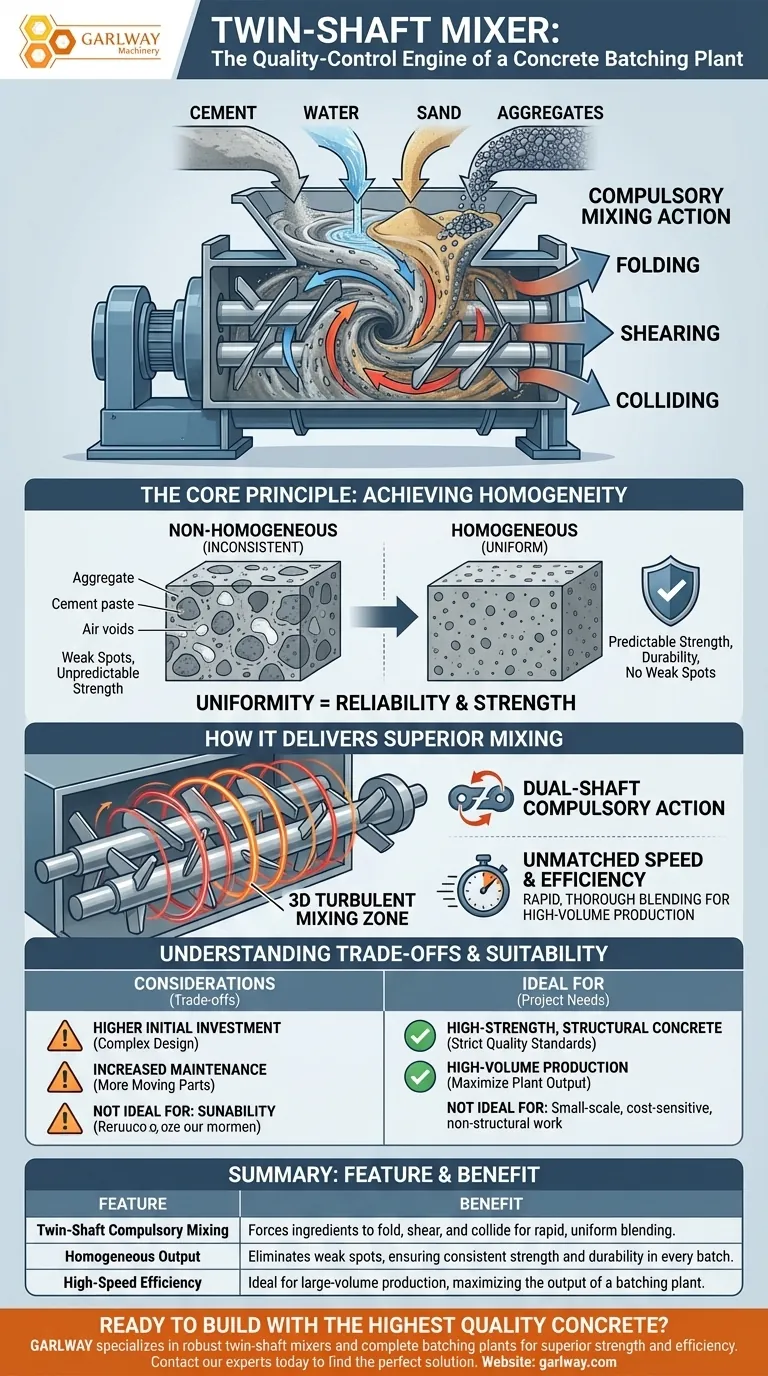
At its core, the function of a twin-shaft mixer is to blend all concrete ingredients—cement, water, sand, and aggregates—into a perfectly uniform and consistent mixture. This process, known as compulsory mixing, is fundamental to producing high-strength, durable concrete required for demanding construction projects.
The twin-shaft mixer is not merely a container; it is the quality-control engine of a concrete batching plant. Its aggressive, turbulent mixing action ensures that every particle is evenly coated, which directly translates to the strength and reliability of the final concrete structure.
The Core Principle: Achieving Homogeneity
The ultimate goal of any concrete mixer is to create a homogeneous mixture. A twin-shaft mixer achieves this with exceptional speed and efficiency.
What is Homogeneous Concrete?
Homogeneity means that every scoop of concrete from a batch has the exact same composition. The water, cement, and aggregates are perfectly and equally distributed throughout the entire volume.
Why Homogeneity is Critical
Without uniform mixing, the resulting concrete will have weak spots and inconsistencies. Proper homogeneity ensures predictable strength, consistent appearance, and long-term durability, preventing structural failures.
How the Twin-Shaft Design Delivers Superior Mixing
The "twin-shaft" design is not arbitrary; it is engineered for a specific, forceful mixing action that other designs cannot replicate.
The Dual-Shaft Compulsory Action
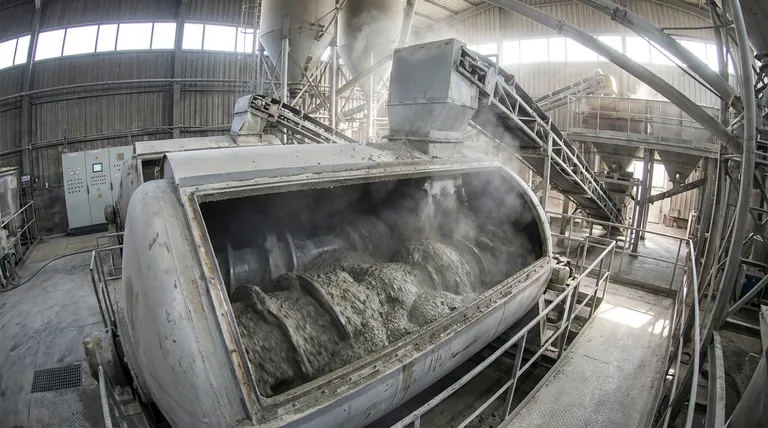
Inside the mixer, two parallel, horizontal shafts fitted with mixing paddles rotate in opposite directions. This counter-rotation is the key to its effectiveness.
Creating a Turbulent Mixing Zone
The overlapping paths of the counter-rotating paddles create an intense, three-dimensional mixing zone. Instead of simply tumbling materials by gravity, this design forces the ingredients to fold, shear, and collide, ensuring rapid and thorough blending.
Unmatched Speed and Efficiency
This compulsory action coats every particle of sand and aggregate with cement paste in a very short time. This high efficiency is vital for modern batching plants that need to produce large volumes of high-quality concrete quickly.
Understanding the Trade-offs
While highly effective, the twin-shaft mixer is not the universal solution for every application. Objectivity requires acknowledging its specific context.
Higher Initial Investment
The complex design, including robust gearboxes and powerful motors required for the compulsory action, makes twin-shaft mixers more expensive upfront compared to simpler drum or pan mixers.
Increased Maintenance Demands
With more moving parts under high stress, these mixers require a more rigorous and detailed maintenance schedule to ensure their long service life and prevent costly breakdowns.
Application Suitability
For small-scale projects or applications where lower-strength concrete is acceptable, the performance of a twin-shaft mixer may be unnecessary, and a more economical mixer type could be a better fit.
Matching the Mixer to Your Project's Needs
Understanding the function of a twin-shaft mixer allows you to specify the right equipment for your goals.
- If your primary focus is high-strength, structural concrete: The compulsory, homogeneous mixing of a twin-shaft design is non-negotiable to meet strict quality standards.
- If your primary focus is high-volume production: The speed and efficiency of the twin-shaft mixer are essential for maximizing the output of your batching plant.
- If your primary focus is cost-sensitive, non-structural work: A simpler and less expensive mixer type may provide an adequate and more practical solution.
Ultimately, choosing the right mixer is about controlling the quality and performance of your most critical building material.
Summary Table:
| Feature | Benefit |
|---|---|
| Twin-Shaft Compulsory Mixing | Forces ingredients to fold, shear, and collide for rapid, uniform blending. |
| Homogeneous Output | Eliminates weak spots, ensuring consistent strength and durability in every batch. |
| High-Speed Efficiency | Ideal for large-volume production, maximizing the output of a batching plant. |
| Considerations | Higher initial investment and maintenance than simpler mixer types. |
Ready to build with the highest quality concrete? The right mixer is the key to your project's success. GARLWAY specializes in construction machinery, offering robust twin-shaft mixers and complete concrete batching plants designed for construction companies and contractors who demand superior strength and efficiency. Contact our experts today to find the perfect solution for your specific needs and ensure the durability of your structures.
Visual Guide
Related Products
- JS500 Electric Cement Concrete Mixer for Sale
- Shaft Mixer Machine for Cement and Regular Concrete Mixing
- HZS90 Large Multiquip Concrete Mixers for Construction
- HZS120 Ready Mix Concrete Batching Plant Commercial Mud Cement Mixer
- HZS25 Best Cement Mixer for Quick Mix Concrete at Bunnings
People Also Ask
- What are the benefits of electric concrete mixers? Quiet, Clean, and Low-Maintenance Mixing
- What are the four factors to consider when selecting a concrete mixer? Optimize Your Construction Project
- What are the two main types of concrete mixers and their uses? Choose the Right Mixer for Your Project
- What is a concrete mixer used for? Achieve Consistent, High-Quality Concrete
- How can a concrete mixer be used to remove rust from metal parts? A Powerful, Large-Scale Cleaning Method