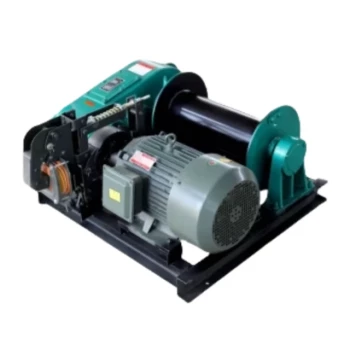
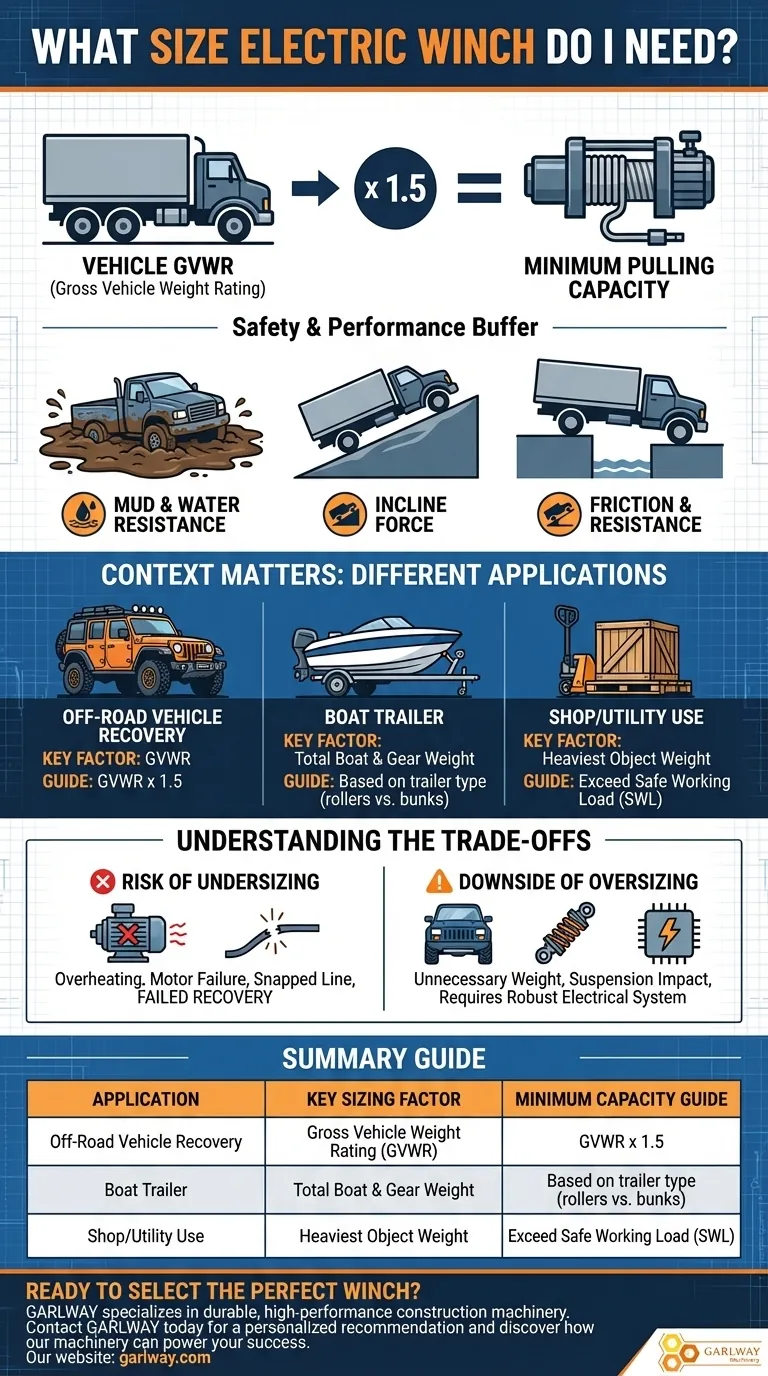
To choose the right size electric winch, you should determine your vehicle's Gross Vehicle Weight Rating (GVWR) and multiply it by 1.5. This calculation provides the minimum pulling capacity you should look for in a winch for safe and effective vehicle recovery.
The standard formula is a reliable starting point, but true winch selection requires understanding that you are rarely pulling just the vehicle's weight. You are fighting against gravity, friction, and resistance, which is why a simple weight match is never enough.
Decoding the 1.5x GVWR Rule
The most common guideline for sizing a winch for an off-road vehicle is based on a simple, proven formula. It’s designed to give you a crucial safety and performance buffer.
What is Gross Vehicle Weight Rating (GVWR)?
The GVWR is the maximum operating weight of your vehicle as specified by the manufacturer. This includes the vehicle's chassis, body, engine, fluids, fuel, accessories, driver, passengers, and cargo.
You can typically find your vehicle's GVWR on a sticker inside the driver's side door frame or in your owner's manual.
Why Multiply by 1.5?
Multiplying by 1.5 is not arbitrary. This "safety factor" accounts for the additional forces your winch must overcome in a real-world recovery situation.
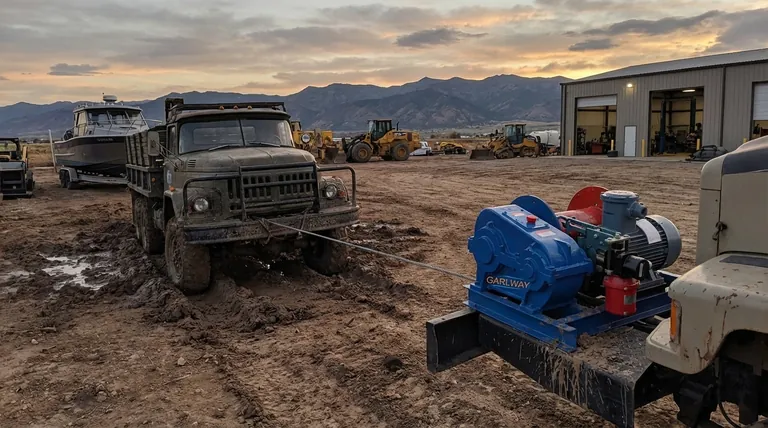
A vehicle's dead weight is only part of the equation. Factors like being stuck in deep mud, submerged in water, or pulling up a steep incline can dramatically increase the load on the winch. The 1.5x multiplier provides the capacity to handle this added resistance.
When the Standard Rule Isn't Enough
While the GVWR rule is excellent for vehicle recovery, different applications have different requirements. The context of the pull is just as important as the weight of the object.
The Critical Difference: Vehicle vs. Marine Winches
Sizing a winch for a boat trailer is fundamentally different. You are primarily overcoming the rolling resistance of the trailer and the incline of the boat ramp, not lifting a dead weight.
The total weight of your boat—including the motor, fuel, and all equipment—is the starting point. The type of trailer also matters immensely; trailers with rollers create less friction and require less winch power than those with bunks.
The Importance of a Solid Mount
A winch is only as strong as its connection point. The installation site must be firm and capable of handling the winch's maximum rated pull.
Whether on a vehicle's frame or a workshop foundation, a weak mount will fail long before the winch reaches its capacity, creating a dangerous situation.
Understanding the Trade-offs
Choosing a winch isn't just about picking the biggest number. There are practical consequences for going too small or unnecessarily large.
The Risk of Undersizing Your Winch
This is the most dangerous mistake. An undersized winch will be strained, causing its motor to overheat and potentially fail prematurely. More critically, it can lead to a snapped line or a failed recovery, putting your vehicle and personal safety at risk.
The Downside of Oversizing
While "more is better" might seem safer, a significantly oversized winch has drawbacks. It adds unnecessary weight to your vehicle's front end, can negatively impact suspension, and requires a more robust electrical system to handle the higher amperage draw.
Making the Right Choice for Your Application
Use your primary goal to guide your final decision on winch capacity.
- If your primary focus is off-road vehicle recovery: Calculate your vehicle's GVWR x 1.5 and use that as your absolute minimum capacity.
- If your primary focus is pulling a boat onto a trailer: Select a capacity based on the total weight of your boat with gear, factoring in whether your trailer has low-friction rollers or high-friction bunks.
- If your primary focus is general shop or utility use: Ensure the winch's Safe Working Load (SWL) exceeds the weight of the heaviest object you plan to move on a level surface.
Choosing the correct winch size ensures you have the power you need when it matters most.
Summary Table:
| Application | Key Sizing Factor | Minimum Capacity Guide |
|---|---|---|
| Off-Road Vehicle Recovery | Gross Vehicle Weight Rating (GVWR) | GVWR x 1.5 |
| Boat Trailer | Total Boat & Gear Weight | Based on trailer type (rollers vs. bunks) |
| Shop/Utility Use | Heaviest Object Weight | Exceed Safe Working Load (SWL) |
Ready to select the perfect winch for your project?
GARLWAY specializes in durable, high-performance construction machinery. Whether you're a contractor needing reliable equipment for a job site or a construction company managing a large fleet, our electric winches, concrete mixers, and batching plants are engineered for demanding applications.
Our experts can help you choose the right winch capacity to ensure safety and efficiency, saving you time and reducing operational risks.
Contact GARLWAY today for a personalized recommendation and discover how our machinery can power your success.
Visual Guide
Related Products
- Electric 120V Boat Winch by Badlands
- Electric and Hydraulic Winch for Heavy Duty Applications
- Small Electric Winch 120V and 240V for Compact Applications
- 12000 lb Electric Boat Trailer Winch with Windlass Anchor Warn
- Electric Hoist Winch Boat Anchor Windlass for Marine Applications
People Also Ask
- How do electric boat winches work? Unlock Effortless Launching & Retrieval
- How much current does an electric boat winch draw? Plan Your Electrical System for Peak Performance
- Can I run a winch straight from a battery? Essential Power Setup for Safe Operation
- What are the types of electric winches available? Choose the Right Winch for Your Job
- What are the uses of electric winches in mining and tunneling? Enhance Safety and Efficiency Underground