
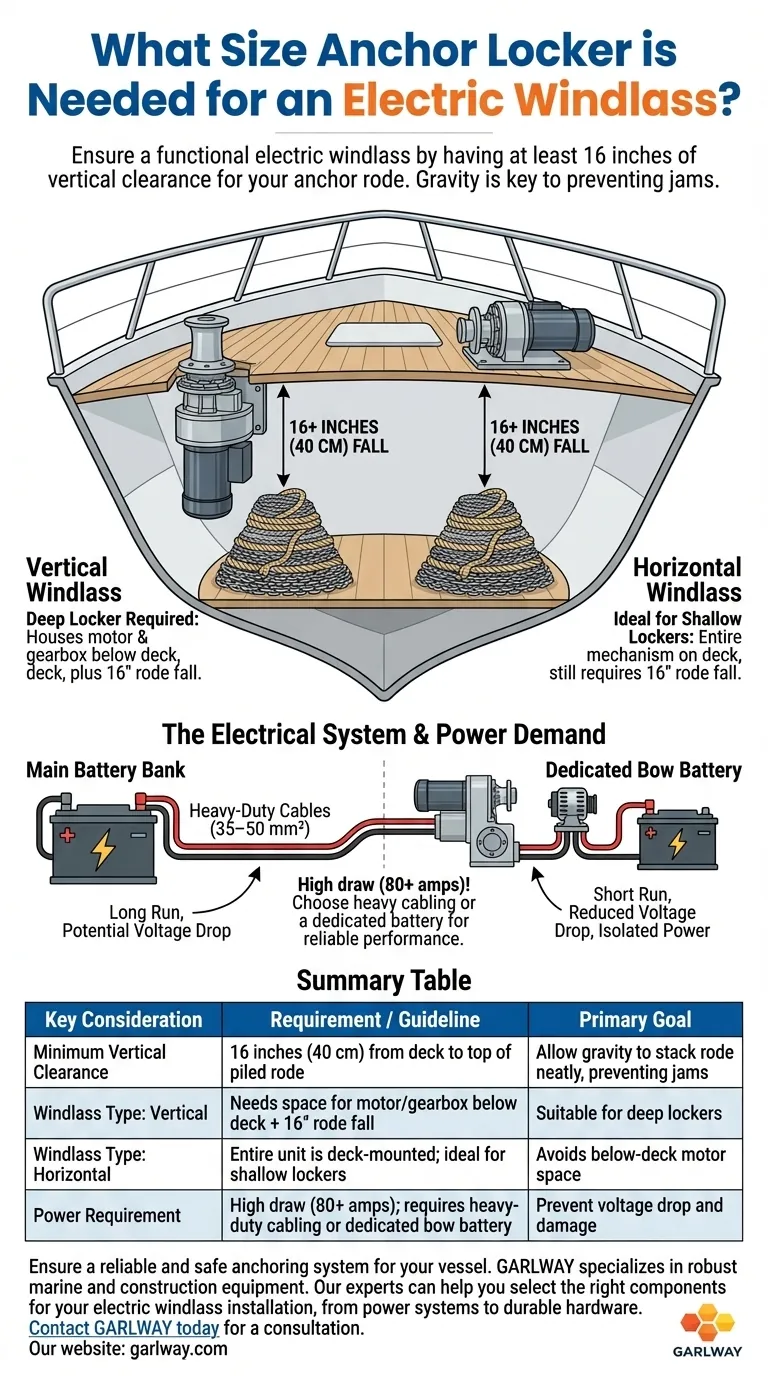
To ensure a functional electric windlass, your anchor locker must have at least 16 inches (about 40 cm) of vertical clearance. This measurement is taken from the underside of the deck down to the absolute top of the anchor rode when it is fully piled inside the locker.
The single most critical factor for a jam-free windlass is ensuring sufficient vertical "fall" for the anchor rode. While the choice between a vertical or horizontal windlass impacts motor placement, the fundamental need for gravity to neatly stack the rode remains the same for both.
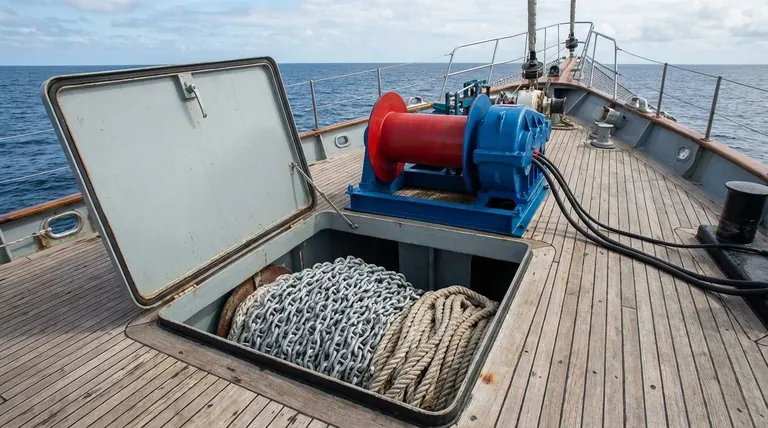
The Critical Dimension: Vertical Fall
The reliability of your electric windlass doesn't come from its motor power alone; it comes from a well-designed locker that allows gravity to do its job.
The 16-Inch Rule
The minimum clearance of 16 inches prevents the incoming rode (chain or rope) from piling up too quickly and jamming the windlass gypsy from below.
When the pile gets too high, it creates back-pressure and can cause the rode to tangle or jam the mechanism, often at the worst possible moment.
How Rode Piling Works
As the rode comes in, it naturally forms a cone-shaped pile. A deeper locker allows this pile to build up without interfering with the windlass.
The total volume of your rode determines the maximum height of this pile. You must account for your longest anchor rode when assessing clearance.
How Windlass Type Dictates Locker Needs
The physical design of the windlass itself is the next major consideration, as it directly impacts how you use the space within the locker.
Vertical Windlass Requirements
A vertical windlass has its motor and gearbox located directly below the deck-mounted unit. This is the most significant factor affecting locker depth.
You need enough vertical space to accommodate not only the 16-inch fall for the rode but also the physical housing of the motor and gearbox. This makes them best suited for boats with deep, dedicated anchor lockers.
Horizontal Windlass Requirements
A horizontal windlass contains all its components—motor, gearbox, and gypsy—in a single unit mounted entirely on top of the deck.
This design is ideal for boats with shallow anchor lockers because it does not require any vertical space for a motor below deck. However, the 16-inch rule for rode fall still applies.
Understanding the Trade-offs: The Electrical System
A successful windlass installation is about more than just physical space; it requires a robust electrical system that is often overlooked.
High Power Demand
An electric windlass is one of the highest-draw accessories on a boat, often pulling over 80 amps at 12 volts under load.
This high demand requires careful planning to avoid significant voltage drop, which can damage the motor and reduce performance.
Cabling and Battery Strategy
You have two primary options to power the windlass: running heavy-duty cables (often 35–50 mm²) from the main battery bank or installing a dedicated battery in the bow.
A separate bow battery, often a durable AGM type, shortens the high-amperage cable run significantly. It can be charged from the alternator using an isolating relay, ensuring it's ready when needed without draining your starting battery.
Making the Right Choice for Your Installation
Your boat's existing layout will heavily influence your decision. Analyze your anchor locker with these goals in mind.
- If you are installing a vertical windlass: Verify your locker is deep enough to house the motor and still provide at least 16 inches of clearance above your fully piled rode.
- If you are retrofitting a boat with a shallow locker: A horizontal windlass is almost always the correct choice, as the entire mechanism sits on deck.
- If your power source is far from the bow: Strongly consider installing a dedicated bow battery to simplify wiring, reduce voltage drop, and ensure reliable windlass performance.
Ultimately, respecting the required space for both the equipment and the anchor rode is the key to a reliable and safe anchoring system.
Summary Table:
| Key Consideration | Requirement / Guideline |
|---|---|
| Minimum Vertical Clearance | 16 inches (40 cm) from deck to top of piled rode |
| Primary Goal | Allow gravity to stack rode neatly, preventing jams |
| Windlass Type: Vertical | Needs space for motor/gearbox below deck + 16" rode fall |
| Windlass Type: Horizontal | Entire unit is deck-mounted; ideal for shallow lockers |
| Power Requirement | High draw (80+ amps); requires heavy-duty cabling or dedicated bow battery |
Ensure a reliable and safe anchoring system for your vessel. GARLWAY specializes in robust marine and construction equipment. Our experts can help you select the right components for your electric windlass installation, from power systems to durable hardware.
Contact GARLWAY today for a consultation and let us provide the durable, high-performance solutions that construction companies and contractors worldwide depend on.
Visual Guide
Related Products
- Electric Hoist Winch Boat Anchor Windlass for Marine Applications
- Heavy Duty Electric Boat Winch Windlass Anchor
- 12000 lb Electric Boat Trailer Winch with Windlass Anchor Warn
- Quick Windlass Portable Winch for Truck and Boat Best Boat Winch
- Warn Winch Windlass Boat Trailer Winch
People Also Ask
- How does an electric anchor winch work? Power, Safety, and Reliable Operation Explained
- What are the advantages of installing an electric anchor winch on a boat? Boost Safety & Ease for Boaters
- What are the operational differences between electric hoists and winches? A Guide to Safe Lifting vs. Pulling
- What are the main benefits of a boat anchor winch? Boost Safety & Efficiency for Your Vessel
- How does a boat anchor winch work? A Guide to Reliable Anchor Handling


