When a safety hazard is found during a concrete mixer inspection, the equipment must be taken out of service immediately. The issue must then be either repaired by a qualified individual or formally reported to the appropriate supervisor or maintenance department. Never operate equipment that has failed a safety inspection.
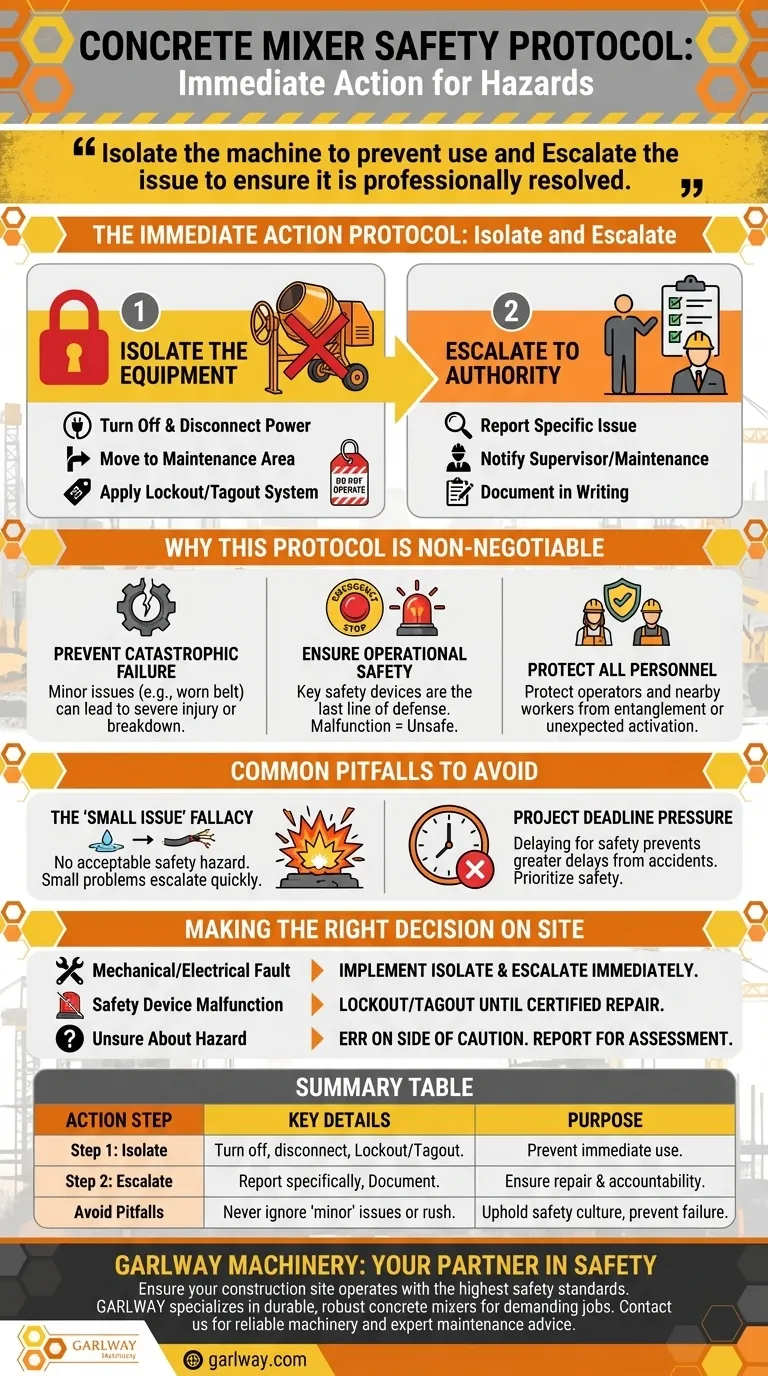
The discovery of any defect is not merely a maintenance task; it is a critical safety stop. The only correct response is a non-negotiable, two-step protocol: Isolate the machine to prevent use and Escalate the issue to ensure it is professionally resolved.
The Immediate Action Protocol: Isolate and Escalate
A functioning concrete mixer is a powerful tool. A compromised one is a significant liability. When an issue is found, follow this strict protocol to ensure the safety of everyone on site.
Step 1: Immediately Isolate the Equipment
The first priority is to prevent anyone from using the faulty machine.
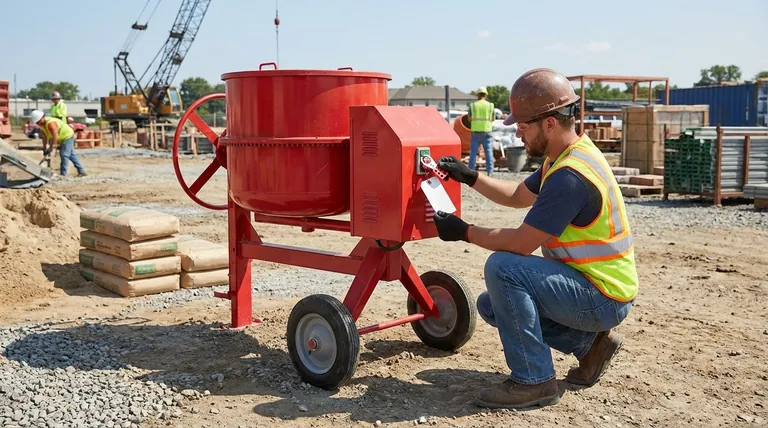
Take immediate steps to remove the mixer from service. This includes turning it off, disconnecting its power source, and, if possible, moving it to a designated maintenance area.
Crucially, the mixer must be clearly marked. Use a lockout/tagout system with a tag that clearly states "Do Not Operate" and describes the identified hazard.
Step 2: Escalate to the Proper Authority
Once the equipment is secured, the problem must be formally communicated.
Report the specific issue to your direct supervisor, the site safety officer, or the maintenance department. Vague reports can be ignored; be precise about what you found.
Ensure the report is documented. A verbal notice can be forgotten, but a written report or entry in a maintenance log creates a formal record and ensures accountability for the repair.
Why This Protocol is Non-Negotiable
Skipping this process introduces unacceptable risk to both personnel and the project. The temptation to "work around" a problem must be resisted.
Preventing Catastrophic Failure
Many serious equipment failures begin as "minor" issues. A worn belt, a loose safety guard, or a faulty emergency stop button can directly lead to severe injury or a catastrophic breakdown.
Addressing these issues proactively is fundamental to preventing accidents.
Ensuring Operational Safety
Safe operation is impossible with compromised equipment. Key safety devices, such as emergency stop buttons, safety barriers, and warning lights, are the last line of defense in an emergency.
If these systems are not functioning perfectly, the machine is inherently unsafe.
Protecting All Personnel
The ultimate goal of any inspection is to protect people. Following the protocol protects the operator and anyone else working near the mixer from hazards like entanglement in moving parts or unexpected machine activation.
Common Pitfalls to Avoid
Real-world pressures can tempt workers to make dangerous compromises. Understanding these pitfalls is key to maintaining a strong safety culture.
The Fallacy of "It's Just a Small Issue"
One of the most common mistakes is underestimating a seemingly minor problem. A small hydraulic fluid leak or a slightly frayed wire can escalate quickly under operational stress.
There is no such thing as an acceptable safety hazard.
The Pressure of Project Deadlines
Delaying a task to report an issue can feel counterproductive, but it is the correct choice. An incident caused by faulty equipment will result in a far greater delay than the time it takes to report and repair the initial problem.
Safety procedures protect the project schedule by preventing major accidents.
Making the Right Decision on Site
Your response should be automatic and decisive based on the type of hazard you discover.
- If you find a mechanical or electrical fault: Immediately implement the Isolate and Escalate protocol without exception.
- If a required safety device is malfunctioning: The mixer is unfit for use and must be locked out and tagged out until a certified repair is complete.
- If you are ever unsure about a potential hazard: Always err on the side of caution by treating it as a serious issue and reporting it for a professional assessment.
A proactive approach to equipment safety is the bedrock of a secure and efficient worksite.
Summary Table:
| Action Step | Key Details | Purpose |
|---|---|---|
| Step 1: Isolate | Turn off, disconnect power, and use a lockout/tagout system. | Prevent immediate use of the hazardous equipment. |
| Step 2: Escalate | Report the specific issue to a supervisor or maintenance with written documentation. | Ensure professional repair and accountability. |
| Avoid Pitfalls | Never ignore "minor" issues or rush due to project deadlines. | Uphold a strong safety culture and prevent catastrophic failure. |
Ensure your construction site operates with the highest safety standards. A reliable concrete mixer is fundamental to your project's success and crew safety. GARLWAY specializes in durable construction machinery, including robust concrete mixers designed for demanding job sites. If you need a reliable machine or expert advice on maintenance protocols, our team is here to help.
Contact GARLWAY today to discuss your equipment needs and keep your projects moving safely and efficiently.
Visual Guide
Related Products
- Portable Concrete Mixer Machine Equipment for Mixing Concrete
- Construction Products Concrete Plant Machine Mixing Concrete Mixer
- Portable Electric Concrete Mixer Machine for Cement Mixing
- JZC400 Mobile Small Concrete Mixer Cement Mixer Machine
- Hydraulic Concrete Mixer Machine Cement Mixing Equipment for Mixture Concrete
People Also Ask
- Why is it necessary to use a portable concrete mixer? Gain Total Control & Efficiency
- How much concrete can you pour with a portable mixer? Find the Perfect Fit for Your Project
- What types of projects are portable concrete mixers suitable for? Ideal for DIY & Small-Scale Construction
- How much does a portable concrete mixer hold? A Guide to Choosing the Right Capacity
- What types of portable concrete mixers exist? Find the Perfect Mixer for Your Project