
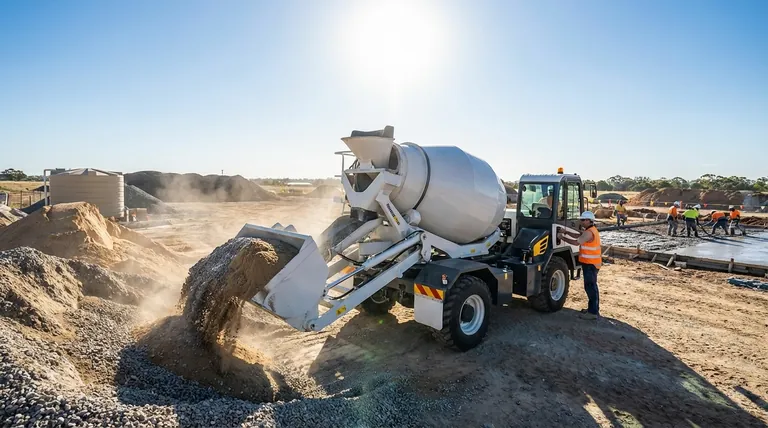
At its core, a self-loading concrete mixer automates material loading using an integrated hydraulic shovel or bucket. This system, controlled by an operator and a computerized weighing system, scoops aggregates and cement, measures them precisely, and feeds them into the mixing drum along with a metered amount of water to match a pre-programmed recipe.
The true innovation of a self-loading mixer is not just the automated loading, but the integration of a loader, a mobile batching plant, and a transit mixer into a single, efficient machine. This transforms on-site concrete production by ensuring accuracy, reducing labor, and saving time.
Deconstructing the Loading and Mixing System
A self-loading mixer is a sophisticated piece of equipment where several key systems work in concert. Understanding each component clarifies how the entire process achieves its efficiency and precision.
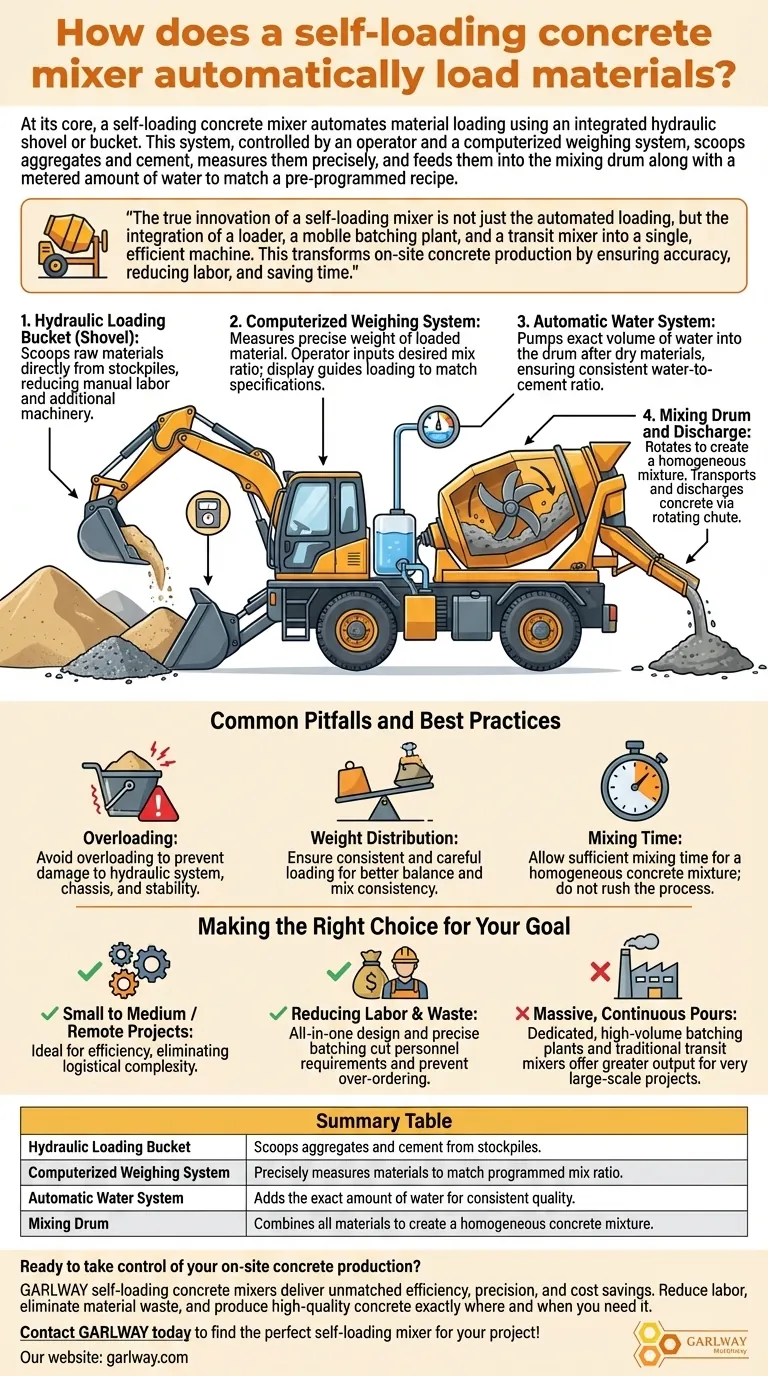
The Hydraulic Loading Bucket
The most visible component is the hydraulic shovel or loading bucket at the front of the machine. This powerful arm is the primary tool for scooping raw materials like sand, gravel, and cement directly from stockpiles on the job site.
This mechanism drastically reduces the manual labor and additional machinery (like a separate wheel loader) typically required to load a traditional mixer.
The Computerized Weighing System
As the shovel lifts the material, an integrated computerized weighing system measures the precise weight of the load. This is the "brain" of the automatic loading process.
The operator inputs the desired concrete mix ratio into the control system. The display then guides the operator, showing exactly how much of each aggregate and cement to load to meet the recipe's specifications.
The Automatic Water System
The mixer is also equipped with a water tank and a pump. Once the dry materials are loaded, the control system automatically pumps the exact required volume of water into the mixing drum, ensuring a consistent water-to-cement ratio for every batch.
The Mixing Drum and Discharge
After all components are loaded, an electric or hydraulic motor rotates the mixing drum. The internal blades tumble the materials to create a homogeneous concrete mixture. The machine can then transport the concrete to the pour site and discharge it via a rotating chute.
Common Pitfalls and Best Practices
While highly efficient, operating a self-loading mixer requires adherence to best practices to ensure safety, equipment longevity, and concrete quality.
The Danger of Overloading
You must strictly follow the manufacturer's guidelines for maximum load capacities. Overloading the bucket or the drum can strain the hydraulic system, damage the chassis, and compromise the machine's stability.
Maintaining Proper Weight Distribution
Consistent and careful loading is essential. Uneven loading can affect the mixer's balance, especially when traveling on uneven terrain, and can also lead to an inconsistent, poorly mixed final product.
Allowing for Sufficient Mixing Time
Automation can create the temptation to rush the process. However, it is critical to allow the materials to mix for the recommended time specified by the mix design. Cutting this short will result in non-homogeneous concrete with weak spots.
Making the Right Choice for Your Goal
A self-loading mixer is a powerful tool, but its value depends entirely on your project's specific needs.
- If your primary focus is efficiency on small to medium-sized or remote projects: This machine is ideal, as it eliminates the logistical complexity of coordinating a batching plant and multiple transit trucks.
- If your primary focus is reducing labor costs and material waste: The all-in-one design and precise, automated batching significantly cut down on personnel requirements and prevent the over-ordering of materials.
- If your primary focus is massive, continuous concrete pours: A dedicated, high-volume batching plant and a fleet of traditional transit mixers will likely offer greater output capacity for very large-scale industrial or infrastructure projects.
Ultimately, this technology empowers you to take precise control over your on-site concrete production.
Summary Table:
| Key Component | Primary Function |
|---|---|
| Hydraulic Loading Bucket | Scoops aggregates and cement from stockpiles. |
| Computerized Weighing System | Precisely measures materials to match the programmed mix ratio. |
| Automatic Water System | Adds the exact amount of water for consistent concrete quality. |
| Mixing Drum | Combines all materials to create a homogeneous concrete mixture. |
Ready to take control of your on-site concrete production?
GARLWAY self-loading concrete mixers integrate a loader, batching plant, and transit mixer into one machine, delivering unmatched efficiency, precision, and cost savings for construction companies and contractors. Reduce labor, eliminate material waste, and produce high-quality concrete exactly where and when you need it.
Contact GARLWAY today to find the perfect self-loading mixer for your project!
Visual Guide
Related Products
- Skid Steer Self Loading Concrete Mixers for Construction
- Belle Mixer Drum Self Loading Mortar Mixers JS3000
- Portable Cement Mixer with Lift Concrete Machine
- Portable Concrete Mixer Machine Equipment for Mixing Concrete
- JW1000 Mobile Cement Mixer Concrete Mixer Truck and Batching Plant
People Also Ask
- How does the control system improve production efficiency in a self loading concrete mixer? Automate Mixing for Speed & Quality
- What is the purpose of keeping the drum rotating during transportation in a self loading concrete mixer? Ensure Quality & Consistency
- How does the weighing process work in a self loading concrete mixer? Achieve Precise, On-Site Concrete Batching
- What components are involved in the loading process of a self loading concrete mixer? A Guide to the Key Systems
- How should materials be loaded into a self-loading concrete mixer? Master the Step-by-Step Process





