
Operating a concrete mixing station safely is a comprehensive discipline that extends far beyond the control panel. It requires strict adherence to operational procedures covering personnel training, equipment maintenance, material handling, and proactive environmental management to ensure the well-being of staff and the integrity of the operation.
True safety in a concrete plant is not a checklist, but a system. It integrates proactive equipment management, strict operational protocols, and intelligent site design to mitigate inherent risks like mechanical failure, dust exposure, and traffic hazards.
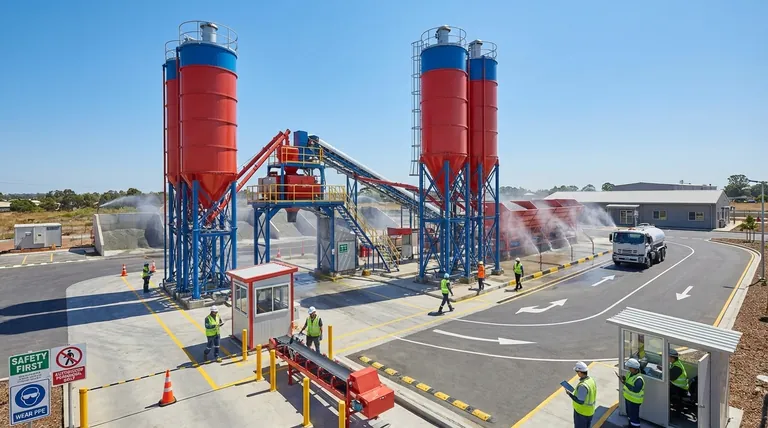
Foundational Safety: Personnel and Procedures
The human element is the first line of defense in any safety program. Proper training and unwavering adherence to established procedures are non-negotiable.
Adherence to Operational Controls
All personnel, without exception, must follow the station's operational control procedures and safety precautions. This ensures that every task is performed in a consistent and predictable manner.
Thorough Equipment Familiarity
Operators must have a deep understanding of the equipment's structure, functions, and maintenance requirements. When in doubt, they should consult the manufacturer's technical documentation or support department.
Supervised Maintenance and Cleaning
During cleaning or maintenance, critical access points like maintenance doors must be kept open. A designated person must supervise the area to prevent accidental start-ups or other hazards.
Ensuring Equipment Integrity and Reliability
The mechanical and electrical systems of the plant are a primary source of potential risk. Proactive care and correct operating techniques are essential to prevent failure.
The Dangers of a "Load Start"
Never start the mixer or conveyor belt when it is already loaded with material. This puts immense strain on the motors and mechanical components, risking immediate failure and creating a significant safety hazard.
Regular Calibration and Data Integrity
Scales are critical for both quality and safety. They must be recalibrated after any sensor replacement to ensure measurement accuracy. It is also wise to back up operational data periodically to prevent loss.
Electrical and Weather Precautions
Operations should be halted during thunderstorms due to the risk of lightning strikes. All network ports and electrical systems must be properly protected. Remember that damage from lightning is typically not covered by equipment warranties.
Managing Material Flow and Production Risks
The process of moving and mixing aggregates, cement, and water presents unique safety challenges, particularly concerning dust and material blockages.
Correct Feeding Procedures
The feeding system should be designed to prevent aggregates from entering operating mechanisms. Sand, stone, and cement should not be fed through the same chute simultaneously to avoid blockages.
Complete Discharge of Materials
The hopper and chute must be completely discharged after each use. Leaving material behind can lead to cross-contamination in the next batch and create hardened build-ups that are difficult and dangerous to remove.
High-Efficiency Dust Control
Production facilities must be equipped with high-efficiency dust control devices, such as bag filters. These systems should be active during material loading, batching, and mixing to protect workers' respiratory health and meet emission standards.
Common Pitfalls and Oversights
Even with established procedures, certain oversights can compromise plant safety. Recognizing these common pitfalls is key to building a resilient safety culture.
Sacrificing Procedure for Speed
The temptation to skip steps, such as not fully discharging a hopper or bypassing a pre-start check, can lead to equipment damage, poor quality output, and serious accidents. Efficiency should never come at the expense of safety protocols.
Neglecting Environmental Factors
Dust and noise are not just pollutants; they are direct safety hazards. Failing to manage them can lead to long-term health issues for staff, regulatory fines, and poor community relations. Dust-free ground surfaces and modern, low-emission equipment should be seen as investments in safety.
Poor Site and Traffic Planning
A poorly designed site layout is an accident waiting to happen. Without circular traffic routes, separate entrances, and clear signage, the risk of vehicle collisions increases dramatically. Locating offices and common areas upwind of dust sources is a simple but critical design principle.
Making the Right Choice for Your Goal
Implementing a robust safety program requires prioritizing actions based on your primary objectives.
- If your primary focus is immediate accident prevention: Prioritize rigorous daily training on operational procedures and pre-use equipment inspections.
- If your primary focus is long-term operational reliability: Emphasize proactive maintenance schedules, correct start-up and shutdown protocols, and proper material handling to prevent equipment strain.
- If your primary focus is environmental compliance and community relations: Invest in comprehensive dust control systems, low-noise equipment, and an intelligent site layout with effective traffic management.
A culture of safety is the most critical component you can mix into your daily operations.
Summary Table:
| Safety Focus Area | Key Measures |
|---|---|
| Personnel & Procedures | Adherence to controls, thorough training, supervised maintenance. |
| Equipment Integrity | Avoid load starts, regular calibration, electrical/weather precautions. |
| Material & Production | Correct feeding, complete material discharge, high-efficiency dust control. |
| Site & Environment | Circular traffic routes, dust-free surfaces, upwind facility placement. |
Ready to build a safer, more reliable concrete mixing operation? GARLWAY specializes in providing robust construction machinery, including advanced concrete batching plants, mixers, and winches, designed with integrated safety features for construction companies and contractors globally. Our equipment supports proactive risk management and long-term operational reliability. Contact GARLWAY today to discuss how our solutions can enhance your plant's safety and performance.
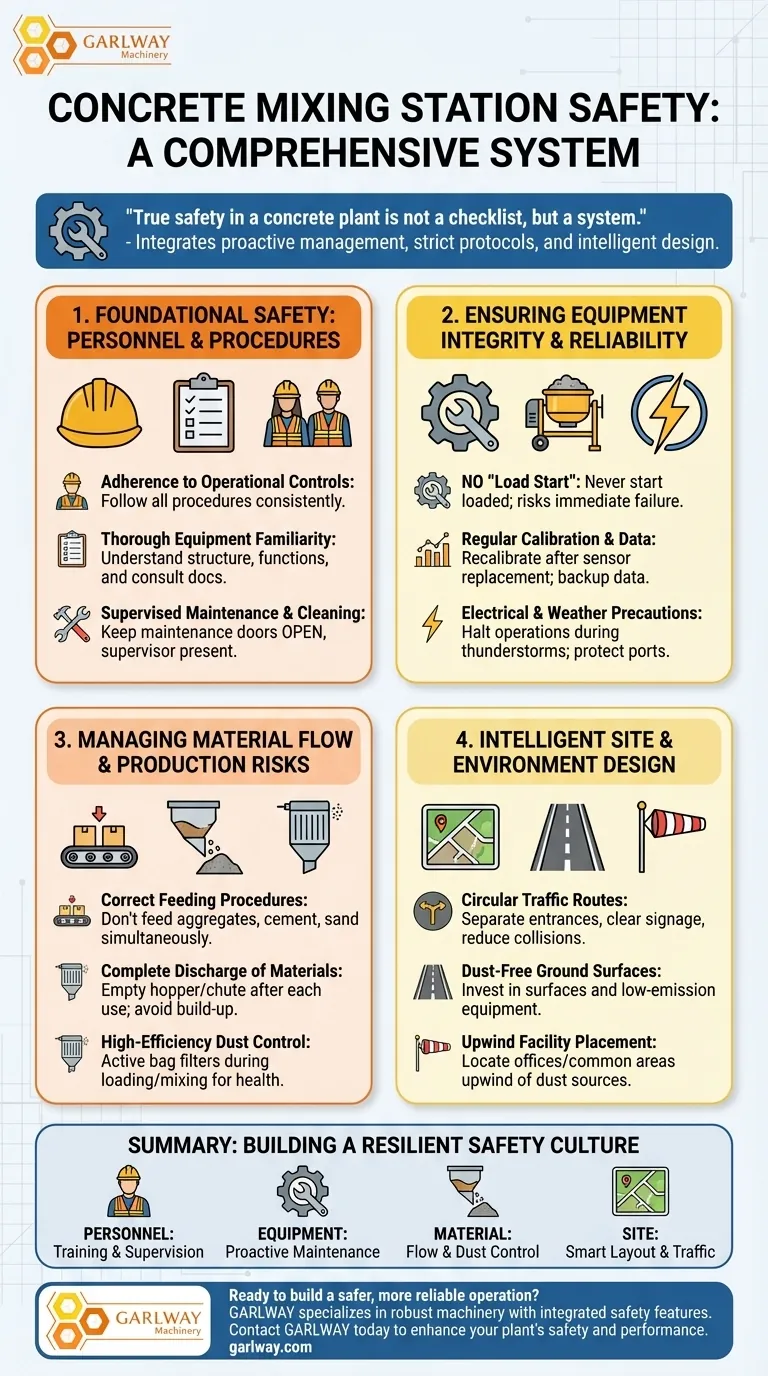
Visual Guide
Related Products
- HZS120 Ready Mix Concrete Batching Plant Commercial Mud Cement Mixer
- HZS35 Small Cement Concrete Mixing Batch Plant
- HZS75 Concrete Batching Plant Cement Mixer Price Concrete Mixer Bunnings Mixing Plant
- HZS180 Ready Mix Concrete Plant for Foundations with Sand and Cement
- Commercial Electric Concrete Mixer Machine HZS 50 Small Batch Plant for Sale
People Also Ask
- What is a ready mix concrete batching plant? The Engine of Modern Construction
- What is the name of the machine used in ready mix? Unpacking the Complete Concrete System
- What is the core component of a concrete batching plant? The Mixer Unit Defines Your Concrete Quality
- What are the types of concrete mixers used in batching plants? Choose the Right Mixer for Your Project
- What are the advantages and disadvantages of concrete batching plants? Maximize Quality & Efficiency





