
At its core, the correct operation and maintenance of a concrete mixing plant are critical for extending its service life, reducing ongoing maintenance costs, and minimizing long-term expenses. This discipline ensures the plant remains a reliable asset rather than a source of unpredictable downtime and financial loss.
The central goal is not merely to keep the machine running, but to guarantee the consistent, high-quality output of concrete. Proper operation and maintenance directly protect the integrity of the final built structures and the profitability of the entire operation.
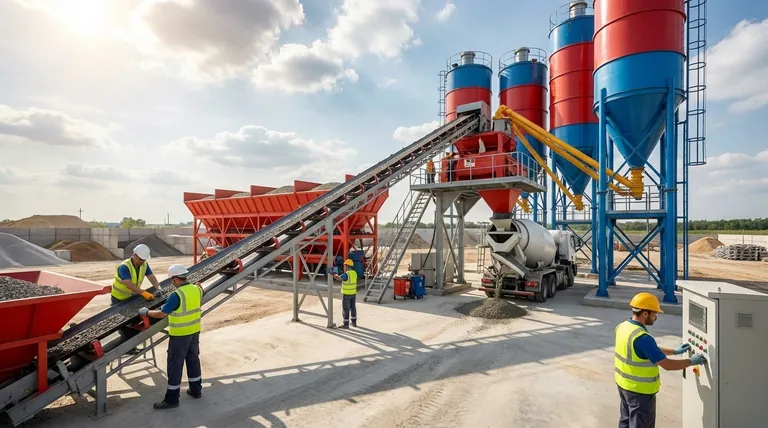
The Plant's Role in Structural Integrity
A concrete mixing plant is more than just a piece of machinery; it is the heart of any major construction project, responsible for producing the single most critical material.
The Core Function of a Mixing Plant
A plant is precision-engineered to mix raw materials like cement, water, sand, and aggregates in specific, carefully controlled proportions. The goal is to produce concrete that meets exact engineering specifications.
Ensuring Uniformity and Strength
An efficient mixing system guarantees the uniform distribution of all components. This uniformity is what gives concrete its designed strength and durability, directly ensuring the safety and longevity of the structures it is used to build.
The Link Between Upkeep and Efficiency
The day-to-day management of your plant has a direct and measurable impact on its production efficiency and, therefore, your bottom line.
The Impact of Quality Equipment
The quality of the plant itself, from the main mixer to the smallest sensor, dictates its potential for efficiency. Reputable manufacturers use superior components that lead to higher and more reliable production output.
Why Brand-Name Components Matter
Key components like sensors, seals, belts, and reducers are the primary factors affecting a plant's reliability. Choosing well-known, trusted brands for these parts is a direct investment in preventing premature failures.
The Necessity of Skilled Operators
Even the best equipment will underperform if not handled correctly. Skilled operators who understand the plant's systems are essential for maximizing efficiency, spotting early warning signs, and preventing costly operational errors.
Understanding the Trade-offs: Proactive vs. Reactive
Every operational decision is a trade-off. The most significant choice is between investing in proactive maintenance or reacting to failures as they happen.
The High Cost of Unplanned Downtime
Reactive maintenance—fixing things only when they break—is deceptive. While it seems to save money upfront, the cost of unplanned downtime, project delays, and emergency repairs is almost always significantly higher than a planned maintenance schedule.
The Hidden Expense of Poor-Quality Parts
Using cheap, non-certified replacement parts is a false economy. These components often fail sooner, cause collateral damage to other systems, and can compromise the quality of the concrete mix, creating far greater liabilities.
The Value of a Maintenance Schedule
A regular, scheduled maintenance program is the cornerstone of reliability. It allows for inspections and parts replacement on your terms, minimizing disruption and ensuring the plant is always ready for peak performance. This includes daily visual inspections and monitoring for any abnormal sounds or movements.
How to Apply This to Your Operation
To translate these principles into action, consider your primary operational goal. A clear maintenance strategy begins with planning and maintaining a stock of essential spare parts to avoid lengthy waits during a breakdown.
- If your primary focus is maximizing uptime: Implement a strict, proactive maintenance schedule and ensure your operators are thoroughly trained.
- If your primary focus is protecting your investment: Purchase equipment from a quality manufacturer and commit to using only high-quality, brand-name replacement parts.
- If your primary focus is guaranteeing construction quality: Enforce rigorous daily inspections and system calibrations to ensure every batch of concrete is perfectly mixed.
By treating your plant as a precision instrument, you transform it from a potential liability into a reliable engine for project success.
Summary Table:
| Goal | Key Action | Primary Benefit |
|---|---|---|
| Maximize Uptime | Implement a proactive maintenance schedule | Minimizes unplanned downtime and project delays |
| Protect Investment | Use high-quality, brand-name parts | Extends plant life and prevents collateral damage |
| Guarantee Quality | Conduct rigorous daily inspections & calibrations | Ensures consistent, high-strength concrete output |
Ready to transform your concrete batching plant into a reliable asset?
GARLWAY specializes in providing durable construction machinery, including high-performance concrete batching plants, mixers, and winches, for contractors and construction companies globally. Our equipment is engineered for longevity and supported by expert advice on operation and maintenance.
Contact GARLWAY today to discuss how our solutions can reduce your long-term costs and ensure your project's success.
Visual Guide

Related Products
- HZS120 Ready Mix Concrete Batching Plant Commercial Mud Cement Mixer
- HZS35 Small Cement Concrete Mixing Batch Plant
- HZS75 Concrete Batching Plant Cement Mixer Price Concrete Mixer Bunnings Mixing Plant
- HZS180 Ready Mix Concrete Plant for Foundations with Sand and Cement
- Commercial Electric Concrete Mixer Machine HZS 50 Small Batch Plant for Sale
People Also Ask
- What is a ready mix concrete batching plant? The Engine of Modern Construction
- What is the name of the machine used in ready mix? Unpacking the Complete Concrete System
- What is the core component of a concrete batching plant? The Mixer Unit Defines Your Concrete Quality
- What are the types of concrete mixers used in batching plants? Choose the Right Mixer for Your Project
- What are the advantages and disadvantages of concrete batching plants? Maximize Quality & Efficiency





