
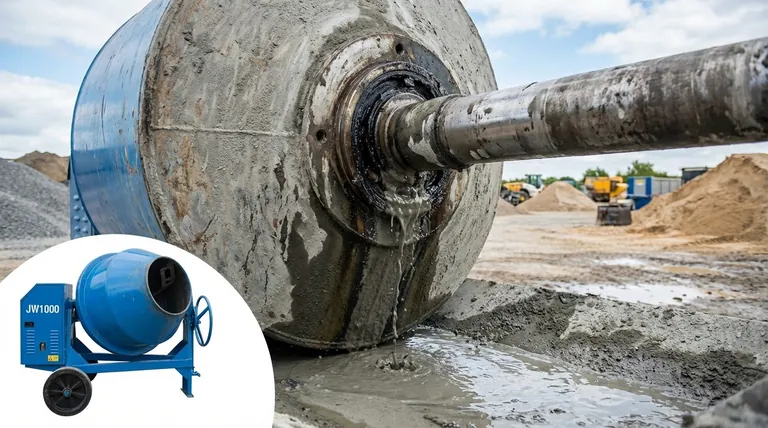
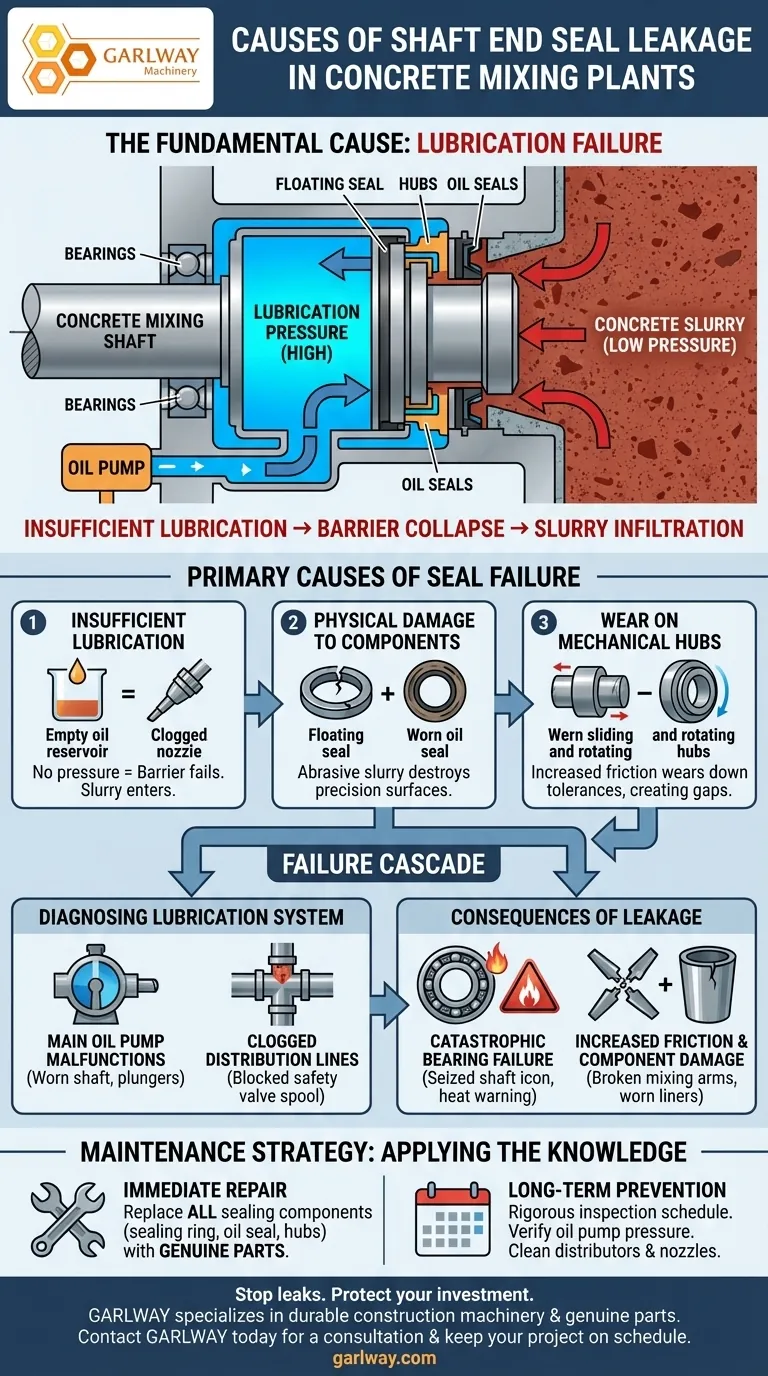
The fundamental cause of shaft end seal leakage in a concrete mixing plant is the failure of the lubrication system to maintain sufficient pressure. This allows abrasive concrete slurry to infiltrate the sealing assembly, which in turn blocks lubrication channels, accelerates wear on critical components like the floating seal and hubs, and ultimately leads to a complete breach of the seal.
The shaft end seal is not merely a physical barrier; it is a dynamic system that relies on positive lubrication pressure to keep abrasive materials out. Leakage is the final symptom of this system's failure, originating from either insufficient lubrication, damaged components, or a combination of both.
The Purpose of the Pressurized Seal System
To understand why seals fail, it's essential to first understand how they are designed to work in the harsh environment of a concrete mixer.
Creating a Protective Barrier
The primary goal of the shaft end seal is to keep the concrete slurry inside the mixing drum and away from the shaft end bearings.
This is accomplished by a multi-component assembly, including floating seals, oil seals, and precision-machined hubs.
The Critical Role of Lubrication
Lubrication does more than just reduce friction. A dedicated oil pump pushes grease or oil into the seal assembly at a specific pressure.
This pressure creates a positive barrier, ensuring that the internal lubrication pressure is higher than the external pressure from the concrete slurry. This outward force actively prevents slurry from entering the system.
Primary Causes of Seal Failure
Leakage occurs when this pressurized barrier is compromised. The failure typically traces back to one of three interconnected issues.
1. Insufficient Lubrication
This is the most common root cause. Without adequate oil pressure, the protective barrier collapses, and slurry immediately begins to work its way into the seal.
This can happen if lubrication is forgotten, the reservoir is empty, or if there is a blockage preventing oil from reaching the seal assembly.
2. Physical Damage to Sealing Components
The floating seal is the main component that fails. Once slurry gets past the initial barrier, its abrasive nature quickly destroys the precision surfaces of the seal.
Similarly, secondary oil seals will wear out rapidly when exposed to the grit and moisture of concrete slurry.
3. Wear on Mechanical Hubs
The seal rotates against a sliding hub and a rotating hub. If lubrication fails, these metal components will experience increased friction and wear.
As these hubs wear down, the precise tolerances required for the seal to function are lost, creating gaps that allow leakage even if lubrication pressure is later restored.
Diagnosing Lubrication System Breakdowns
Often, the problem isn't the seal itself but the system that supplies it with lubrication. A thorough diagnosis must check the entire oil circuit.
Main Oil Pump Malfunctions
The issue can start at the source. A worn main oil pump drive shaft or malfunctioning plungers within the pump will prevent it from generating the required pressure.
Clogged Distribution Lines
Oil travels from the pump through a distributor and into narrow channels. Over time, hardened grease or contaminants can create blockages.
A clogged safety valve spool in the oil circuit distributor is a common point of failure, preventing proper oil distribution to the shaft end.
The Consequences of a Leaking Seal
Ignoring shaft end leakage leads to a cascade of expensive and time-consuming failures that go far beyond replacing a simple seal.
Catastrophic Bearing Failure
Once slurry penetrates the main seal, it will contaminate the shaft end bearings. This abrasive mixture destroys the bearings, leading to increased heat, vibration, and eventual seizure of the mixing shaft.
Increased Friction and Component Damage
A failing seal system dramatically increases friction between the shaft and bearings.
This strain can lead to significant damage to the mixing arms and liners inside the drum, potentially causing them to wear prematurely or break.
How to Apply This to Your Maintenance Strategy
Your response to a leaking seal should be determined by whether you are performing an emergency repair or implementing a long-term reliability plan.
- If your primary focus is immediate repair: Replace the entire set of sealing components—including the sealing ring, oil seal, sliding hub, and rotating hub—to ensure all parts have matching tolerances. Always use original manufacturer parts to avoid size discrepancies that lead to rapid failure.
- If your primary focus is long-term prevention: Implement a rigorous inspection schedule for the entire lubrication system. Regularly verify oil pump pressure, clean and inspect the oil circuit distributors, and ensure all lubrication nozzles are clear and functioning correctly.
Ultimately, proactive management of your mixer's lubrication system is the most effective strategy for ensuring shaft end seal reliability and preventing costly downtime.
Summary Table:
| Cause of Failure | Primary Symptom | Key Component Affected |
|---|---|---|
| Insufficient Lubrication | Loss of oil pressure | Floating Seal & Hubs |
| Physical Seal Damage | Abrasive wear | Floating Seal & Oil Seals |
| Mechanical Hub Wear | Loss of tolerances | Sliding & Rotating Hubs |
| Lubrication System Breakdown | Blocked oil channels | Oil Pump & Distributors |
Stop seal leaks and protect your investment. Shaft end seal failure leads to catastrophic bearing damage and costly downtime. GARLWAY specializes in durable construction machinery, including concrete batching plants and mixers. Our genuine parts and expert support ensure your equipment runs reliably. Contact GARLWAY today for a consultation and keep your project on schedule.
Visual Guide
Related Products
- Shaft Mixer Machine for Cement and Regular Concrete Mixing
- HZS35 Small Cement Concrete Mixing Batch Plant
- Construction Products Concrete Plant Machine Mixing Concrete Mixer
- HZS120 Ready Mix Concrete Batching Plant Commercial Mud Cement Mixer
- HZS180 Ready Mix Concrete Plant for Foundations with Sand and Cement
People Also Ask
- How do cement mixers enhance safety on construction sites? Reduce Strain, Hazards, and Accidents
- What are the key benefits of using a cement mixer on a construction site? Boost Efficiency, Quality & Safety
- What are the efficiency advantages of cement mixers? Boost Project Speed, Quality, and ROI
- How does cleaning a cement mixer after use benefit its performance? Maximize Lifespan and Mix Quality
- Can a cement mixer be used for mixing mortar? Understanding the Risks and Best Practices





