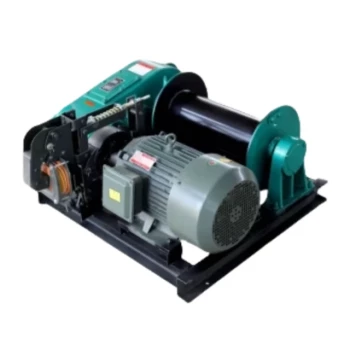
At their core, capstan winches offer superior safety by fundamentally changing the operator's relationship with the machine and the load. Unlike standard winches, they provide direct manual control over tension, position the operator away from the dangerous line of pull, and utilize synthetic rope that is inherently safer than steel cable in the event of a break.
The primary safety advantage of a capstan winch stems from its design, which separates the pulling mechanism from rope storage. This gives the operator direct, intuitive control and places them outside the immediate danger zone, a significant improvement over the fixed-position operation of a standard winch.
The Core Design Difference
To understand the safety benefits, you must first understand the mechanical difference between the two winch types.
How a Standard Winch Works
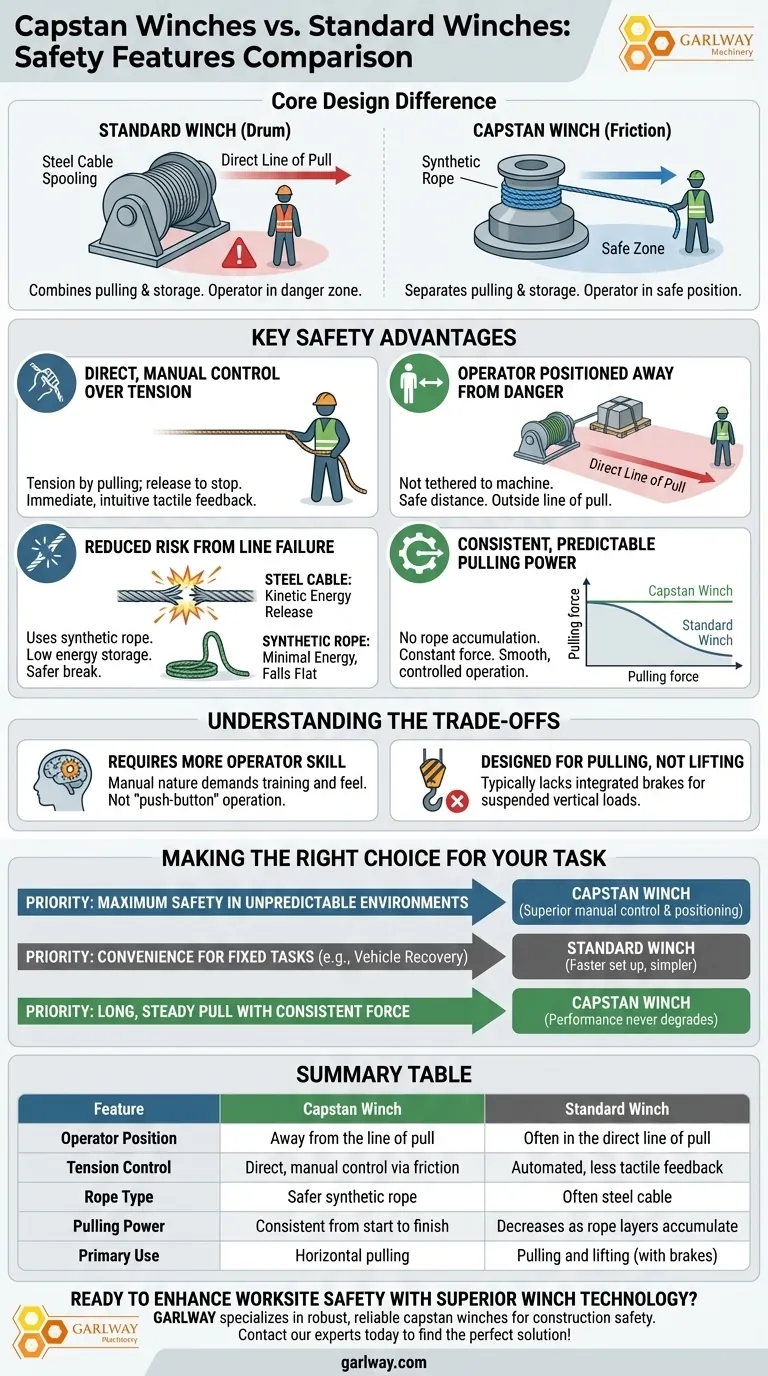
A standard drum winch combines pulling and storage into one component. The cable or rope wraps directly onto a drum, and as more layers accumulate, the winch's effective pulling power decreases. The operator is typically positioned at the winch's controls, often in the direct line of pull.
How a Capstan Winch Works
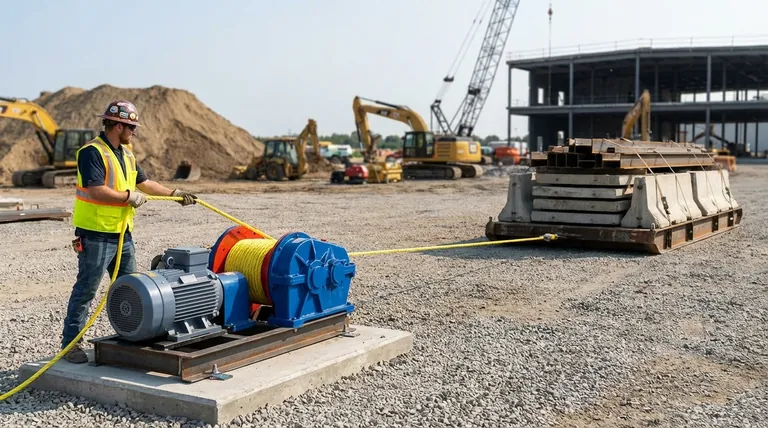
A capstan winch uses a rotating, friction-based drum (capstan) to do the pulling. The rope is not stored on this drum; it is simply wrapped around it a few times. The operator pulls on the loose end of the rope to create tension, which engages the friction and pulls the load. The rope itself is stored separately.
Key Safety Advantages Explained
This fundamental design difference creates several distinct safety advantages.
Direct, Manual Control Over Tension
The operator is the "clutch." By pulling on the rope's tail, they create the friction that pulls the load. To stop the pull instantly, they simply release tension. This direct, tactile feedback provides an immediate and intuitive way to manage the force being applied.
Operator Positioned Away from Danger
Because the rope is not stored on the machine, the operator is not tethered to it. They can stand at a safe distance and, most importantly, completely outside the direct line of pull—the most dangerous area should any part of the rigging fail.
Reduced Risk from Line Failure
Capstan winches exclusively use synthetic rope, not steel cable. Steel cable stores immense amounts of kinetic energy when under load and can whip back violently and fatally if it snaps. Synthetic rope has far less stretch and energy storage, causing it to simply fall to the ground if it breaks, dramatically reducing the risk of serious injury.
Consistent, Predictable Pulling Power
Because rope does not accumulate on the capstan drum, the winch delivers constant pulling force from the beginning of the pull to the end. This predictable performance eliminates the jerky or slowing behavior of a standard winch, giving the operator a more controlled and stable operation.
Understanding the Trade-offs
While safer in many respects, capstan winches are not without their own considerations. Objectivity requires acknowledging their specific operational demands.
Requires More Operator Skill
The manual nature of a capstan winch demands more training and feel from the operator. It is not a simple "push-button" operation. The user must learn to properly apply and manage tension to ensure a smooth, safe pull.
Designed for Pulling, Not Lifting
Critically, most capstan winches are designed for horizontal pulling tasks only. They typically lack the integrated braking systems required to safely hold a suspended vertical load, a function for which standard winches are often designed.
Making the Right Choice for Your Task
Your choice depends entirely on the application and your safety priorities.
- If your primary focus is maximum operator safety in unpredictable environments: A capstan winch is superior due to its manual control and off-axis operator positioning.
- If your primary focus is convenience for a fixed task like vehicle recovery: A standard drum winch is often faster to set up and simpler for less-experienced users.
- If your primary focus is a long, steady pull with consistent force: A capstan winch excels because its performance never degrades as more rope is paid out.
Ultimately, choosing the right winch means choosing the tool that grants the operator the most effective and predictable control over the load.
Summary Table:
| Feature | Capstan Winch | Standard Winch |
|---|---|---|
| Operator Position | Away from the line of pull | Often in the direct line of pull |
| Tension Control | Direct, manual control via friction | Automated, less tactile feedback |
| Rope Type | Safer synthetic rope | Often steel cable |
| Pulling Power | Consistent from start to finish | Decreases as rope layers accumulate |
| Primary Use | Horizontal pulling | Pulling and lifting (with brakes) |
Ready to enhance worksite safety with superior winch technology? GARLWAY specializes in construction machinery, offering robust and reliable capstan winches designed for construction companies and contractors who prioritize operator safety. Our winches provide the direct control and protection your team needs. Contact our experts today to find the perfect winch solution for your specific application!
Visual Guide
Related Products
- Portable Small Trailer Winch
- Small Electric Winch 120V and 240V for Compact Applications
- Electric and Hydraulic Winch for Heavy Duty Applications
- 12000 lb Heavy Duty Electric Boat Winch
- Hydraulic Winding Engine Harbor Freight Winch
People Also Ask
- What features were incorporated into the upgraded portable winch system? Boost Your Recovery Power & Safety
- What are some uses mentioned for portable winches beyond vehicle recovery? Essential Versatility for Property & Work
- How could the twisting issue with a portable winch be mitigated? Achieve Safe, Centered Pulls with Proper Rigging
- What is the significance of trailer winches in the boating industry? Ensure Safe and Efficient Boat Recovery
- What should be considered when mounting a winch on a trailer? Ensure a Safe, Aligned Installation