
The most critical advice for using a manual windlass is to protect your hands with good gloves and to be mentally prepared for a much slower operation than an electric model. This deliberate pace becomes especially important when you need to re-anchor several times or leave an anchorage in a hurry, as the physical effort and time required can be significant.
A manual windlass is a testament to simplicity and reliability, but its practical value hinges on your willingness to trade speed and convenience for mechanical robustness and independence from your boat's electrical system.
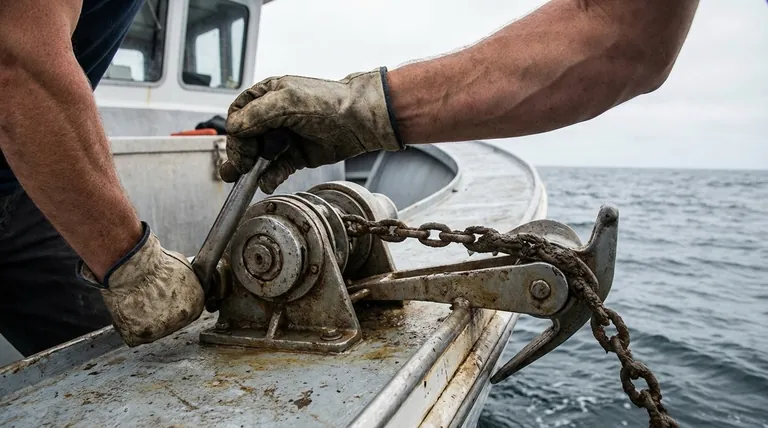
The Operational Reality of Manual Hauling
Using a manual windlass is a fundamentally different experience from using an electric one. Success requires adjusting your expectations and techniques to match the tool's design.
Expect a Slower Pace
The most noticeable characteristic is the speed. Retrieving an anchor and chain is a deliberate, methodical process that cannot be rushed.
This slower operation is a key factor to consider if you often need to move or re-anchor multiple times to find the perfect holding.
The Importance of Good Gloves
This is non-negotiable practical advice. Handling the chain and operating the windlass lever can be rough on your hands, and a good pair of gloves prevents blisters, cuts, and fatigue.
The "Hand-Haul" Technique
Many experienced sailors find it faster to haul in most of the anchor chain by hand, especially when the load is light.
They then engage the manual windlass only for the final, most difficult part of the job: breaking the anchor free from the seabed and lifting its dead weight onto the bow roller.
Acknowledging the Physical Demand
There is no power-assist button. Operating a manual windlass requires upper body strength, which can be a welcome form of exercise or a significant challenge depending on your fitness and the conditions.
Navigating Challenging Conditions
The true test of any windlass comes when conditions are less than ideal. A manual system requires specific techniques to manage the heavy loads.
When the Anchor is Set Hard
In strong winds or when an anchor has dug deep into the seabed, the strain on the system can make retrieval extremely difficult.
The force required to break the anchor free can be immense, testing both the equipment and the operator.
Using Your Engine to Assist
A common and highly effective technique is to use the boat's engine to take the load off the windlass.
By motoring slowly forward over the anchor, you reduce the tension on the rode, making it much easier to break the anchor free and retrieve the chain.
Understanding the Trade-offs
Choosing a manual windlass means accepting a distinct set of advantages and disadvantages. Objectivity is key to making the right decision for your vessel.
The Advantage of Simplicity
The greatest strength of a manual windlass is its independence. It requires no electricity, has no complex wiring, and eliminates a common point of electrical failure on a boat. It will function even if your entire electrical system fails.
The Cost Factor
Manual windlasses are considerably less expensive to purchase and install than their electric counterparts, representing a significant cost saving.
The Risk of Seizing
While simple, they are not immune to problems. Some users report manual windlasses seizing up, particularly on long passages where maintenance might be neglected. Regular service is still required.
The "Hasty Departure" Problem
The most significant operational drawback is speed. If you need to weigh anchor and leave in a hurry, a manual windlass is a clear liability compared to the rapid retrieval of an electric model.
Making the Right Choice for Your Situation
Your decision should be based on your anchoring style, your boat's systems, and your personal priorities.
- If your primary focus is reliability and cost-savings: A manual windlass is an excellent choice, offering robust operation without relying on battery power or complex electronics.
- If your primary focus is convenience and speed: An electric windlass is superior, particularly if you anchor often, in deep water, or in crowded areas where quick departures may be necessary.
- If you often anchor in windy or difficult conditions: Recognize that a manual windlass will be more physically demanding, and mastering the technique of using your engine to assist is essential.
Ultimately, choosing a manual windlass is a commitment to a simpler, more hands-on approach to anchoring.
Summary Table:
| Key Aspect | Practical Advice |
|---|---|
| Pace & Expectation | Much slower than electric; requires deliberate, methodical operation. |
| Hand Protection | Always wear good gloves to prevent blisters and cuts. |
| Hauling Technique | Hand-haul light chain; use windlass for breaking anchor free. |
| Challenging Conditions | Use boat's engine to reduce load on the windlass. |
| Primary Advantage | Simplicity, reliability, and independence from electrical systems. |
| Primary Drawback | Slower operation, especially for hasty departures. |
Need a reliable anchoring solution for your construction or marine project?
At GARLWAY, we specialize in robust machinery, including winches and hoists built for demanding conditions. Our equipment is engineered for durability and simplicity, much like the reliable manual windlass described here. Whether you're a contractor on a job site or managing a marine operation, we provide the dependable power you need.
Contact GARLWAY today to discuss how our winches and concrete machinery can enhance your project's efficiency and safety.
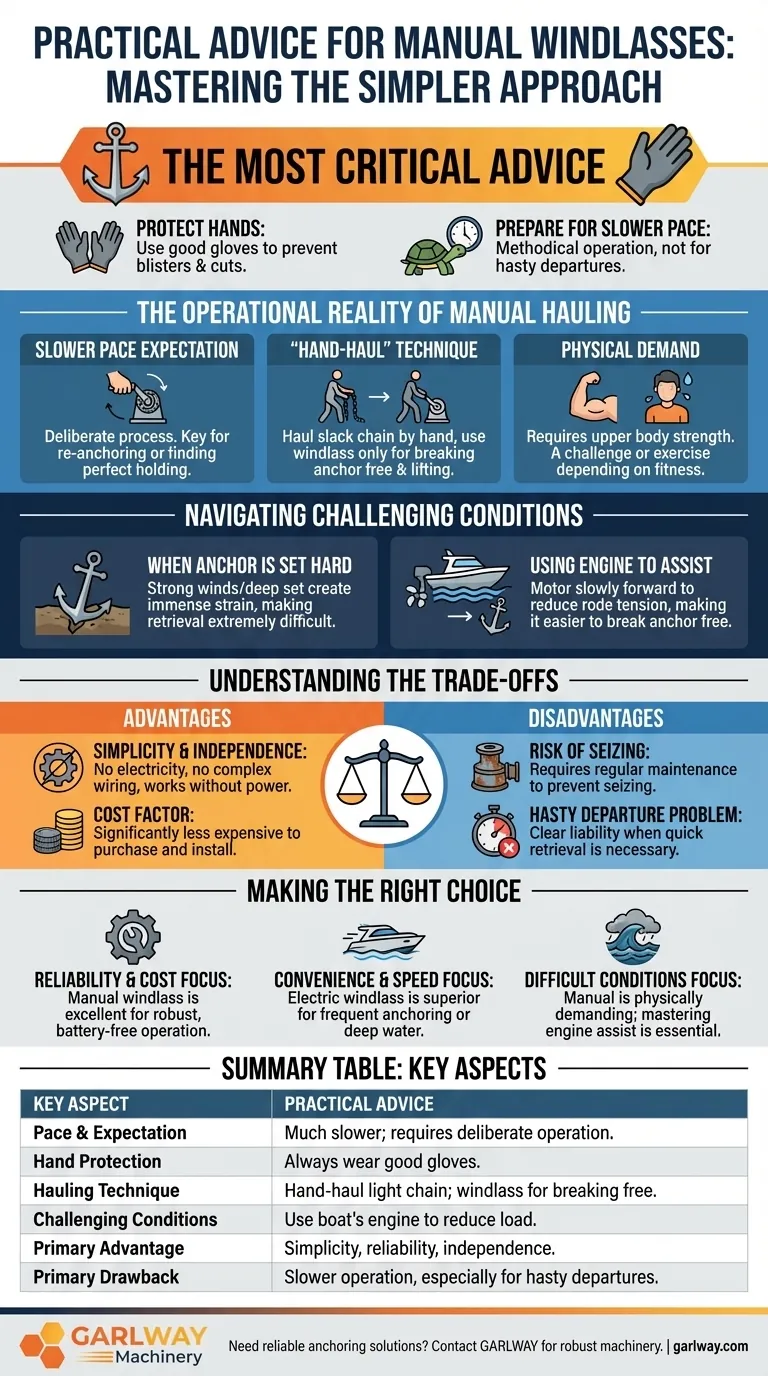
Visual Guide
Related Products
- Quick Windlass Portable Winch for Truck and Boat Best Boat Winch
- Electric Hoist Winch Boat Anchor Windlass for Marine Applications
- Heavy Duty Electric Boat Winch Windlass Anchor
- Warn Winch Windlass Boat Trailer Winch
- 12000 lb Electric Boat Trailer Winch with Windlass Anchor Warn
People Also Ask
- What features were incorporated into the upgraded portable winch system? Boost Your Recovery Power & Safety
- What are some uses mentioned for portable winches beyond vehicle recovery? Essential Versatility for Property & Work
- How could the twisting issue with a portable winch be mitigated? Achieve Safe, Centered Pulls with Proper Rigging
- What are the primary uses of a portable winch for a truck? Boost Your Truck's Capability and Self-Reliance
- What is the single rope traction force of the quick winch without a pulley block? 0.5 to 40 Tons Explained


