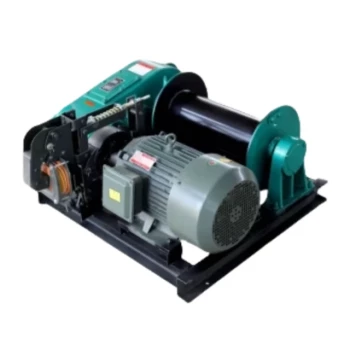
When using an anchor winch, the primary considerations for your chain are its weight, which dictates holding power, and its compatibility with your specific winch system. The length and type of chain must be balanced against the winch's design—whether it's a gypsy for all-chain rodes or a drum for combination rope-chain rodes—and the type of seabed you are anchoring in.
The core challenge is balancing the superior holding power provided by the chain's weight against the practical trade-offs of onboard weight, equipment compatibility, and potential environmental impact.
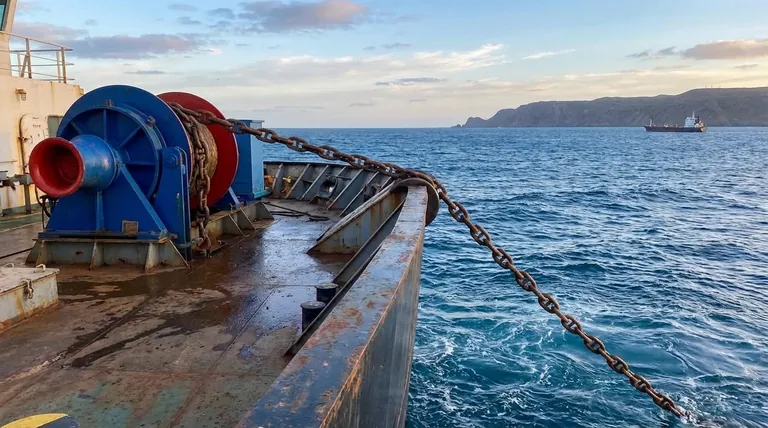
The Principle: Why Chain Is So Effective
Chain is the cornerstone of a secure anchoring system, and understanding its function is key to using it correctly with a winch.
How Catenary Creates Holding Power
An anchor's job is to dig into the seabed. It performs best when the pulling force is horizontal, parallel to the seafloor.
The significant weight of the chain creates a sag, known as catenary. This curve ensures that even as your boat moves with wind and waves, the pull on the anchor itself remains horizontal, preventing it from breaking free. More chain equals more weight and a more effective catenary.
Why Boat Type Matters
The reference to catamarans is important. Due to their wide beam, catamarans tend to "tack" back and forth at anchor more than monohulls.
The heavy catenary of a long chain acts as a superior shock absorber for this motion, providing a smoother experience and placing less stress on the anchor.
Matching Your Rode to Your Winch
The combination of rope and chain you use (your "rode") must be matched to the type of winch you have. There are two primary systems.
All-Chain Rodes and the Gypsy
Larger vessels often use an all-chain rode. This system requires a specific type of winch wheel called a gypsy, which has pockets designed to grip the chain links precisely.
This is the most robust and reliable system for heavy-duty anchoring, but it adds significant weight to the bow of the boat.
Combination Rodes and the Drum Winch
Many recreational boats use a combination rode, consisting of a shorter length of chain attached to a much longer length of rope. This is managed by a drum winch, which simply winds the entire rode onto a large spool.
This setup saves considerable weight but introduces a critical point of complexity: the splice between the rope and chain.
Understanding the Trade-offs and Risks
While chain is highly effective, its use involves important compromises and potential problems that every skipper must manage.
The Problem of "Drum Stickiness"
On a drum winch, the stiff chain section is wound onto the drum first, followed by the softer, more pliable rope.
Under tension, the rope can get tightly wedged beside the inflexible chain links. This "stickiness" can cause the winch to jam during retrieval. Removing a section of rope, as some users do, creates more space on the drum, reducing pressure and the likelihood of jamming.
The Downside of Onboard Weight
Every kilogram of chain in your bow locker is weight that can negatively affect your boat's performance, potentially making it slower and less responsive, especially in rough seas. You must balance the need for secure anchoring with your vessel's handling characteristics.
The Risk to the Seabed
An all-chain rode can be destructive to sensitive marine environments. As the boat swings with the wind and tide, the heavy chain drags across the seafloor.
This action can destroy fragile coral reefs and rip up vital seagrass beds. In such areas, using a much shorter chain leader or a specialized anchoring technique is an essential part of responsible seamanship.
Making the Right Choice for Your System
Your decision should be guided by your boat, your winch, and the type of anchoring you do most often.
- If your primary focus is maximum holding power in severe weather: An all-chain rode managed by a properly sized gypsy is the most secure configuration.
- If your primary focus is weight savings on a trailer boat or smaller vessel: A combination rope-chain rode on a drum winch is highly effective, but pay close attention to the splice and be mindful of potential drum binding.
- If you frequently anchor in environmentally sensitive areas: Minimize your chain length to what is necessary for catenary and consider using a rope-only rode with a heavier anchor as an alternative.
By understanding these principles, you can configure your anchor winch and rode for maximum security and confidence on the water.
Summary Table:
| Consideration | Key Factor | Impact on System |
|---|---|---|
| Chain Weight | Creates catenary for horizontal pull | Maximizes anchor holding power |
| Winch Type | Gypsy (all-chain) vs. Drum (rope-chain) | Dictates rode compatibility and setup |
| Boat Type | Monohull vs. Catamaran | Influences required chain length for shock absorption |
| Seabed Type | Sensitive environments (e.g., coral) | May require shorter chain to minimize damage |
| Onboard Weight | Affects boat performance and handling | Balances security with vessel responsiveness |
Configure Your Anchor System for Maximum Security
Choosing the right chain and winch combination is critical for safe and effective anchoring. GARLWAY specializes in robust construction and marine machinery, offering durable winches designed for demanding applications. Our expertise ensures your equipment is matched to your specific needs, whether for commercial marine use or heavy-duty construction projects.
Let our experts help you select the perfect winch for your requirements. Contact GARLWAY today to discuss your project and discover how our reliable solutions can enhance your operational safety and efficiency.
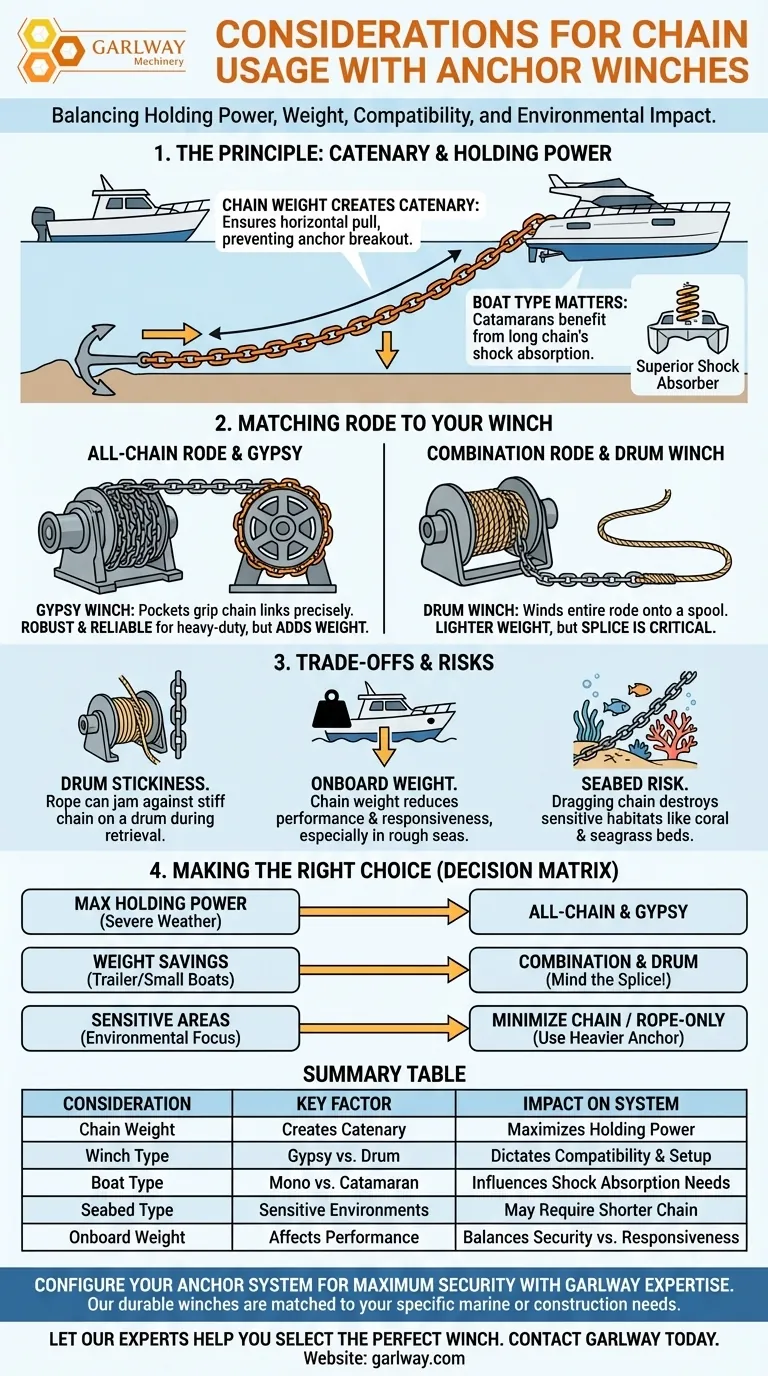
Visual Guide
Related Products
- 12000 lb Electric Boat Trailer Winch with Windlass Anchor Warn
- Heavy Duty Electric Boat Winch Windlass Anchor
- Best 18000 Pound Drum Anchor Trailer Winch
- Electric Hoist Winch Boat Anchor Windlass for Marine Applications
- Warn Winch Windlass Boat Trailer Winch
People Also Ask
- How does an electric boat trailer winch differ from a manual one? Effort vs. Control Explained
- What size winch do I need for my boat? Get the Right Capacity for Safe Hauling
- How should a boat trailer winch be properly used? A Step-by-Step Guide for Safe Loading
- What maintenance steps are specific to boat trailer winches? Ensure Safety & Reliability at the Ramp
- How strong of a winch do I need for my boat? Get the Right Pulling Power for Trailering & Anchoring