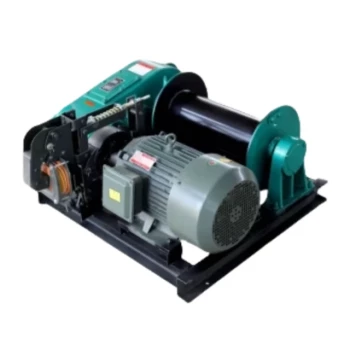
The critical safety feature that prevents a boat from rolling backward during winching is a spring-loaded ratchet built directly into the winch mechanism. This device allows the winch drum to turn in one direction to pull the boat forward but is designed to mechanically lock and prevent it from reversing under the boat's weight when you stop cranking.
The spring-loaded ratchet is your primary mechanical safeguard against backward movement. However, true safety comes from understanding how this part works, recognizing its potential failure points, and never relying on it as your only line of defense.
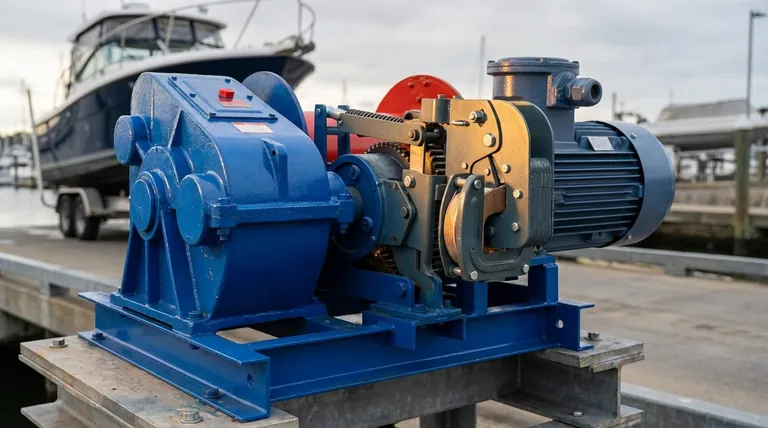
How the Winch Ratchet Works
A trailer winch ratchet is a simple but effective mechanical lock. Its operation is the source of the distinct clicking sound you hear while retrieving your boat.
The 'Clicking' Sound of Safety
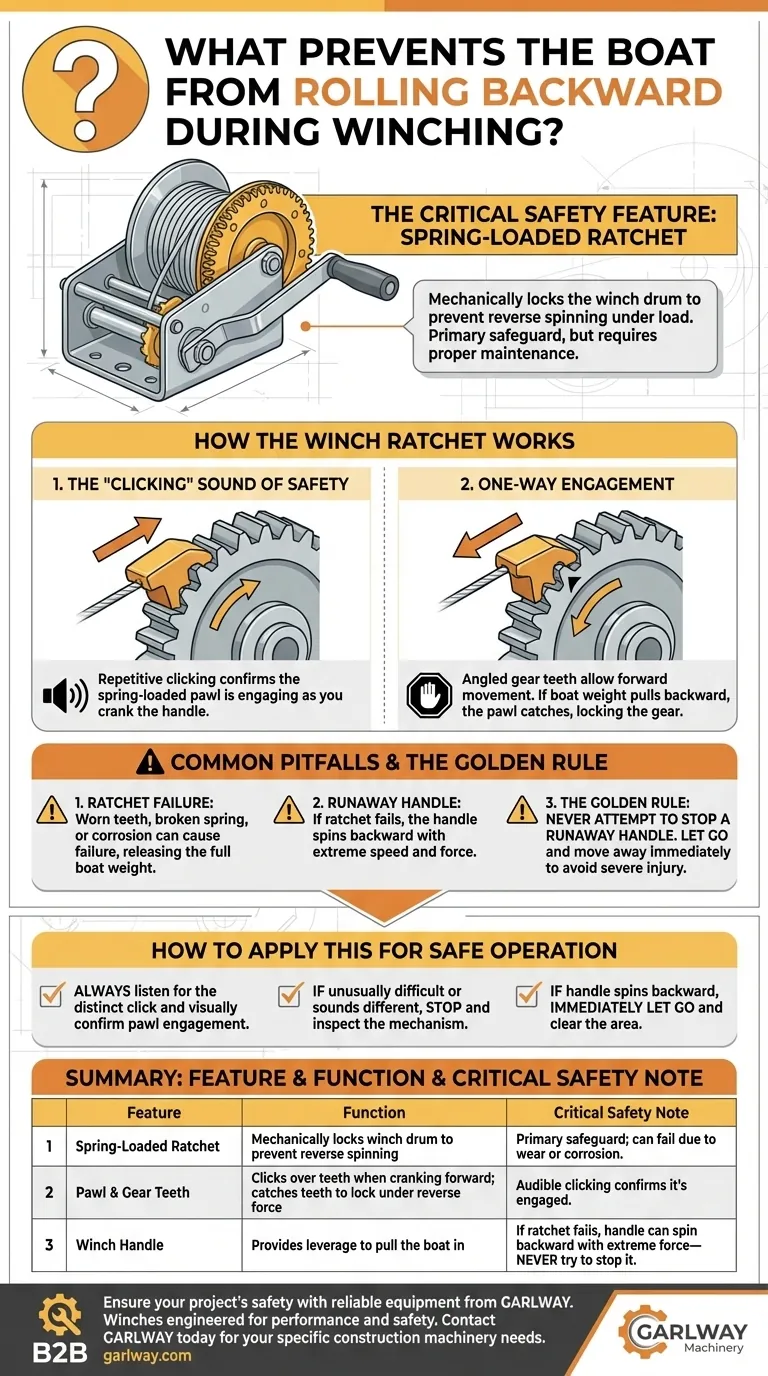
That repetitive clicking is the sound of the spring-loaded pawl (a small metal lever) skipping over the teeth of the main winch gear as you crank the handle. This is the audible confirmation that the safety mechanism is in position.
One-Way Engagement
The gear's teeth are angled. As you crank the handle to pull the boat in, the pawl easily slides up and over each tooth. But if the boat's weight tries to pull the line out, the pawl immediately catches a tooth, locking the gear and preventing it from spinning backward.
The Role of the Handle
The handle provides the leverage to turn the gear system. The ratchet's job is to hold all the progress you make with each turn, taking the load off of you and securing the boat's position the moment you pause or let go.
Common Pitfalls and Failure Points
While generally reliable, the ratchet is a mechanical part that can fail. Understanding the risks is crucial for avoiding a dangerous situation at the boat ramp.
When a Ratchet Fails
Failure can occur due to a weakened or broken spring, worn or damaged gear teeth, or corrosion that prevents the pawl from engaging properly. If the pawl doesn't lock securely into the gear, the full weight of the boat will be released.
The Danger of a Runaway Handle
If the ratchet fails, the winch handle will spin backward with incredible speed and force, driven by the boat's weight. This is the single most common cause of serious injury when using a manual winch.
The Golden Rule: Let Go
Never attempt to stop a runaway winch handle. The force is too great and will almost certainly result in broken bones or other severe injuries. The most critical safety procedure in this scenario is to immediately let go of the handle and move away.
How to Apply This to Your Project
Your safety depends on more than just this one component. A disciplined approach to the entire winching process is essential.
- If your primary focus is routine loading: Always listen for the distinct click of the ratchet and visually confirm the pawl is engaging before you let go of the handle.
- If your winch feels unusually difficult or sounds different: Stop immediately and inspect the ratchet mechanism for debris, rust, or visible wear before continuing.
- If your winch handle ever spins backward: Your immediate and only action should be to let go and clear the area to avoid injury.
Ultimately, your knowledge of the equipment and a commitment to safe practices are what ensure you get home safely.
Summary Table:
| Feature | Function | Critical Safety Note |
|---|---|---|
| Spring-Loaded Ratchet | Mechanically locks winch drum to prevent reverse spinning under load. | Primary safeguard; can fail due to wear or corrosion. |
| Pawl & Gear Teeth | Pawl clicks over teeth when cranking forward, catches teeth to lock under reverse force. | Audible clicking confirms it's engaged. |
| Winch Handle | Provides leverage to pull the boat in. | If ratchet fails, handle can spin backward with extreme force—NEVER try to stop it. |
Ensure your project's safety with reliable equipment from GARLWAY.
Whether you're a construction company managing heavy loads or a contractor requiring dependable pulling power, our winches are engineered for performance and safety. Don't compromise on the mechanisms that protect your crew and assets.
Contact GARLWAY today to find the right winch solution for your specific needs and experience the durability and innovation built into all our construction machinery, including concrete mixers and batching plants.
Visual Guide
Related Products
- 12000 lb Electric Boat Trailer Winch with Windlass Anchor Warn
- Portable Small Trailer Winch
- Best 18000 Pound Drum Anchor Trailer Winch
- Warn Winch Windlass Boat Trailer Winch
- Quick Windlass Portable Winch for Truck and Boat Best Boat Winch
People Also Ask
- How does an electric boat trailer winch differ from a manual one? Effort vs. Control Explained
- What size winch do I need for my boat? Get the Right Capacity for Safe Hauling
- How should a boat trailer winch be properly used? A Step-by-Step Guide for Safe Loading
- What maintenance steps are specific to boat trailer winches? Ensure Safety & Reliability at the Ramp
- How strong of a winch do I need for my boat? Get the Right Pulling Power for Trailering & Anchoring