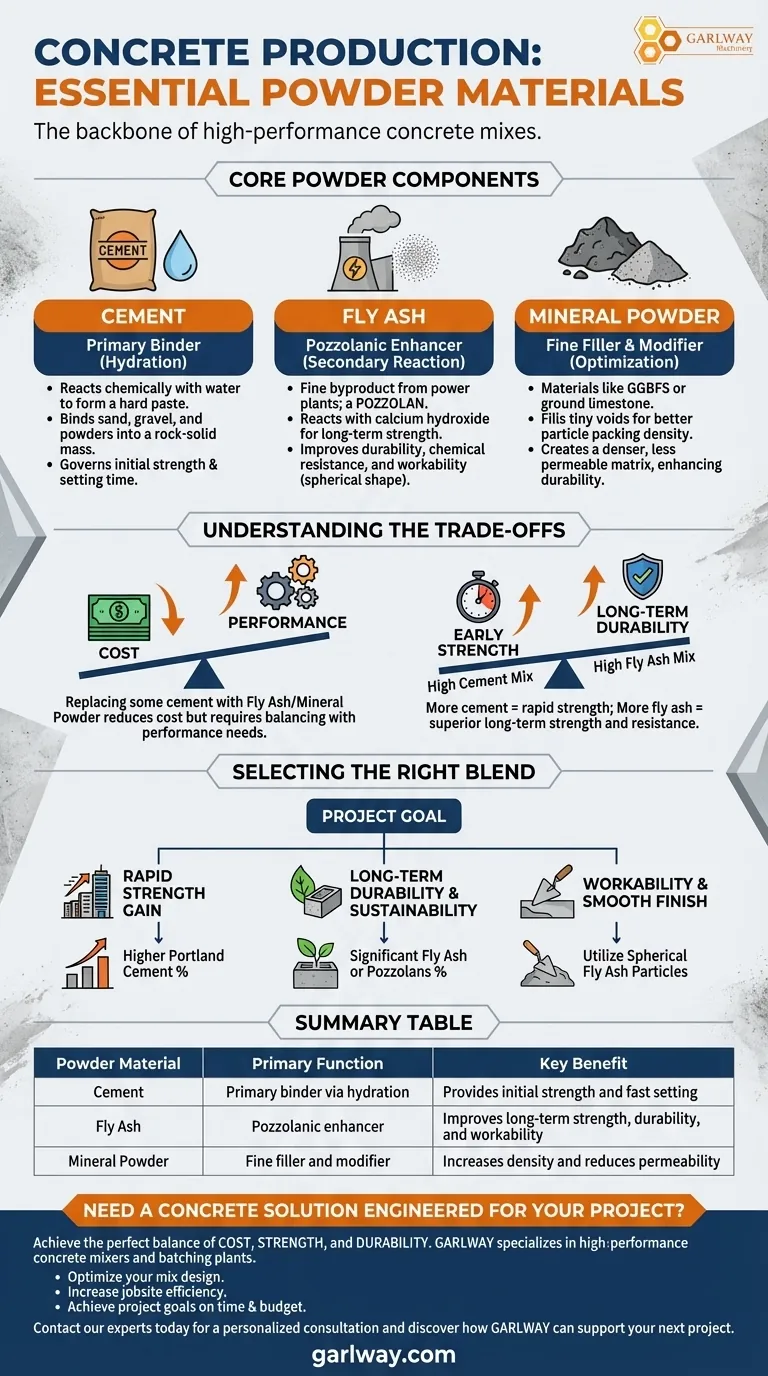
At its core, the production of modern concrete relies on a carefully balanced combination of three primary powder materials. These are cement, which serves as the fundamental binder, and supplementary powders like fly ash and mineral powder, which enhance performance and durability.
While Portland cement is the indispensable active ingredient, the strategic inclusion of supplementary powders like fly ash is what elevates a basic mix into high-performance, durable, and cost-effective concrete.
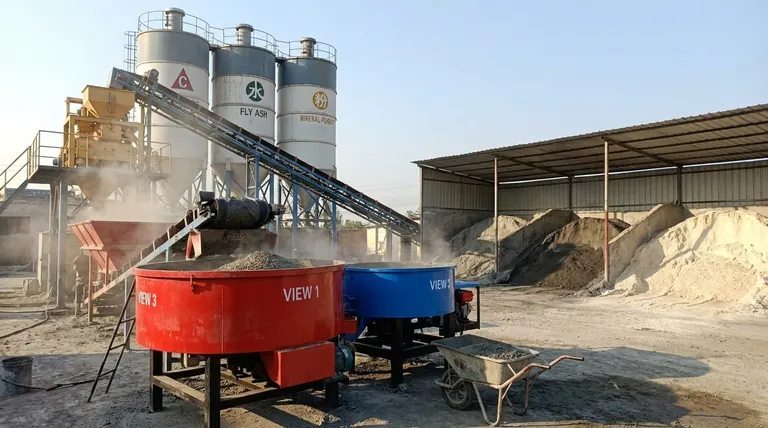
The Role of Each Powder Component
To understand how concrete works, you must first understand the specific function of each powder. They are not interchangeable; each contributes unique properties to the final mixture.
Cement: The Primary Binder
Portland cement is the engine of concrete. It's a hydraulic cement, meaning it reacts chemically with water in a process called hydration.
This reaction forms a paste that hardens and binds the other components—sand, gravel, and supplementary powders—into the rock-solid mass we know as concrete. The amount and quality of cement directly govern the concrete's initial strength and setting time.
Fly Ash: The Pozzolanic Enhancer
Fly ash is a fine powder that is a byproduct of burning pulverized coal in electric generation power plants. It is not an inert filler; it is a pozzolan.
A pozzolanic material reacts with calcium hydroxide, a byproduct of the cement hydration process, to form additional cementitious compounds. This secondary reaction adds significant long-term strength, improves durability, and increases resistance to chemical attack. The spherical shape of fly ash particles also acts like microscopic ball bearings, improving the workability and flow of fresh concrete.
Mineral Powder: The Fine Filler and Performance Modifier
The term "mineral powder" often refers to materials like ground-granulated blast-furnace slag (GGBFS) or ground limestone. These powders primarily serve to optimize the mixture.
Their fine particles help improve the overall particle packing density, filling the tiny voids between cement and sand grains. This creates a denser, less permeable concrete matrix, which enhances durability. Depending on the type, some mineral powders also have cementitious properties, further contributing to strength.
Understanding the Trade-offs
Selecting the right blend of powders is a balancing act. The ideal ratio depends entirely on the project's specific requirements for performance, budget, and timeline.
Cost vs. Performance
Cement is typically the most expensive powder component in concrete. Replacing a portion of it with less expensive materials like fly ash or mineral powder can significantly reduce the overall cost of the mix. However, this must be balanced against performance requirements.
Early Strength vs. Long-Term Durability
Mixes with a high percentage of Portland cement tend to gain strength very quickly. This is ideal for projects requiring rapid construction cycles.
Conversely, mixes with a high volume of fly ash may gain strength more slowly at the start but will ultimately achieve superior long-term strength and greater resistance to harsh environmental conditions.
Sourcing and Consistency
The quality of your raw materials is paramount. While cement manufacturing is highly standardized, the properties of fly ash can vary depending on its source. Ensuring a consistent supply of high-quality, well-prepared powders is essential for preventing delays and producing reliable, high-quality concrete.
Selecting the Right Powder Blend for Your Project
Your project's primary goal will dictate the optimal blend of powder materials.
- If your primary focus is rapid strength gain: Rely on a mix with a higher percentage of Portland cement for fast hydration and curing.
- If your primary focus is long-term durability and sustainability: Incorporate a significant percentage of fly ash or other pozzolanic materials to create a dense, resilient concrete matrix.
- If your primary focus is workability and a smooth finish: Utilize the lubricating effect of spherical fly ash particles to improve the flow and placement of the concrete.
Mastering the interplay between these powders is the key to designing concrete that is not just strong, but perfectly engineered for its intended purpose.
Summary Table:
| Powder Material | Primary Function | Key Benefit |
|---|---|---|
| Cement | Primary binder via hydration | Provides initial strength and fast setting |
| Fly Ash | Pozzolanic enhancer | Improves long-term strength, durability, and workability |
| Mineral Powder | Fine filler and modifier | Increases density and reduces permeability |
Need a Concrete Solution Engineered for Your Project?
Choosing the right powder blend is critical to achieving the perfect balance of cost, strength, and durability for your construction needs. GARLWAY specializes in providing high-performance construction machinery, including concrete mixers and batching plants, designed to handle precise material formulations for contractors and construction companies worldwide.
Let us help you build better:
- Optimize your mix design for superior results.
- Increase jobsite efficiency with reliable equipment.
- Achieve project goals on time and on budget.
Contact our experts today for a personalized consultation and discover how GARLWAY can support your next project.
Visual Guide