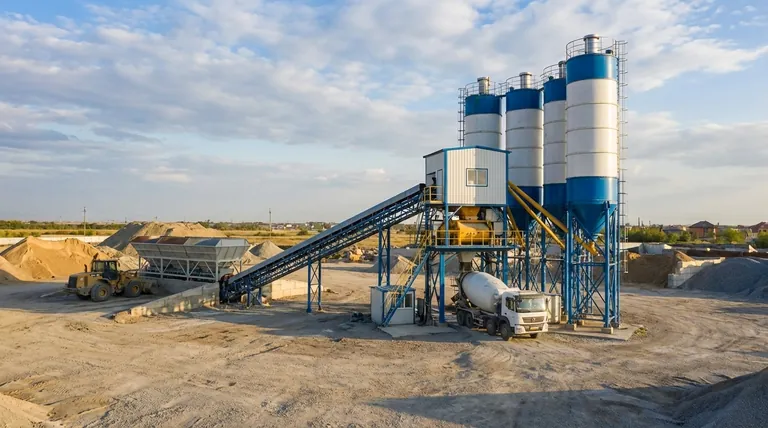
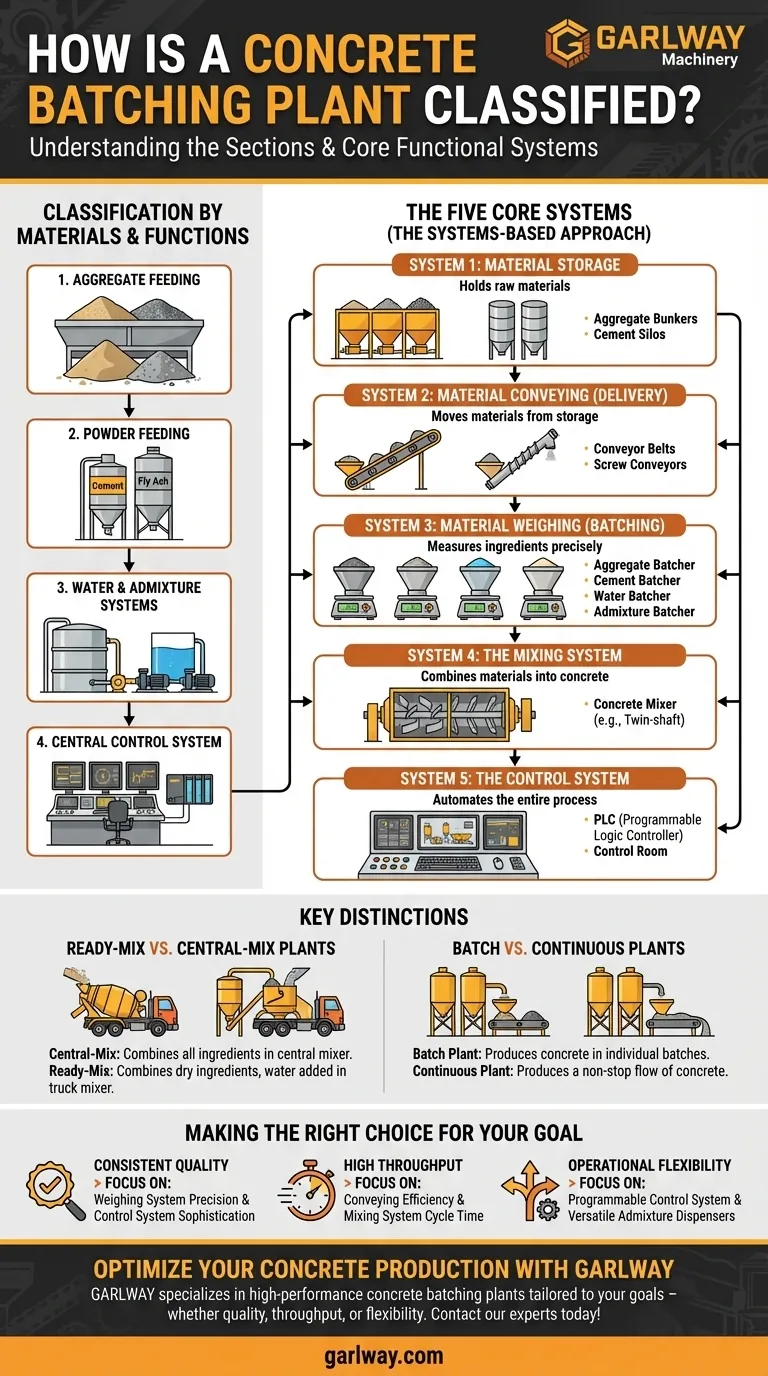
At its core, a concrete batching plant is classified into four main sections based on the materials they handle: aggregate feeding, powder feeding (cement and fly ash), water and admixture systems, and the central control system that integrates them. These sections work in concert to transport, weigh, mix, and discharge concrete according to a specific recipe.
While it's easy to see a plant as a collection of individual components, the most effective way to understand it is by viewing it as five interconnected functional systems: storage, conveying, weighing, mixing, and control. This systems-based approach demystifies the entire operation.
The Five Core Systems of a Batching Plant
A concrete batching plant isn't just a machine; it's a process. Each system performs a distinct function, handing off material to the next until the final product is created.
System 1: Material Storage
This is the starting point for all raw ingredients. Proper storage is crucial for protecting materials from the elements and ensuring a continuous supply.
The primary components are aggregate bunkers or hoppers for sand and gravel, and cement silos for storing powders like cement and other cementitious materials.
System 2: Material Conveying (Delivery)
This system moves the raw materials from storage to the weighing and mixing sections. The efficiency of the conveying system often dictates the plant's overall production speed.
Key equipment includes conveyor belts for moving aggregates and screw conveyors for precisely transferring cement from the silo to the weighing hopper.
System 3: Material Weighing (Batching)
This is arguably the most critical system for ensuring concrete quality. It measures each ingredient with high precision before it enters the mixer.
Each material type has its own dedicated weighing system, often called a batcher or weigh hopper, to ensure the recipe is followed exactly. This includes separate scales for aggregates, cement, water, and chemical admixtures.
System 4: The Mixing System
This is the heart of the plant where all the weighed ingredients are combined to produce homogenous concrete.
The central component is the concrete mixer, which is most commonly a twin-shaft mixer known for its fast and thorough mixing action. The quality and consistency of the final product depend entirely on the mixer's performance.
System 5: The Control System
This is the brain of the operation, orchestrating the actions of all other systems. Modern plants are highly automated to ensure speed, accuracy, and repeatability.
The control system is typically housed in a control room and run by a PLC (Programmable Logic Controller). It manages the entire process from weighing and conveying to mixing and discharging, based on the recipes programmed by the operator.
Understanding Key Distinctions
It's important not to confuse the functional sections within a plant with the different types of plants. These classifications describe the plant's overall operational model.
Ready-Mix vs. Central-Mix Plants
This is the most common distinction. A central-mix plant combines all ingredients, including water, in the central mixer before discharging into a truck.
A ready-mix plant (or dry-batch plant) combines all the dry ingredients and discharges them into a truck mixer, where water is then added and mixed during transit.
Batch vs. Continuous Plants
A batch plant, the most common type, produces concrete in discrete, individual batches.
A continuous mix plant, as the name implies, produces a non-stop flow of concrete. This type is less common and typically used for large-scale civil projects like dams or roller-compacted concrete paving.
Making the Right Choice for Your Goal
Understanding these systems allows you to focus on the sections most critical to your operational needs.
- If your primary focus is consistent quality: Your analysis should center on the precision of the weighing system and the sophistication of the control system.
- If your primary focus is high throughput: The efficiency of the material conveying systems and the cycle time of the mixing system will be your biggest concerns.
- If your primary focus is operational flexibility: A highly programmable control system and versatile admixture dispensers are paramount for handling multiple complex recipes.
By viewing a plant through the lens of these five core systems, you can effectively evaluate, operate, and troubleshoot any concrete production facility.
Summary Table:
| System | Primary Function | Key Components |
|---|---|---|
| Storage | Holds raw materials | Aggregate bunkers, Cement silos |
| Conveying | Moves materials | Conveyor belts, Screw conveyors |
| Weighing | Measures ingredients precisely | Aggregate, Cement, Water batchers |
| Mixing | Combines materials into concrete | Twin-shaft mixer |
| Control | Automates the entire process | PLC, Control room |
Ready to optimize your concrete production?
Understanding the core systems of a batching plant is the first step toward maximizing your project's efficiency, quality, and profitability. Whether your priority is consistent quality, high throughput, or operational flexibility, GARLWAY has the right solution.
GARLWAY specializes in engineering high-performance construction machinery, including reliable concrete batching plants, winches, and mixers for construction companies and contractors worldwide. We can help you select a plant where the weighing, control, and mixing systems are perfectly tailored to your specific goals.
Contact our experts today for a free consultation and let us help you build a more productive operation.
Visual Guide
Related Products
- HZS120 Ready Mix Concrete Batching Plant Commercial Mud Cement Mixer
- HZS35 Small Cement Concrete Mixing Batch Plant
- HZS75 Concrete Batching Plant Cement Mixer Price Concrete Mixer Bunnings Mixing Plant
- HZS180 Ready Mix Concrete Plant for Foundations with Sand and Cement
- Commercial Electric Concrete Mixer Machine HZS 50 Small Batch Plant for Sale
People Also Ask
- What is a ready mix concrete batching plant? The Engine of Modern Construction
- What is the name of the machine used in ready mix? Unpacking the Complete Concrete System
- What is the core component of a concrete batching plant? The Mixer Unit Defines Your Concrete Quality
- What are the types of concrete mixers used in batching plants? Choose the Right Mixer for Your Project
- What are the advantages and disadvantages of concrete batching plants? Maximize Quality & Efficiency