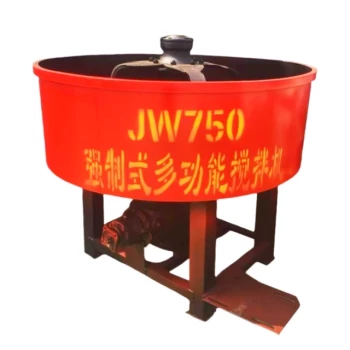
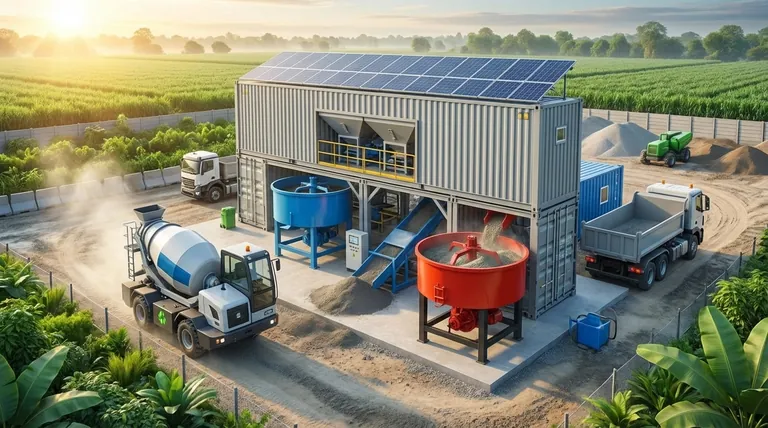
To be clear, modern concrete mixing plant containers are considered a sustainable choice primarily because they reduce energy consumption, lower emissions, and minimize material waste. This combination of features directly addresses the growing demand for more environmentally responsible and efficient construction practices.
The core insight is that sustainability in this context is not just an environmental goal; it is a direct driver of operational efficiency and cost savings. By optimizing resource use and streamlining on-site processes, these systems make projects both greener and more profitable.
The Core Pillars of Sustainability
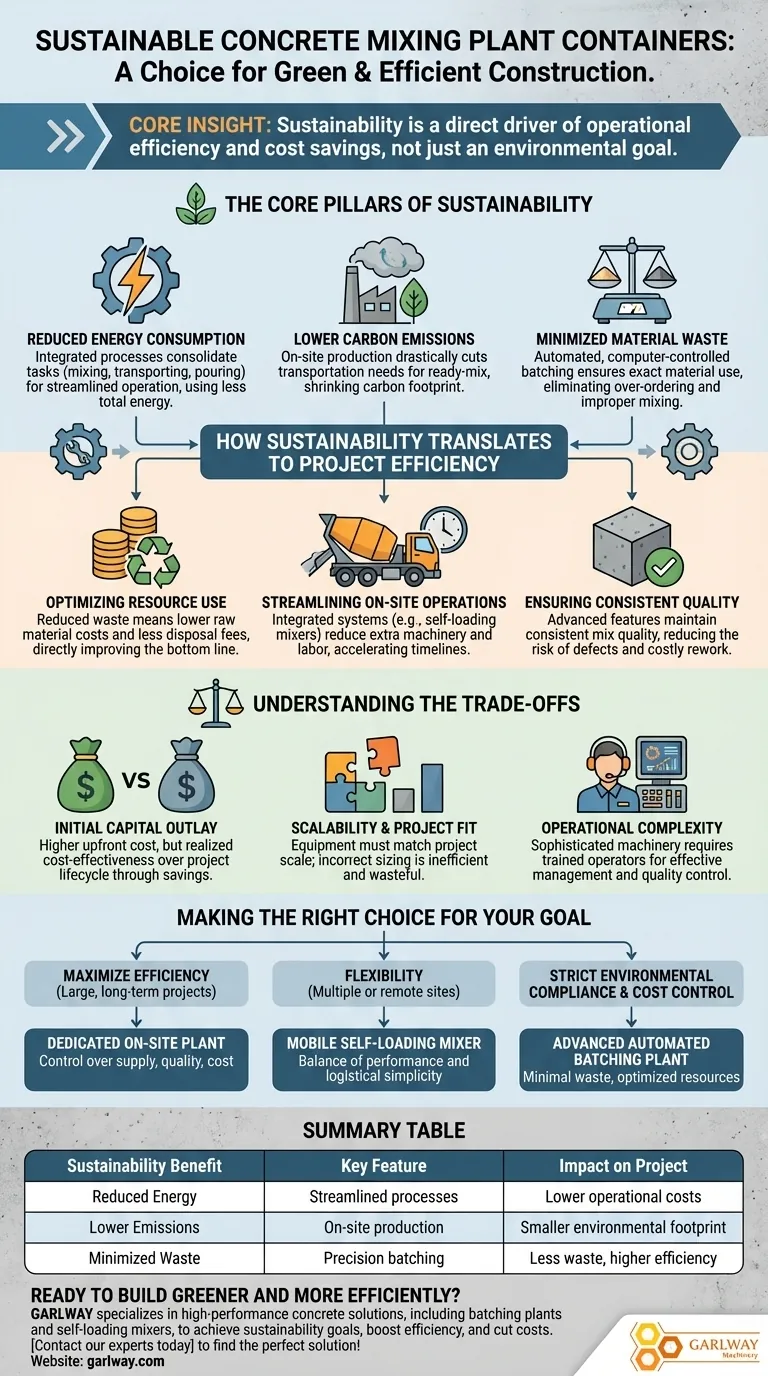
The sustainability benefits of modern concrete plants are rooted in three fundamental areas of improvement over traditional methods. They represent a significant shift in how resources are managed on a construction site.
Reduced Energy Consumption
By design, integrated mixing plants are engineered for efficiency. They consolidate multiple processes—mixing, transporting, and pouring—into a more streamlined operation, which inherently consumes less total energy than running separate pieces of equipment for each task.
Lower Carbon Emissions
Lower energy consumption directly translates to a smaller carbon footprint. Furthermore, by producing concrete on-site or near-site, these plants drastically cut down on the transportation needs for ready-mix concrete, a major source of emissions in large-scale projects.
Minimized Material Waste
Precision is key to sustainability. Automated and computer-controlled batching systems ensure that the exact amount of cement, aggregate, and water is used for every mix. This virtually eliminates the costly and wasteful problem of over-ordering or improper mixing common with manual methods.
How Sustainability Translates to Project Efficiency
The environmental benefits are intrinsically linked to tangible project outcomes. For a project manager or developer, "sustainability" also means better control over budgets, timelines, and quality.
Optimizing Resource and Material Use
Reduced waste isn't just good for the environment; it's a direct cost saving. Using precise mixtures means you purchase less raw material and spend less on waste disposal, directly improving the project's bottom line.
Streamlining On-Site Operations
Systems like self-loading concrete mixers embody this principle. They handle mixing, transporting, and pouring in one integrated process, which significantly reduces the need for extra machinery and the labor required to operate it. This consolidation accelerates project timelines.
Ensuring Consistent, High-Quality Output
Modern plants often include features like automatic transmission and dedicated water tanks to maintain a consistent mix quality. High-quality, reliable concrete reduces the risk of structural defects, minimizing the need for costly and resource-intensive rework.
Understanding the Trade-offs
While highly beneficial, these systems require careful consideration. Objectivity is crucial when evaluating any equipment investment.
Initial Capital Outlay
The primary trade-off is the initial investment. The upfront cost for a modern, efficient mixing plant can be higher than that for more traditional, disparate equipment. The cost-effectiveness is realized over the project's lifecycle through operational savings.
Scalability and Project Fit
The choice of plant must match the project's scale. Deploying a large, high-capacity plant for a small residential build would be inefficient and wasteful. The sustainability benefits are only realized when the equipment is correctly sized for the job's demands.
Operational Complexity
While they streamline processes, modern plants are sophisticated pieces of machinery. They require trained operators to manage the automated systems effectively and ensure both quality control and safety standards are met.
Making the Right Choice for Your Goal
Selecting the right equipment depends entirely on your project's specific priorities.
- If your primary focus is maximizing efficiency on large, long-term projects: A dedicated on-site mixing plant provides unparalleled control over supply, quality, and cost.
- If your primary focus is flexibility across multiple or remote sites: A mobile, self-loading concrete mixer offers the best balance of performance and logistical simplicity.
- If your primary focus is strict environmental compliance and cost control: Prioritize a plant with advanced, automated batching to ensure minimal waste and optimized resource usage.
Ultimately, adopting sustainable concrete production is about choosing smarter, more efficient tools to achieve better project outcomes.
Summary Table:
| Sustainability Benefit | Key Feature | Impact on Project |
|---|---|---|
| Reduced Energy Consumption | Streamlined, integrated processes | Lower operational costs |
| Lower Carbon Emissions | On-site production, less transport | Smaller environmental footprint |
| Minimized Material Waste | Precision batching & automation | Less waste, higher material efficiency |
Ready to build greener and more efficiently?
GARLWAY specializes in providing high-performance construction machinery, including concrete batching plants and self-loading mixers, designed to help construction companies and contractors worldwide achieve sustainability goals while boosting project efficiency and cutting costs.
Contact our experts today to find the perfect concrete solution for your next project!
Visual Guide
Related Products
- Construction Products Concrete Plant Machine Mixing Concrete Mixer
- Commercial Electric Concrete Mixer Machine HZS 50 Small Batch Plant for Sale
- HZS35 Small Cement Concrete Mixing Batch Plant
- HZS120 Ready Mix Concrete Batching Plant Commercial Mud Cement Mixer
- HZS75 Concrete Batching Plant Cement Mixer Price Concrete Mixer Bunnings Mixing Plant
People Also Ask
- What factors should be considered when choosing between volumetric and traditional mixers? Optimize Your Concrete Project Strategy
- What is the difference between pan and planetary mixers? Choose the Right Mixer for Your Concrete Project
- When was the first concrete mixer developed and by whom? Discover the 1900 Breakthrough
- What is the average lifespan of a concrete mixer? Maximize Your Equipment's Lifespan & ROI
- What are the two broad types of concrete mixers? Choose the Right Mixer for Your Project