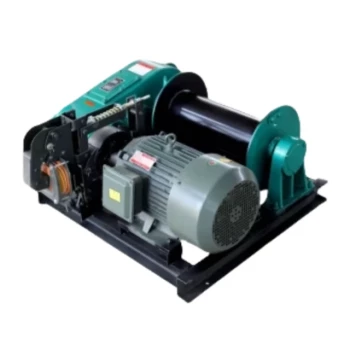
In a towing winch, the wire is the critical component that physically connects the winch to the load being pulled. It is responsible for bearing the immense tension and transferring the pulling force generated by the winch's motor and gear system to the object you need to move.
The wire may seem like a simple part, but its true role is to act as the final link in a chain of power. Understanding how it works with the motor, gears, and drum is essential for operating a winch safely and effectively.
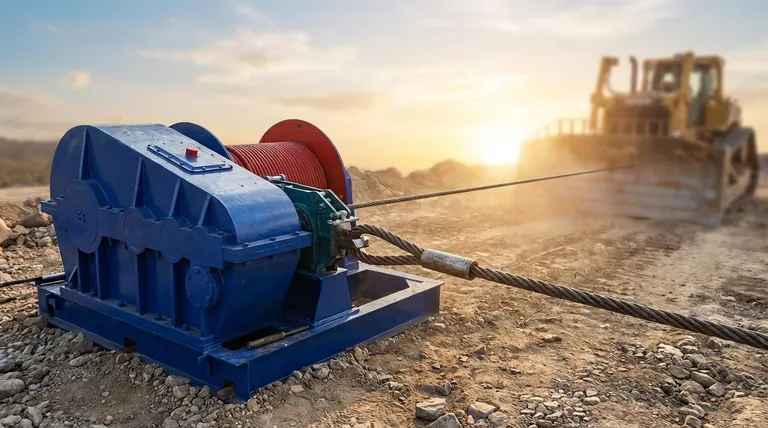
The Winch: A System of Force Transfer
A winch isn't just one part; it's an integrated system designed to convert electrical or hydraulic power into immense pulling force. The wire is the most visible element, but its function is entirely dependent on the components behind it.
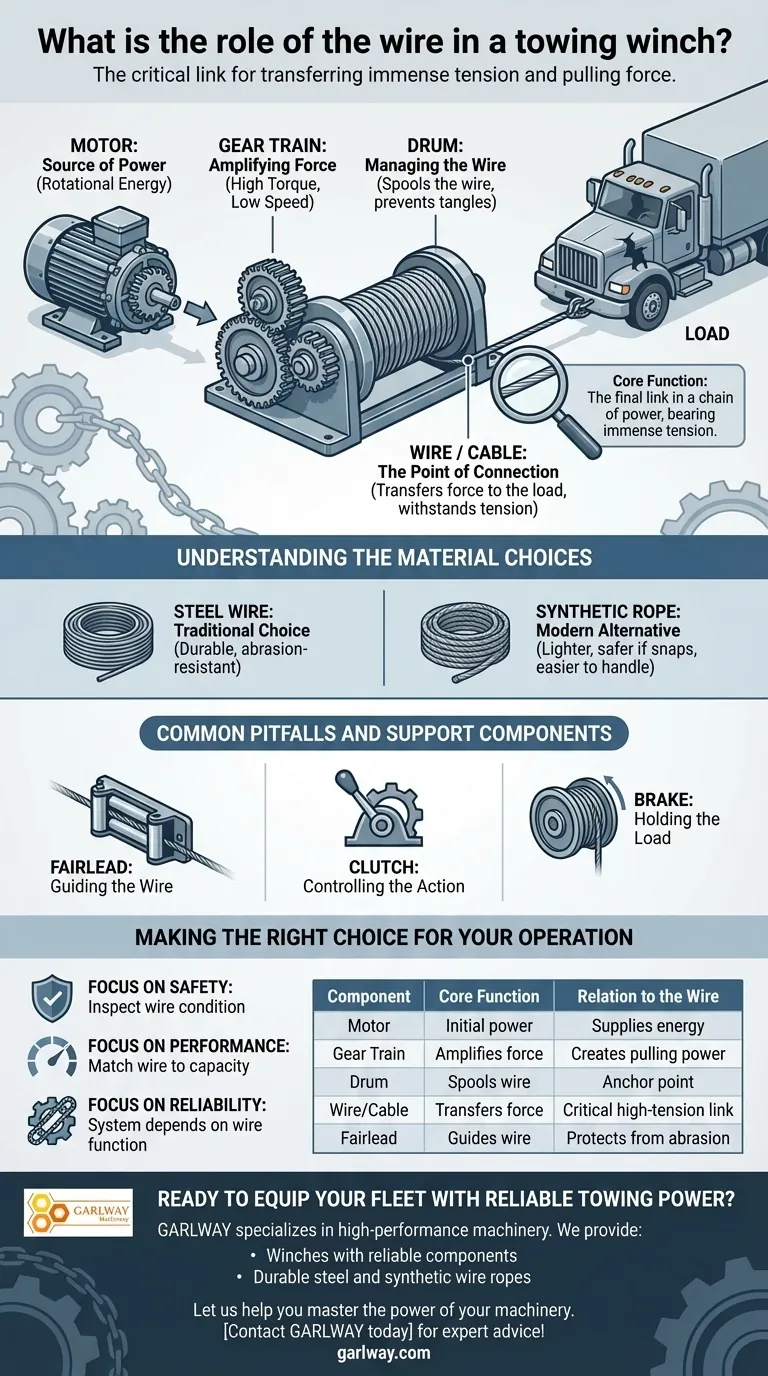
The Source of Power: The Motor
The process begins with the winch motor. This component provides the initial power, creating rotational energy that starts the pulling process.
Amplifying Force: The Gear Train
The motor's raw power is fed into a gear train. This series of gears transforms the motor's high speed into low-speed, high-torque pulling power, effectively multiplying the force.
Managing the Wire: The Drum
The drum is the spool that the wire wraps around. As the gear train turns the drum, it winds the wire, pulling the load closer. Its round shape is crucial for preventing the wire from tangling under load.
The Point of Connection: The Wire's Core Function
The wire (or cable) is spooled around the drum and extends out to attach to the vehicle or object. Its primary job is to withstand the pulling force generated by the system and transfer it directly to the load.
Understanding the Material Choices
The material of the winch line is a critical decision, as it dictates strength, weight, and handling characteristics.
Steel Wire: The Traditional Choice
Steel wire is the classic material used for winch cables. It is durable and resistant to abrasion, making it a reliable choice for many applications.
Synthetic Rope: The Modern Alternative
Many modern winches now use synthetic fiber rope. This material is significantly lighter than steel, safer if it snaps, and easier to handle, though it can be more susceptible to abrasion.
Common Pitfalls and Support Components
Properly managing the wire is crucial for safety and the longevity of your equipment. Several components exist solely to support the wire's function.
Guiding the Wire: The Fairlead
A fairlead is a device mounted to the winch that guides the wire as it spools onto the drum. This prevents the wire from rubbing against sharp edges and fraying, significantly extending its life.
Controlling the Action: The Clutch and Brake
The clutch allows the operator to disengage the drum from the gear train, letting the wire be pulled out freely by hand. The braking system automatically engages to hold the load securely when the motor is not pulling.
Making the Right Choice for Your Operation
Understanding the wire's role within the larger system helps you use the winch more effectively and safely.
- If your primary focus is safety: Always inspect the wire's condition before use, as it is the component under the most direct strain.
- If your primary focus is performance: Ensure the wire's length and material are appropriate for the winch's pulling capacity and the types of recovery you perform.
- If your primary focus is reliability: Recognize that the wire's function depends on the entire system, from the motor to the drum, working in unison.
Ultimately, viewing the winch as a complete system—not just a wire on a spool—is the key to mastering its power.
Summary Table:
| Component | Core Function | Relation to the Wire |
|---|---|---|
| Motor | Provides initial rotational power | Supplies the energy the wire transfers |
| Gear Train | Amplifies force (high torque) | Creates the pulling power the wire withstands |
| Drum | Spools the wire | The anchor point the wire wraps around |
| Wire/Cable | Transfers force to the load | The critical, high-tension link in the system |
| Fairlead | Guides wire onto the drum | Protects the wire from abrasion and damage |
Ready to Equip Your Fleet with Reliable Towing Power?
Understanding the critical role of every component, especially the wire, is key to safe and efficient operations. GARLWAY specializes in high-performance construction machinery, including robust winches, concrete mixers, and batching plants designed for the demands of construction companies and contractors globally.
We provide the durable equipment your projects require:
- Winches built with reliable motors, gears, and drums for maximum pulling power.
- Durable steel and synthetic wire ropes suited to your specific capacity and safety needs.
Let us help you master the power of your machinery. Contact GARLWAY today for expert advice and to find the perfect winch solution for your team!
Visual Guide
Related Products
- Warn Winch Windlass Boat Trailer Winch
- Small Electric Winch 120V and 240V for Compact Applications
- Portable Small Trailer Winch
- Quick Windlass Portable Winch for Truck and Boat Best Boat Winch
- Electric 120V Boat Winch by Badlands
People Also Ask
- What are the main components of a boat trailer winch? A Guide to Safe & Efficient Boat Loading
- What factors should be considered when choosing a boat trailer winch? Ensure Safe and Effortless Boat Loading
- What is the purpose of boat trailer winches? Safely and Efficiently Load Your Boat
- What are the two main types of boat trailer winches? Manual vs. Electric Explained
- How often should a boat trailer winch be replaced? Your Guide to Safety and Longevity