
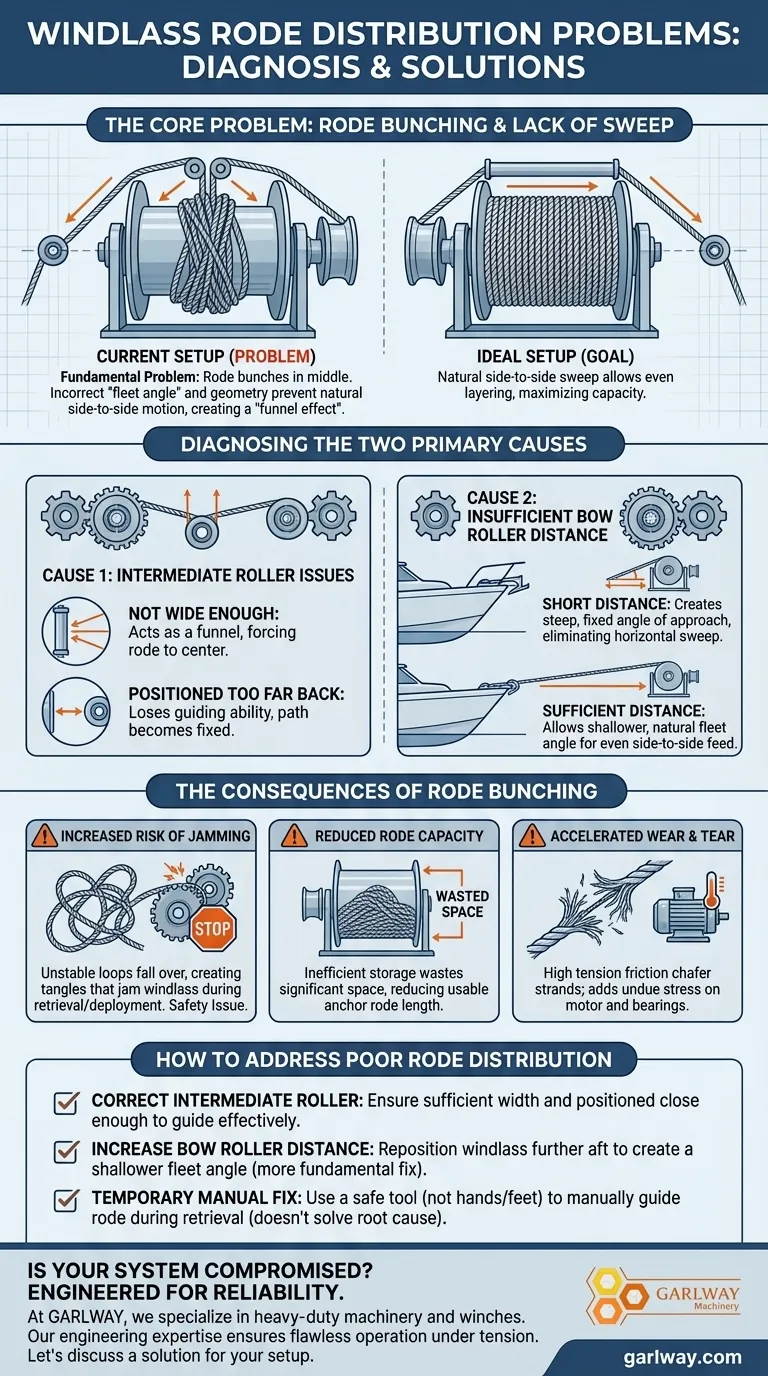
The fundamental problem with the current setup is that the rode bunches in the middle of the windlass drum. This failure to distribute evenly across the drum is caused by a system geometry that actively prevents the necessary side-to-side motion of the incoming rode.
The core issue stems from an incorrect "fleet angle," the angle at which the rode approaches the drum. Both an improperly sized or positioned intermediate roller and insufficient distance from the bow roller are creating a funnel effect, forcing the rode into a pile rather than allowing it to lay evenly.
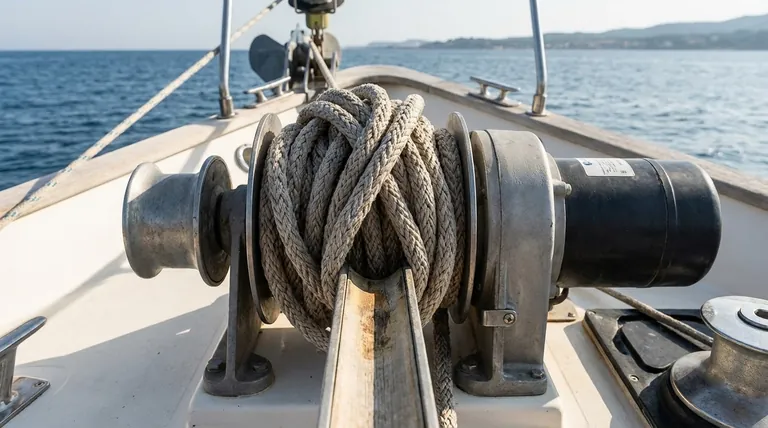
The Core Problem: A Lack of Side-to-Side Sweep
A windlass relies on the natural tendency of the rode to sweep from side to side as it is retrieved. This action is what allows it to layer evenly across the full width of the drum.
When the system geometry is wrong, this natural sweep is constricted. The rode is forced down a narrow path, leading directly to the center of the drum where it piles up into a large bunch.
Diagnosing the Two Primary Causes
Two specific mechanical factors are directly responsible for this bunching effect.
Cause 1: The Intermediate Roller
An intermediate roller is meant to guide the rode smoothly to the windlass. However, if it is not configured correctly, it becomes the primary source of the problem.
There are two ways it can fail:
- It is not wide enough: A narrow roller acts as a funnel, forcing the rode into a central channel and preventing it from reaching the outer edges of the drum.
- It is positioned too far back: If the roller is too far from the drum, it loses its ability to effectively guide the rode to the sides. The rode's path becomes fixed long before it reaches the drum.
Cause 2: Insufficient Bow Roller Distance
The distance between the bow roller (where the anchor is housed) and the windlass drum is critical for proper rode distribution.
A short distance creates a steep, fixed angle of approach. This eliminates the slight horizontal angle needed for the rode to naturally feed onto the left and right sides of the drum as it fills.
The Consequences of Rode Bunching
Ignoring this issue leads to several practical and potentially dangerous problems.
Increased Risk of Jamming
A bunched pile of rode is unstable. The loops can fall over one another, creating a tangle that can easily jam the windlass during either retrieval or deployment. A jammed anchor system can be a serious safety issue.
Reduced Rode Capacity
Bunching is an incredibly inefficient way to store rode. It wastes a significant amount of space on the drum, which can effectively reduce your usable anchor rode length.
Accelerated Wear and Tear
When the rode piles up, the strands chafe against each other under high tension. This friction accelerates wear on the rode and can also put undue stress on the windlass motor and bearings.
How to Address Poor Rode Distribution
Resolving this requires correcting the underlying geometry of your anchor system.
- If your primary focus is the intermediate roller: Ensure it is wide enough to allow the rode to reach the edges of the drum and is positioned close enough to guide it effectively.
- If your primary focus is the bow roller distance: This is a more fundamental issue that may require repositioning the windlass further aft to create a shallower, more effective fleet angle.
- If you need an immediate, temporary fix: You can manually guide the rode with a safe tool (never your hands or feet) during retrieval, but this does not solve the root cause.
A properly aligned anchor system ensures reliability, maximizes capacity, and is crucial for safe operation.
Summary Table:
| Problem | Primary Cause | Consequence |
|---|---|---|
| Rode Bunches in Middle | Incorrect Fleet Angle | Jamming, Reduced Capacity |
| Lack of Side-to-Side Sweep | Narrow/Ill-Positioned Roller | Uneven Layering, Wear & Tear |
| Funnel Effect | Insufficient Bow Roller Distance | Safety Risks, Inefficient Storage |
Is your anchor system's reliability compromised by poor rode distribution? The safety and efficiency of your vessel depend on robust equipment. At GARLWAY, we specialize in heavy-duty construction machinery, including winches and related systems built for demanding marine and construction environments. Our engineering expertise can help ensure your equipment operates flawlessly under tension. Let's discuss a solution for your specific setup. Contact our experts today for a consultation.
Visual Guide
Related Products
- Quick Windlass Portable Winch for Truck and Boat Best Boat Winch
- Warn Winch Windlass Boat Trailer Winch
- Electric Hoist Winch Boat Anchor Windlass for Marine Applications
- Heavy Duty Electric Boat Winch Windlass Anchor
- 12000 lb Electric Boat Trailer Winch with Windlass Anchor Warn
People Also Ask
- What features were incorporated into the upgraded portable winch system? Boost Your Recovery Power & Safety
- What are some uses mentioned for portable winches beyond vehicle recovery? Essential Versatility for Property & Work
- How could the twisting issue with a portable winch be mitigated? Achieve Safe, Centered Pulls with Proper Rigging
- What are the primary uses of a portable winch for a truck? Boost Your Truck's Capability and Self-Reliance
- What is the single rope traction force of the quick winch without a pulley block? 0.5 to 40 Tons Explained


