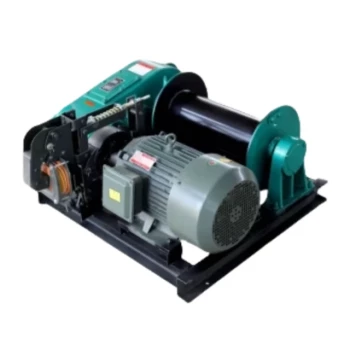
The primary advantages of an electric winch are a significant reduction in physical effort, much faster and more efficient operation, and a substantial increase in safety. Unlike manual tools that require constant human power and frequent resetting, an electric winch uses a motor to provide consistent, controllable pulling power at the press of a button.
The core decision between electric and manual tools is a trade-off. An electric winch exchanges higher upfront cost and installation complexity for vastly superior power, speed, and safety, making it the better choice for almost any scenario beyond occasional, light-duty tasks.
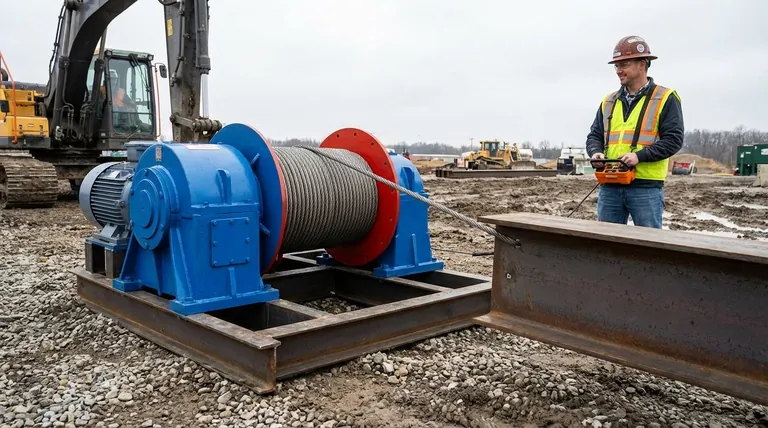
The Core Differences: Effort and Power
The most immediate and obvious distinction between electric and manual recovery tools lies in the source of power. This fundamental difference has major implications for both capability and user experience.
Eliminating Physical Strain
An electric winch does the hard work for you. Its motor and gearbox convert electrical energy into immense pulling force, eliminating the strenuous labor required to operate a manual winch, come-along, or hi-lift jack.
This is a critical advantage for operators with limited physical strength or when fatigue becomes a factor during a long or difficult recovery.
Unlocking Superior Pulling Power
Electric winches are engineered to handle heavy loads consistently and reliably. They offer significantly more pulling capacity than what a person can generate with a manual device, making them suitable for larger vehicles, boats, or materials.
Consistent and Controlled Operation
The electric motor provides a smooth, continuous pull. This is a stark contrast to the start-and-stop nature of manual tools, which require you to repeatedly ratchet a handle and reset your rigging once you run out of cable travel.
Efficiency and Speed in Recovery
In any recovery or pulling situation, time is a critical factor. The speed and convenience of an electric winch are major operational advantages that reduce downtime and can even enhance safety.
Faster Retrieval Times
An electric winch works much faster than any manual alternative. This rapid operation reduces the time your vehicle is stuck in a hazardous position and significantly cuts down on labor costs or production downtime in commercial settings.
Simplified Remote Operation
Most electric winches are operated with a wired or wireless remote control. This allows the user to stand at a safe distance with a clear view of the entire operation, making precise adjustments without being next to a tensioned line.
No Need for Constant Resets
Manual tools like a come-along have a very short pull length, often requiring you to stop, release tension, and reset the entire rigging multiple times to move a vehicle a meaningful distance. An electric winch can spool out dozens of feet of cable for a single, uninterrupted pull.
Understanding the Trade-offs
While the advantages are clear, choosing an electric winch involves acknowledging its specific requirements and downsides compared to simpler manual tools. An objective assessment requires looking at the complete picture.
Upfront Cost
There is a substantial cost difference between a quality electric winch and manual tools. The initial investment for a winch, mounting plate, and potential electrical upgrades can be significant.
Installation and Power Dependence
An electric winch must be properly mounted to a vehicle or structure and wired into a reliable electrical system. It is entirely dependent on a charged battery to function, which is a consideration in a vehicle with a dead engine.
Maintenance and Complexity
With a motor, solenoid, gearbox, and electrical wiring, an electric winch has more components that can potentially fail. It requires periodic inspection and maintenance that simpler, purely mechanical tools do not.
Making the Right Choice for Your Needs
The right tool ultimately depends on your specific application, budget, and how frequently you anticipate needing it.
- If your primary focus is cost for very occasional, light-duty use: A manual tool like a high-quality come-along can be a practical, budget-friendly solution.
- If your primary focus is safety and ease of use: The remote operation and elimination of physical strain make an electric winch the definitive choice.
- If your primary focus is speed and efficiency for frequent recovery: The time saved and superior power of an electric winch make it a necessary and worthwhile investment.
Ultimately, investing in the right equipment empowers you to handle challenging situations safely and effectively.
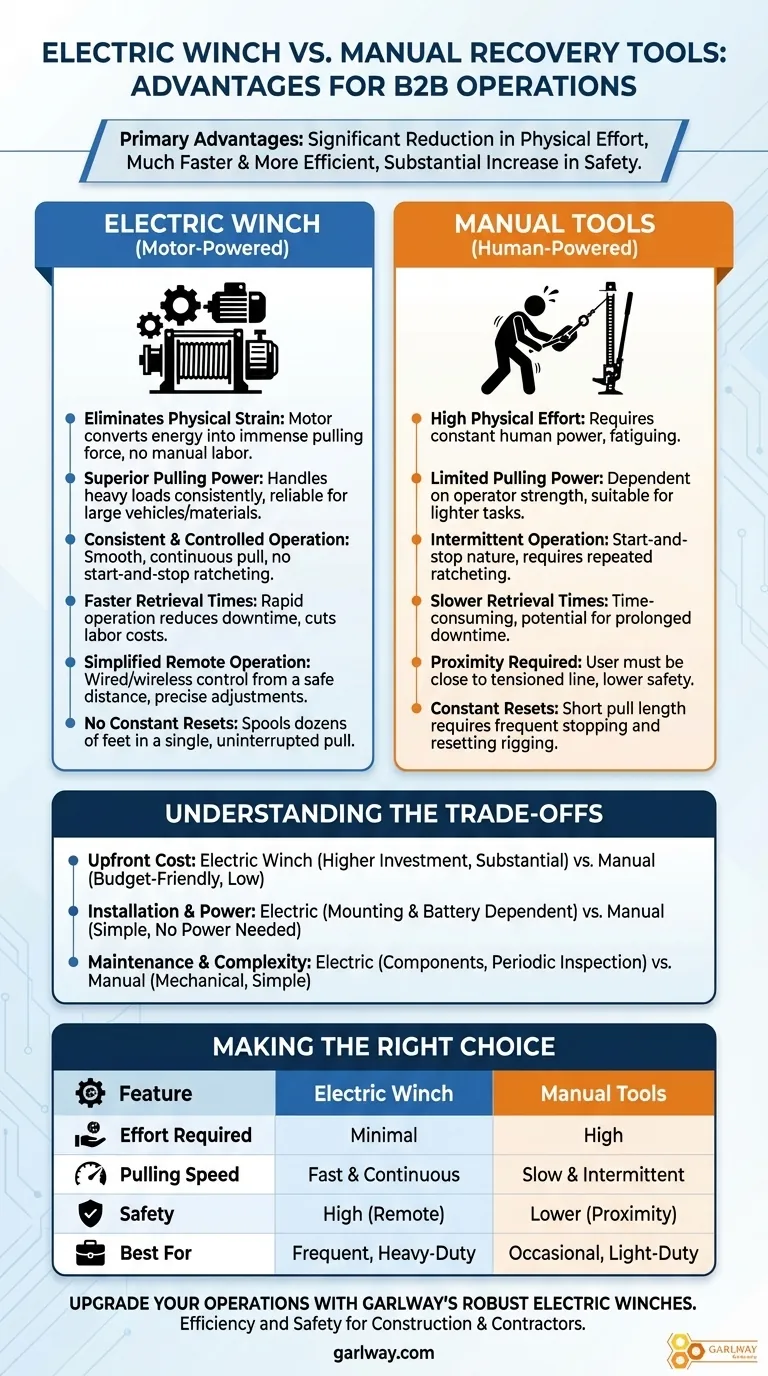
Summary Table:
| Feature | Electric Winch | Manual Tools |
|---|---|---|
| Effort Required | Minimal (motor-powered) | High (human-powered) |
| Pulling Speed | Fast and continuous | Slow and intermittent |
| Safety | High (remote operation) | Lower (proximity required) |
| Best For | Frequent, heavy-duty tasks | Occasional, light-duty use |
Upgrade your recovery and lifting operations with GARLWAY's robust electric winches. Designed for construction companies and contractors who value efficiency and safety, our winches deliver reliable power to handle demanding tasks with ease. Don't compromise on performance—contact our experts today to find the perfect winch solution for your projects!
Visual Guide
Related Products
- Electric 120V Boat Winch by Badlands
- Electric and Hydraulic Winch for Heavy Duty Applications
- Small Electric Winch 120V and 240V for Compact Applications
- 12000 lb Electric Boat Trailer Winch with Windlass Anchor Warn
- Electric Hoist Winch Boat Anchor Windlass for Marine Applications
People Also Ask
- How do electric boat winches work? Unlock Effortless Launching & Retrieval
- How much current does an electric boat winch draw? Plan Your Electrical System for Peak Performance
- Can I run a winch straight from a battery? Essential Power Setup for Safe Operation
- What are the types of electric winches available? Choose the Right Winch for Your Job
- What are the uses of electric winches in mining and tunneling? Enhance Safety and Efficiency Underground