To ensure proper self-leveling of a winch line, the most critical factor is achieving the correct "fleet angle." While some specific product guides may cite an angle as high as 18 degrees, the universally accepted and safer industry standard for most winches is significantly smaller, typically between 1.5 and 3 degrees.
The core principle is straightforward: the distance between your bow roller (or fairlead) and the winch drum dictates the angle of the line. A longer distance creates a smaller, more desirable angle, which allows the rope to spool evenly across the entire drum without bunching up.
Understanding the Critical "Fleet Angle"
The term "fleet angle" might sound technical, but it's a simple geometric concept that is the single most important factor in how your winch rope spools. Getting it right prevents premature rope wear, dangerous bunching, and ensures reliable operation.
What is Fleet Angle?
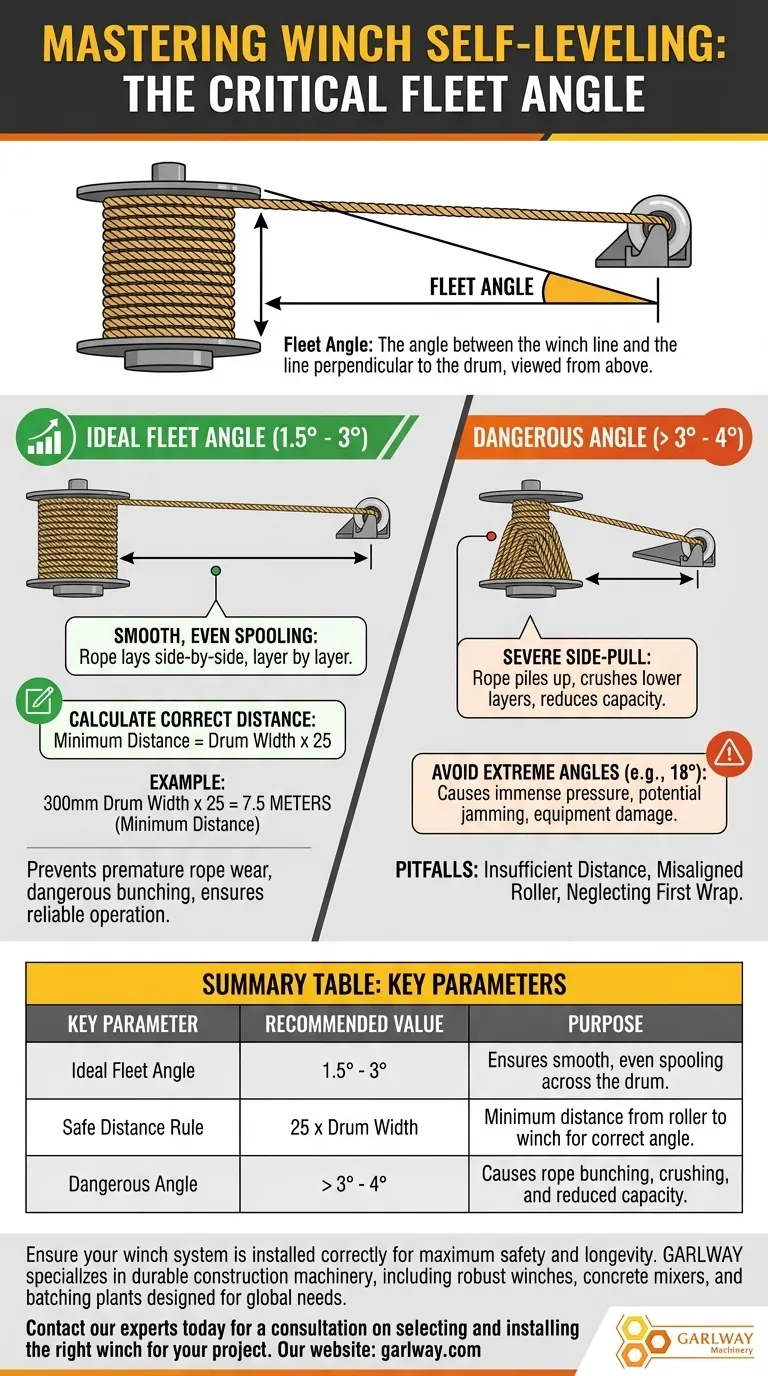
The fleet angle is the angle created between the winch line and a line running perpendicular to the drum, as viewed from above.
Imagine a triangle:
- One point is the center of your bow roller.
- The other two points are the absolute center of the winch drum and the outermost edge (the flange) of the drum.
The angle at the bow roller in this triangle is the fleet angle. A small angle ensures the line is pulled gently toward the center as it spools, allowing it to lay evenly side-by-side.
Why a Small Angle is Crucial
A fleet angle within the 1.5 to 3-degree range creates the ideal conditions for self-leveling.
As the line feeds onto the drum, this gentle angle provides just enough side-pull to guide it neatly next to the previous wrap. This ensures the line fills the drum smoothly from one flange to the other, layer by layer.
The Dangers of a Large Angle
An angle greater than 3-4 degrees (and especially an extreme angle like 18 degrees) creates a severe side-pull on the line.
Instead of laying down neatly, the rope will be forced aggressively toward the center of the drum. This causes it to pile up in a pyramid shape, creating immense pressure that can crush and damage the rope buried in the lower layers. This "bunching" also drastically reduces the winch's effective pulling capacity and can lead to dangerous situations where the line gets jammed.
How to Calculate the Correct Setup
You don't need to be a mathematician to get this right. The goal is to calculate the minimum distance required between the bow roller and the winch drum based on the drum's width.
The Reliable Rule of Thumb
For a smooth (non-grooved) drum, a simple and safe rule is to ensure the distance to the roller is at least 25 times the width of the winch drum.
Distance (min) = Drum Width x 25
This ratio will consistently produce a fleet angle that is well within the safe and effective range for self-leveling.
A Practical Example
Let's use the example of a winch with a 300mm drum width.
- Drum Width: 300mm
- Calculation: 300mm x 25 = 7,500mm (or 7.5 meters)
To ensure this winch self-levels properly, the bow roller must be at least 7.5 meters away from the winch. The 948mm distance mentioned in the reference would create a dangerously steep angle, leading to severe line bunching.
Common Pitfalls to Avoid
Achieving the correct angle is simple, but a few common installation mistakes can undermine the entire setup.
Insufficient Distance
This is the most frequent error. Limited deck space or improper planning leads to placing the roller too close to the winch. This guarantees the fleet angle will be too large, resulting in poor line spooling and rope damage.
Misaligned Roller
The bow roller or fairlead must be perfectly centered with the winch drum. If it's offset to one side, the rope will consistently favor spooling on that side of the drum, leading to uneven wraps and potential jamming.
Neglecting the First Wrap
The first layer of rope on the drum is the foundation for every other layer. It must be wound on by hand under light tension, ensuring each wrap is tight and perfectly adjacent to the last. A messy first layer will cause all subsequent layers to spool unevenly, regardless of the fleet angle.
Making the Right Choice for Your Goal
Your primary goal should always be safety and equipment longevity. Use these guidelines to ensure your installation is correct.
- If your primary focus is maximum rope life and safety: Adhere strictly to the 25:1 distance-to-width ratio to achieve a fleet angle of 1.5-2 degrees.
- If you are dealing with significant space constraints: You may be forced into a larger angle, but do not exceed 3-4 degrees. Understand that this will increase wear on your rope and require you to monitor the spooling process more closely.
- If you are using a grooved drum: These drums are more forgiving and can sometimes operate with slightly larger angles, but staying within the recommended range remains the best practice for preventing wear on the rope and drum grooves.
Properly setting the distance between your roller and winch is the most critical step for ensuring it operates safely and effectively for years to come.
Summary Table:
| Key Parameter | Recommended Value | Purpose |
|---|---|---|
| Ideal Fleet Angle | 1.5° - 3° | Ensures smooth, even spooling across the drum. |
| Safe Distance Rule | 25 x Drum Width | Minimum distance from roller to winch for correct angle. |
| Dangerous Angle | > 3° - 4° | Causes rope bunching, crushing, and reduced capacity. |
Ensure your winch system is installed correctly for maximum safety and longevity. GARLWAY specializes in durable construction machinery, including robust winches, concrete mixers, and batching plants designed for the demanding needs of construction companies and contractors globally. Our expertise helps you avoid costly setup errors and equipment failure. Contact our experts today for a consultation on selecting and installing the right winch for your project.
Visual Guide
Related Products
- Warn Winch Windlass Boat Trailer Winch
- Electric and Hydraulic Winch for Heavy Duty Applications
- Small Electric Winch 120V and 240V for Compact Applications
- 12000 lb Electric Boat Trailer Winch with Windlass Anchor Warn
- Quick Windlass Portable Winch for Truck and Boat Best Boat Winch
People Also Ask
- What are the main components of a boat trailer winch? A Guide to Safe & Efficient Boat Loading
- What factors should be considered when choosing a boat trailer winch? Ensure Safe and Effortless Boat Loading
- What is the purpose of boat trailer winches? Safely and Efficiently Load Your Boat
- What are the two main types of boat trailer winches? Manual vs. Electric Explained
- How often should a boat trailer winch be replaced? Your Guide to Safety and Longevity