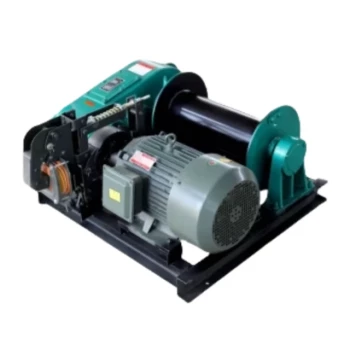
The specified rope speed for a quick winch, also known as a fast winch, is typically between 18 to 25 meters per minute. This classification directly refers to its operational velocity, making it a distinct category of winch designed for specific applications where speed is a priority.
Understanding winch speed is not just about a single number; it's about recognizing the fundamental trade-off between speed, power, and control to select the right tool for your objective.
What Defines Winch Speed?
The classification of a winch often begins with its speed, as this dictates its primary function. This single characteristic separates fast winches from their slower, more powerful counterparts.
The "Quick Winch" Standard
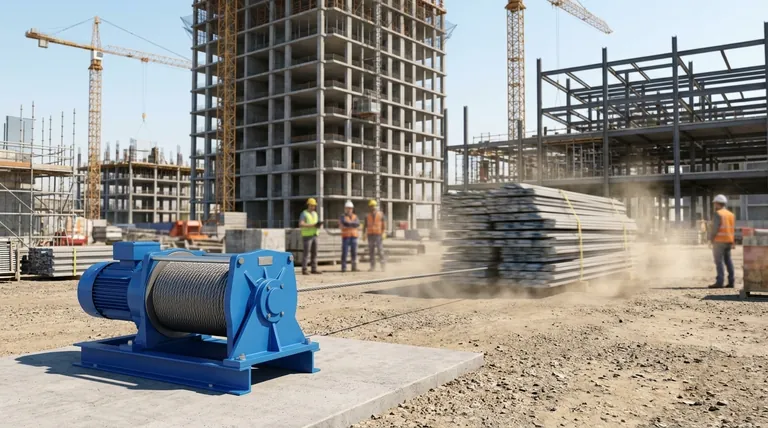
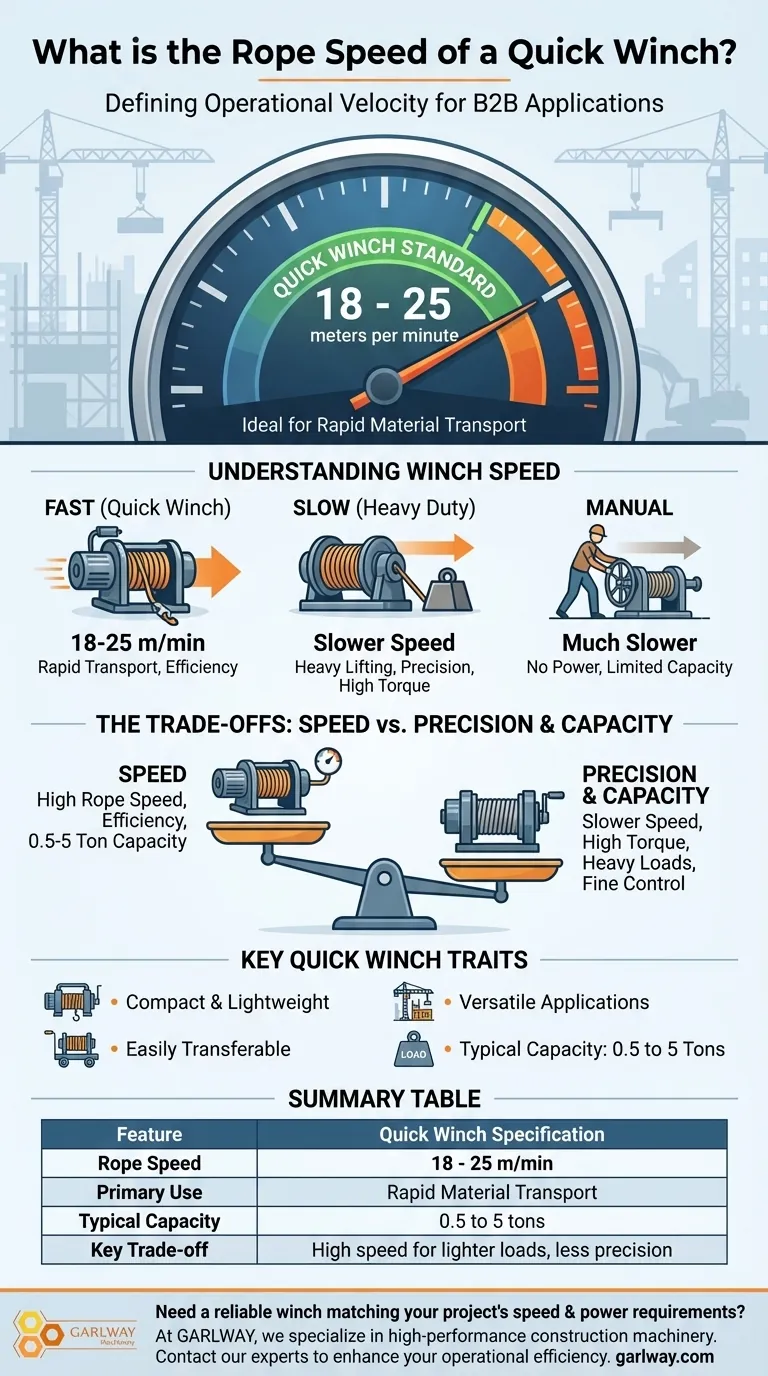
The defining feature of a quick winch is its high linear rope speed, which falls in the 18-25 m/min range. This makes it highly effective for tasks where moving materials quickly is more important than lifting exceptionally heavy loads.
Context Against Other Types
Winches are broadly categorized by their rope speed: fast (quick), slow, and adjustable speed. While a quick winch excels at rapid transport, a slow winch is engineered for heavy lifting and precise positioning, where high torque is more critical than velocity.
Associated Physical Traits
Quick winches are often designed to be compact, lightweight, and easily transferable. Their design prioritizes versatility and ease of use, making them suitable for a wide array of environments from large construction sites to smaller vehicle-towing tasks.
Understanding the Trade-offs
Selecting a quick winch involves accepting a set of trade-offs inherent to its design. High speed is an advantage, but it comes with considerations that may make it unsuitable for certain jobs.
Speed vs. Precision
A fast rope speed is excellent for moving a load over a distance efficiently. However, it can make millimeter-precise positioning challenging. For delicate operations, a slow-speed winch offers superior control.
Speed vs. Lifting Capacity
While models vary, high-speed winches are generally intended for lighter loads, often in the 0.5 to 5-ton range. Winches designed for extremely heavy lifting typically operate at slower speeds to maximize mechanical advantage and torque.
Powered vs. Manual Systems
Quick winches are powered machines. In contrast, manually driven winches like capstans operate at much slower speeds and have lower lifting capacities. They are primarily used in locations where no power supply is available.
How to Choose the Right Winch for Your Task
Your final decision should be guided by the specific demands of your project.
- If your primary focus is rapid material transport: A quick winch is the ideal choice, as its high rope speed will maximize your efficiency.
- If your primary focus is heavy lifting or delicate positioning: A slow-speed winch is the superior option, prioritizing torque and fine control over velocity.
- If you are working without a power source: A manual winch is your only practical solution, accepting the limitations in speed and capacity.
Choosing the correct winch is about aligning the equipment's core strengths with your primary operational goal.
Summary Table:
| Feature | Quick Winch Specification |
|---|---|
| Rope Speed | 18 - 25 meters per minute |
| Primary Use | Rapid material transport |
| Typical Capacity | 0.5 to 5 tons |
| Key Trade-off | High speed for lighter loads, less precision |
Need a reliable winch that matches your project's speed and power requirements?
At GARLWAY, we specialize in high-performance construction machinery. Our range of quick winches is engineered for contractors and construction companies who need efficient, rapid material transport on-site.
Let us help you enhance your operational efficiency. Contact our experts today to discuss your specific needs and find the perfect winch solution from GARLWAY.
Visual Guide
Related Products
- Quick Windlass Portable Winch for Truck and Boat Best Boat Winch
- Small Electric Winch 120V and 240V for Compact Applications
- Portable Small Trailer Winch
- Hydraulic Winding Engine Harbor Freight Winch
- Electric and Hydraulic Winch for Heavy Duty Applications
People Also Ask
- What features were incorporated into the upgraded portable winch system? Boost Your Recovery Power & Safety
- What are some uses mentioned for portable winches beyond vehicle recovery? Essential Versatility for Property & Work
- How could the twisting issue with a portable winch be mitigated? Achieve Safe, Centered Pulls with Proper Rigging
- What are the primary uses of a portable winch for a truck? Boost Your Truck's Capability and Self-Reliance
- What is the single rope traction force of the quick winch without a pulley block? 0.5 to 40 Tons Explained