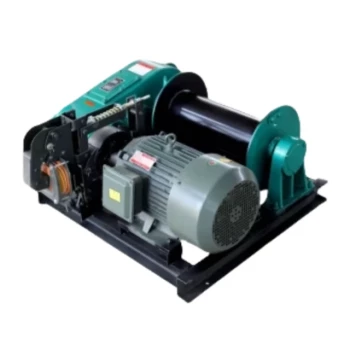
At its core, an electric winch is a powerful mechanical device designed to pull, lift, or position heavy objects using an electric motor. It converts electrical energy into a strong, controlled linear force by winding a steel cable or synthetic rope around a rotating drum, making it possible to move loads far too heavy for a person to manage alone.
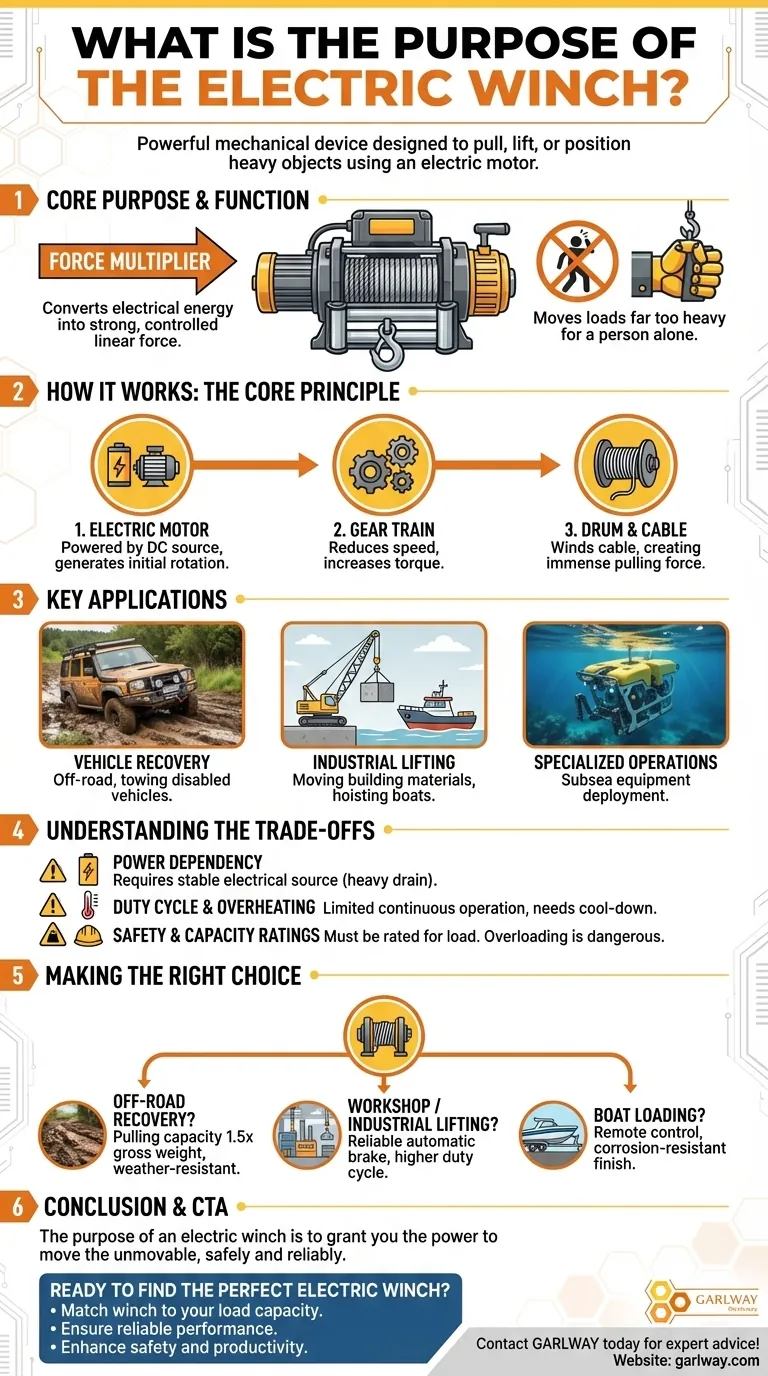
An electric winch is not just a motor and a rope; it is a force multiplier. Its primary purpose is to provide significant mechanical advantage, enabling the safe and efficient movement of massive loads like vehicles, boats, or industrial materials with minimal human effort.
How an Electric Winch Works: The Core Principle
An electric winch operates on a straightforward yet powerful principle of converting rotational motion into a linear pulling force. This process involves a few key components working in unison.
The Electric Motor
The heart of the device is its electric motor. Powered typically by a vehicle's battery or another direct current source, the motor generates the initial rotational power required for the operation.
The Gear Train
The motor's high-speed, low-torque power is channeled through a gear train. This series of gears reduces the speed of the rotation while dramatically increasing its torque, or pulling power.
The Drum and Cable
This high-torque force turns the winch's drum. As the drum rotates, it neatly winds the attached steel cable or synthetic rope, pulling whatever object is attached to the other end with a steady and immense force.
Key Applications: Where Electric Winches Excel
While the principle is simple, the applications are vast. Electric winches are indispensable tools in a variety of fields where heavy lifting and pulling are routine.
Vehicle Recovery
This is perhaps the most common application. Off-road vehicles use winches to pull themselves or other vehicles out of difficult situations like mud, sand, or ditches. They are also used to tow disabled vehicles onto trailers.
Industrial and Construction Lifting
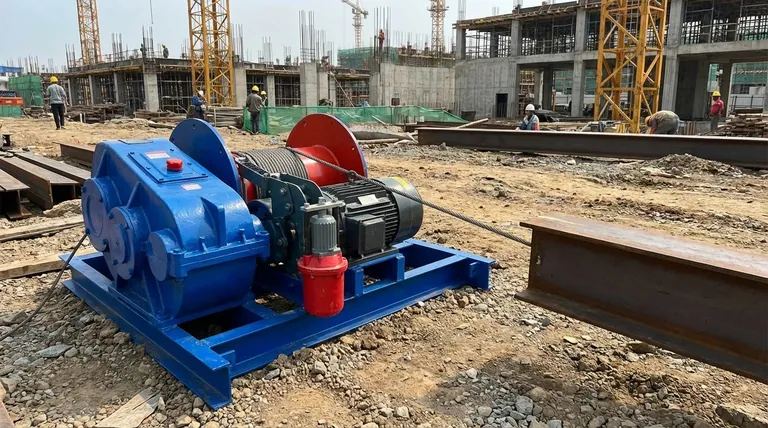
In industrial settings, electric winches are used to lift and position extremely heavy loads. This includes moving large building materials on a construction site or hoisting boats out of the water at a marina.
Specialized Operations
The reliability and power of electric winches make them essential for more specialized tasks. For example, they are used in subsea operations for deploying and recovering underwater equipment.
Understanding the Trade-offs
While incredibly useful, it's important to understand the limitations and considerations that come with using an electric winch to ensure safe and effective operation.
Power Dependency
An electric winch is entirely dependent on a stable electrical source. In vehicle applications, this means a heavy drain on the battery, often requiring the vehicle's engine to be running during use to prevent draining the battery completely.
Duty Cycle and Overheating
Winches generate significant heat. Most are not designed for continuous operation and have a limited "duty cycle"—a set amount of time they can run before needing a cool-down period. Exceeding this can damage the motor.
Safety and Capacity Ratings
A winch is only as safe as its operator. It is critical to use a winch that is properly rated for the load you intend to move. Overloading a winch can cause the cable to snap or the motor to fail, creating a dangerous situation.
Making the Right Choice for Your Goal
Selecting the correct electric winch depends entirely on its intended application. Matching the winch's capability to your specific task is the most important step.
- If your primary focus is off-road vehicle recovery: You need a winch with a pulling capacity of at least 1.5 times your vehicle's gross weight and durable, weather-resistant construction.
- If your primary focus is workshop or industrial lifting: Prioritize a model with a reliable automatic brake to hold the load securely and a higher duty cycle for more frequent use.
- If your primary focus is loading a boat onto a trailer: A winch with a remote control for better visibility and a corrosion-resistant finish is essential for marine environments.
Ultimately, the purpose of an electric winch is to grant you the power to move the unmovable, safely and reliably.
Summary Table:
| Key Aspect | Description |
|---|---|
| Core Purpose | Converts electrical energy into a powerful, controlled linear pulling force. |
| Primary Function | To pull, lift, or position heavy loads safely and efficiently. |
| Common Applications | Vehicle recovery, industrial/construction lifting, marine operations. |
| Key Considerations | Power dependency, duty cycle (overheating risk), and load capacity ratings. |
Ready to Find the Perfect Electric Winch for Your Project?
Whether you're recovering vehicles, lifting materials on a construction site, or handling specialized industrial tasks, choosing the right winch is critical for safety and efficiency. GARLWAY specializes in durable and powerful construction machinery, including a range of electric winches designed for the demands of construction companies and contractors globally.
Let us help you:
- Match the right winch to your specific load capacity and application needs.
- Ensure reliable performance with equipment built for tough environments.
- Enhance your operational safety and productivity.
Contact GARLWAY today for expert advice and to explore our winch solutions!
Visual Guide
Related Products
- Electric 120V Boat Winch by Badlands
- Small Electric Winch 120V and 240V for Compact Applications
- 12000 lb Electric Boat Trailer Winch with Windlass Anchor Warn
- Electric Hoist Winch Boat Anchor Windlass for Marine Applications
- Electric and Hydraulic Winch for Heavy Duty Applications
People Also Ask
- How do electric boat winches work? Unlock Effortless Launching & Retrieval
- How much current does an electric boat winch draw? Plan Your Electrical System for Peak Performance
- Can I run a winch straight from a battery? Essential Power Setup for Safe Operation
- What are the types of electric winches available? Choose the Right Winch for Your Job
- What are the uses of electric winches in mining and tunneling? Enhance Safety and Efficiency Underground