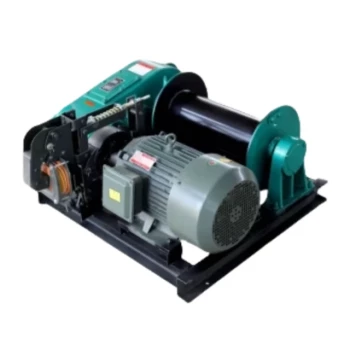
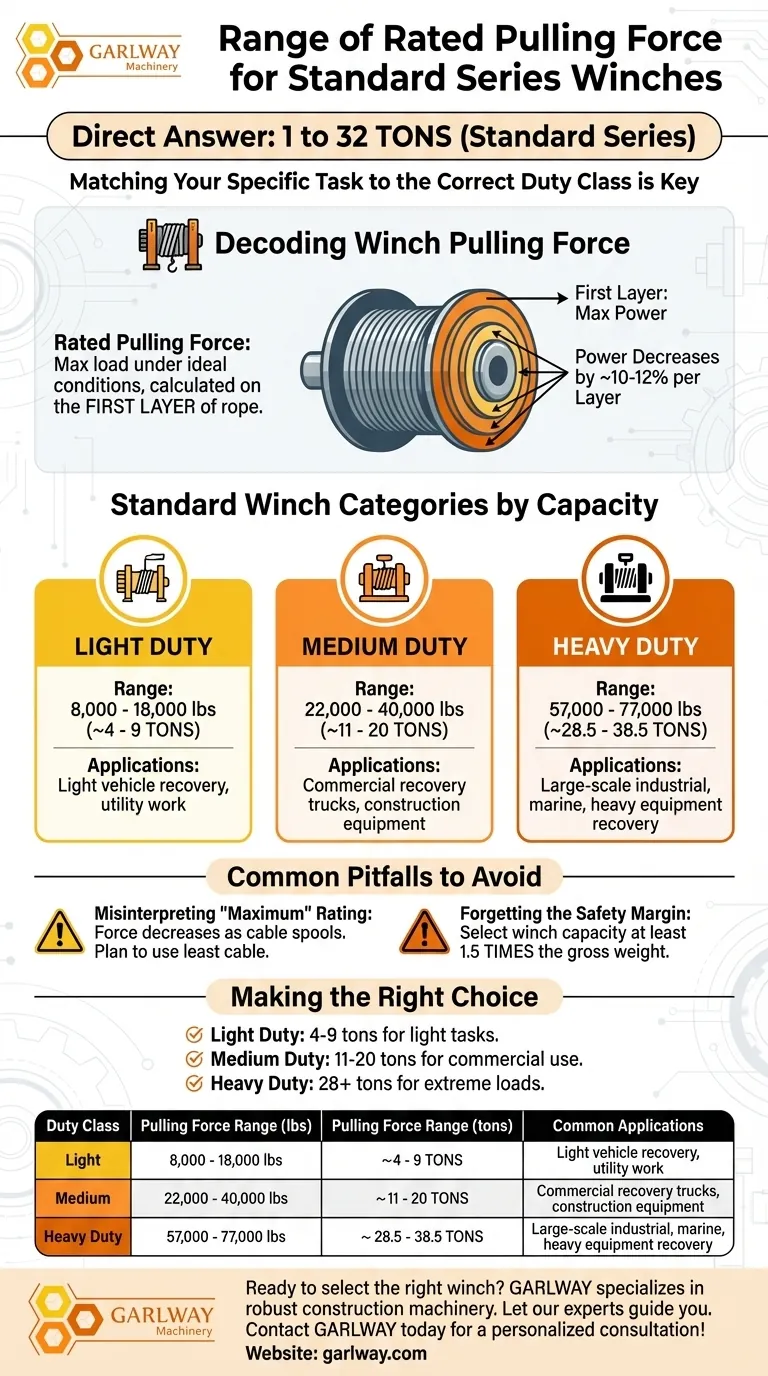
To answer your question directly, the rated pulling force for standard series winches typically ranges from 1 to 32 tons. This broad spectrum covers a wide variety of industrial and commercial applications, with specific models designed for distinct operational demands.
The key is to look beyond the total range and understand how winches are categorized into duty classes. Matching your specific task to the correct class—light, medium, or heavy—is more critical than focusing on the absolute minimum or maximum pulling force available.
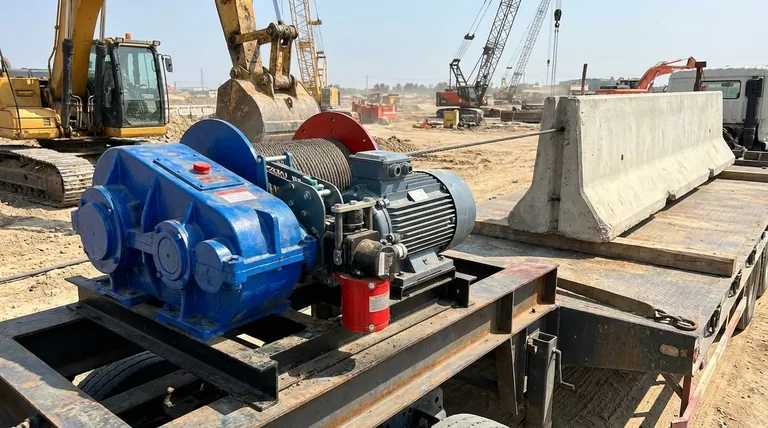
Decoding Winch Pulling Force
What "Rated Pulling Force" Means
The rated pulling force (or line pull) is the maximum load a winch can pull under ideal conditions. This is a crucial performance metric for safety and operational success.
This rating is almost always calculated with only the first layer of rope wrapped around the winch drum. As more rope is spooled onto the drum, the effective pulling power decreases with each subsequent layer.
The Impact of the Drum Layer
For every additional layer of rope on the drum, the winch's pulling power is reduced by approximately 10-12%. A winch rated for 10,000 lbs on its first layer might only pull around 7,500 lbs on its third layer.
Standard Winch Categories by Capacity
To simplify selection, winches are often grouped into duty classes based on their pulling force. These classifications provide a practical framework for matching a winch to its intended job.
Light Duty Winches
Light duty winches typically range from 8,000 to 18,000 lbs (approximately 4 to 9 tons). These are common for lighter vehicle recovery, utility work, and general-purpose pulling tasks.
Medium Duty Winches
Medium duty winches cover a range of 22,000 to 40,000 lbs (approximately 11 to 20 tons). They are designed for commercial recovery trucks, construction equipment, and more demanding industrial applications.
Heavy Duty Winches
Heavy duty winches provide the most power, with a pulling force from 57,000 to 77,000 lbs (approximately 28.5 to 38.5 tons). These are reserved for large-scale industrial, marine, and heavy equipment recovery operations.
Common Pitfalls to Avoid
Misinterpreting the "Maximum" Rating
The most common mistake is assuming the winch can pull its maximum rated load in any situation. Always remember the pulling force decreases as more cable is wound onto the drum.
Plan your pulls to use the least amount of cable possible to maximize the force you can apply.
Forgetting the Safety Margin
Never choose a winch rated for the exact weight of the object you need to pull. Environmental factors like mud, incline, and friction add significant resistance.
A standard rule of thumb is to select a winch with a capacity at least 1.5 times the gross weight of the vehicle or object you intend to move.
Making the Right Choice for Your Application
- If your primary focus is light vehicle recovery or utility tasks: A light-duty winch in the 4 to 9-ton range will provide sufficient power without unnecessary weight and cost.
- If your primary focus is commercial recovery or construction: A medium-duty winch between 11 and 20 tons offers the robust performance and durability required for daily professional use.
- If your primary focus is large-scale industrial or marine operations: A heavy-duty winch rated for 28 tons or more is necessary to handle extreme loads safely and effectively.
Ultimately, selecting the right winch is about understanding the real-world demands of your task and choosing a capacity that handles it with a confident margin of safety.
Summary Table:
| Duty Class | Pulling Force Range (lbs) | Pulling Force Range (tons) | Common Applications |
|---|---|---|---|
| Light Duty | 8,000 - 18,000 lbs | ~4 - 9 tons | Light vehicle recovery, utility work |
| Medium Duty | 22,000 - 40,000 lbs | ~11 - 20 tons | Commercial recovery trucks, construction |
| Heavy Duty | 57,000 - 77,000 lbs | ~28.5 - 38.5 tons | Large-scale industrial, marine operations |
Ready to select the right winch for your project?
Choosing the correct pulling force is critical for safety and efficiency. GARLWAY specializes in providing robust and reliable construction machinery, including a full range of winches designed for professionals.
We help construction companies and contractors globally find the perfect equipment for their needs, ensuring you have the power and durability for any job.
Let our experts guide you to the ideal solution. Contact GARLWAY today for a personalized consultation!
Visual Guide
Related Products
- Warn Winch Windlass Boat Trailer Winch
- Electric and Hydraulic Winch for Heavy Duty Applications
- Small Electric Winch 120V and 240V for Compact Applications
- 12000 lb Electric Boat Trailer Winch with Windlass Anchor Warn
- Quick Windlass Portable Winch for Truck and Boat Best Boat Winch
People Also Ask
- What are the main components of a boat trailer winch? A Guide to Safe & Efficient Boat Loading
- What factors should be considered when choosing a boat trailer winch? Ensure Safe and Effortless Boat Loading
- What is the purpose of boat trailer winches? Safely and Efficiently Load Your Boat
- What are the two main types of boat trailer winches? Manual vs. Electric Explained
- How often should a boat trailer winch be replaced? Your Guide to Safety and Longevity