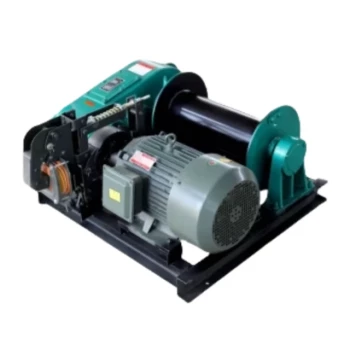
The primary advantage of connecting a winch directly to your vehicle's electrical system is gaining access to a continuous and powerful source of energy. This integration allows the winch to draw power from the vehicle's alternator while the engine is running, far surpassing the limited capacity of any portable battery pack.
The core insight is that a vehicle's electrical system is not just a battery; it's a power generation plant in miniature. Tapping into this system means your winch's endurance is limited by the fuel in your tank, not the charge in a box.
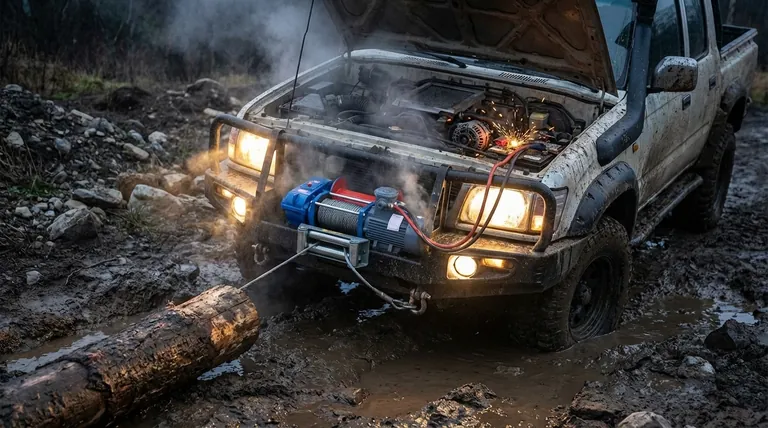
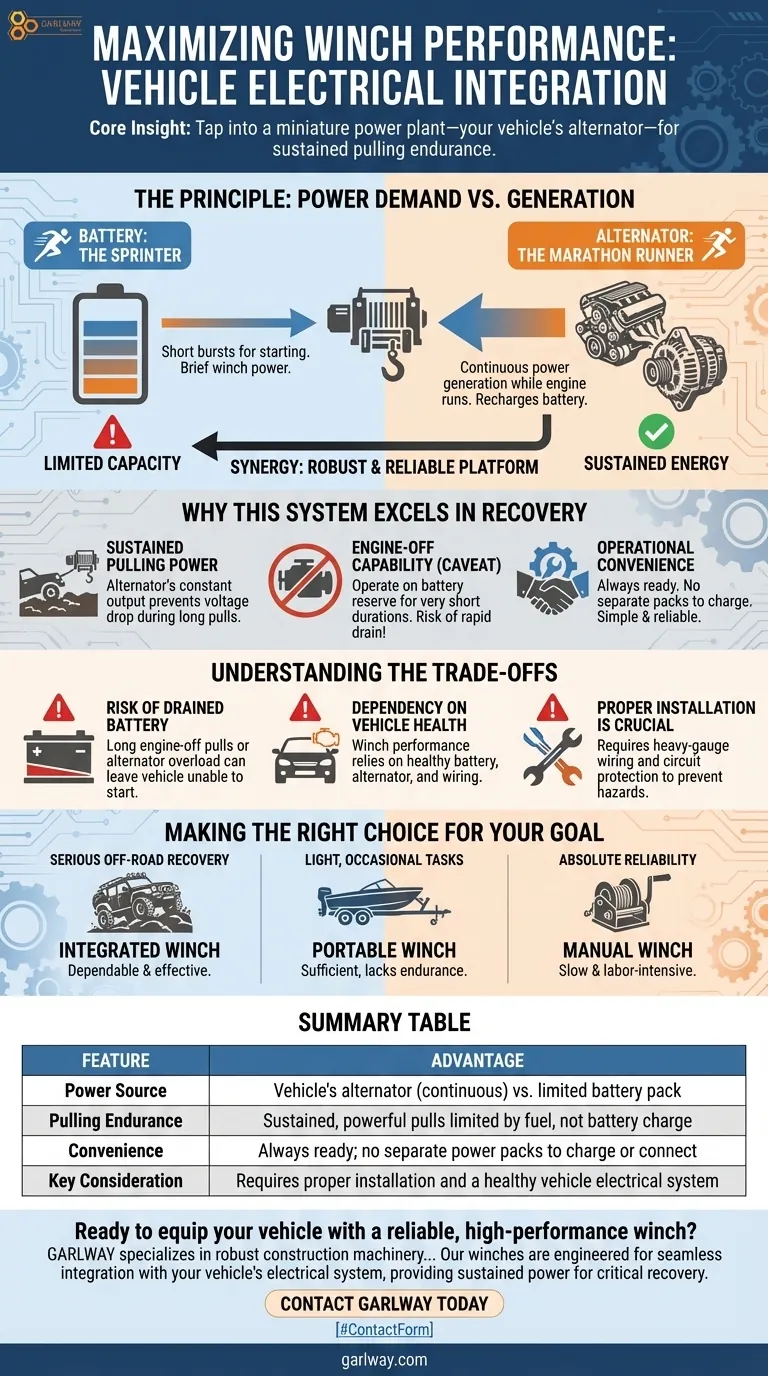
The Principle: Power Demand vs. Power Generation
To understand why direct connection is superior, you must first appreciate the immense power a winch consumes and how a vehicle's electrical system is designed to meet that demand.
The Massive Current Draw of a Winch
An electric winch under load is one of the most power-hungry accessories you can add to a vehicle. It can easily draw several hundred amps of current, a demand that would drain a standalone battery in minutes.
The Battery's Role: The Sprinter
Think of your vehicle's battery as a sprinter. It is excellent at providing a massive burst of power for a short duration, which is perfect for starting the engine. It can also power a winch for brief periods.
The Alternator's Role: The Marathon Runner
The alternator, on the other hand, is a marathon runner. While the engine is running, it continuously generates electrical power. Its job is to run all the vehicle's systems and, crucially, to recharge the battery.
When a winch is connected to this system, the alternator becomes its primary power source, ensuring it can perform long, heavy pulls without quickly depleting its energy supply.
Why This System Excels in Recovery
The synergy between the battery and alternator provides a robust and reliable platform for vehicle recovery operations.
Sustained Pulling Power
For difficult recoveries that require several minutes of continuous winching, the alternator's constant power generation is non-negotiable. It prevents the battery voltage from dropping to a point where the winch motor slows down or stalls completely.
Engine-Off Capability (With a Critical Caveat)
A major benefit is the ability to operate the winch even if the engine has stalled. However, this relies solely on the battery's reserve capacity. This should only be done for very short pulls, as it can drain a healthy battery with alarming speed.
Operational Convenience
An integrated winch is always ready for use. There are no separate power packs to charge, carry, or connect in a stressful situation. This simplicity and reliability are paramount during an emergency.
Understanding the Trade-offs
While highly effective, this system is not without its risks and dependencies. Acknowledging them is key to safe operation.
The Risk of a Drained Battery
The most significant risk is draining the vehicle's battery. If you perform a long pull with the engine off, or if your alternator can't keep up with the demand, you can leave your vehicle unable to start.
Dependency on Vehicle Health
The winch is only as reliable as the electrical system supporting it. A weak battery, a failing alternator, or poor wiring will severely compromise your winch's performance and could leave you stranded.
Proper Installation is Crucial
Connecting a high-current device like a winch is not a simple task. It requires heavy-gauge wiring, proper circuit protection, and secure connections to handle the electrical load safely and prevent potential fire hazards.
Making the Right Choice for Your Goal
Your intended use case dictates the best power solution.
- If your primary focus is serious off-road or vehicle recovery: A winch hard-wired to your vehicle's electrical system is the only dependable and effective choice.
- If your primary focus is light, occasional tasks (e.g., pulling a boat onto a trailer): A portable winch with a dedicated power pack might be sufficient, but it lacks the endurance for recovery.
- If your primary focus is absolute reliability without electricity: A manual winch (like a Hi-Lift or come-along) is an option, but it is extremely slow and labor-intensive.
Ultimately, integrating a winch with your vehicle's alternator transforms it from a simple accessory into a powerful and enduring recovery tool.
Summary Table:
| Feature | Advantage |
|---|---|
| Power Source | Vehicle's alternator (continuous power) vs. limited battery pack |
| Pulling Endurance | Sustained, powerful pulls limited by fuel, not battery charge |
| Convenience | Always ready; no separate power packs to charge or connect |
| Key Consideration | Requires proper installation and a healthy vehicle electrical system |
Ready to equip your vehicle with a reliable, high-performance winch?
GARLWAY specializes in robust construction machinery, offering durable winches, concrete mixers, and batching plants designed for the demanding needs of construction companies and contractors globally. Our winches are engineered for seamless integration with your vehicle's electrical system, providing the sustained power you need for critical recovery and heavy-duty tasks.
Contact GARLWAY today to discuss your specific requirements and discover how our solutions can enhance your operational efficiency and safety.
Visual Guide
Related Products
- Warn Winch Windlass Boat Trailer Winch
- Portable Small Trailer Winch
- Quick Windlass Portable Winch for Truck and Boat Best Boat Winch
- Electric and Hydraulic Winch for Heavy Duty Applications
- Small Electric Winch 120V and 240V for Compact Applications
People Also Ask
- What are the main components of a boat trailer winch? A Guide to Safe & Efficient Boat Loading
- What factors should be considered when choosing a boat trailer winch? Ensure Safe and Effortless Boat Loading
- What is the purpose of boat trailer winches? Safely and Efficiently Load Your Boat
- What are the two main types of boat trailer winches? Manual vs. Electric Explained
- How often should a boat trailer winch be replaced? Your Guide to Safety and Longevity