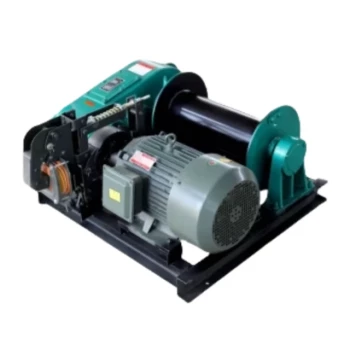
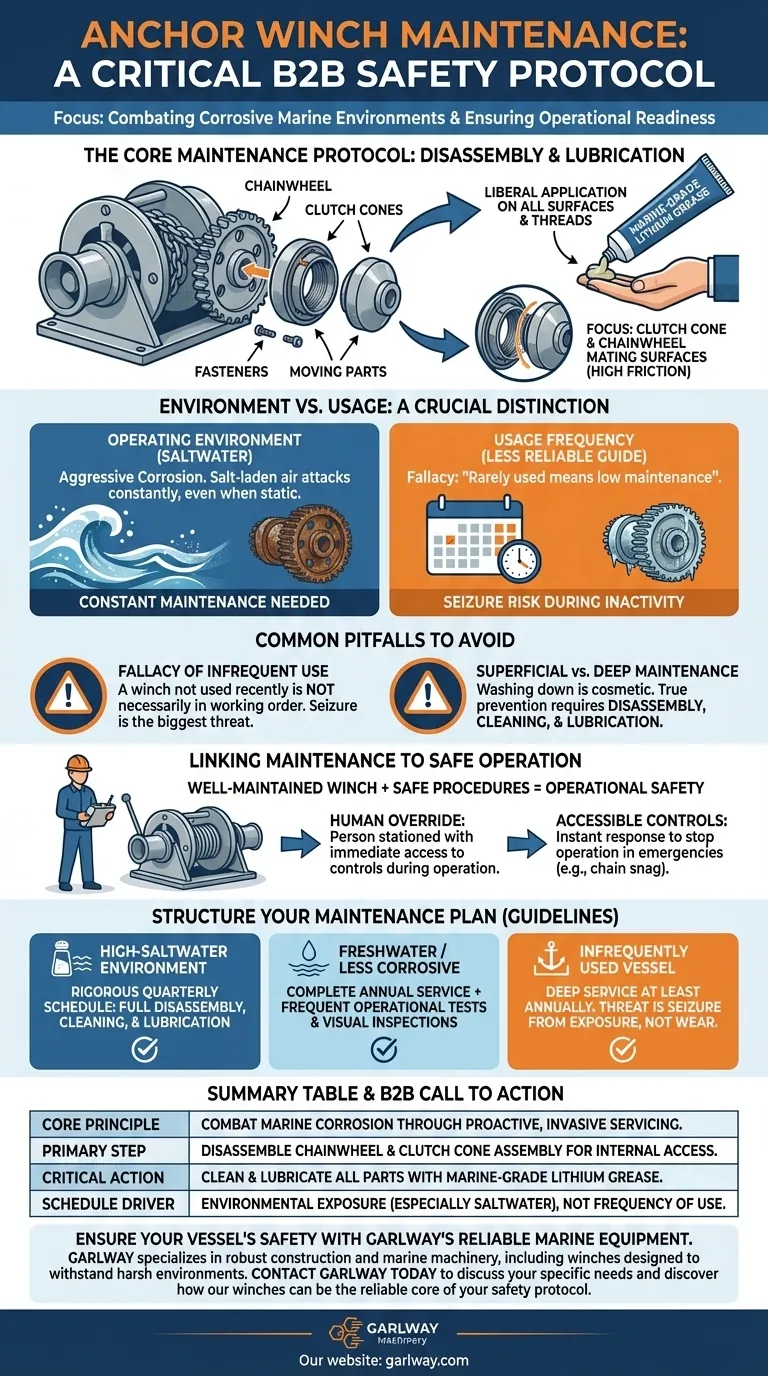
Proper anchor winch maintenance is a critical safety discipline, not just a mechanical task. The core procedure involves systematically disassembling the chainwheel and clutch cone assembly to clean, inspect, and lubricate all moving parts, fasteners, and high-friction surfaces with a quality marine-grade lithium grease.
The central principle of winch maintenance is to proactively combat the corrosive marine environment. Relying on usage frequency as a guide is a common mistake; the real threat is environmental exposure, which requires regular, invasive servicing to prevent seizure and operational failure.
The Core Maintenance Protocol: Disassembly and Lubrication
Effective maintenance goes beyond a simple surface-level check. It requires getting inside the mechanism where corrosion and contamination cause the most damage.
The First Step: Systematic Disassembly
Begin by carefully disassembling the chainwheel and clutch cone system. This provides the necessary access to the internal moving parts that are most vulnerable to saltwater intrusion and seizure.
Cleaning and Greasing Key Components
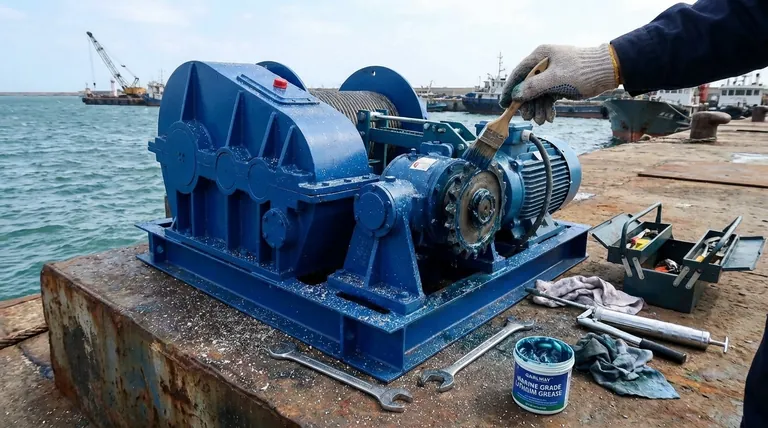
Once disassembled, clean every component thoroughly. Apply a liberal coat of lithium grease to all moving parts and threaded fasteners. This not only lubricates but also creates a barrier against moisture.
Focus on High-Friction Surfaces
Pay special attention to the mating surfaces of the two clutch cones and the chainwheel. These areas are under immense pressure during operation. Keeping them clean and properly greased is essential for smooth engagement and preventing the mechanism from binding or slipping.
The Impact of the Operating Environment
Where you operate is more important than how often you operate. The maintenance schedule must be adapted to the harshness of the environment.
Why Saltwater Demands More
Saltwater is exceptionally corrosive. In salt belt regions or for any vessel operating at sea, the need for maintenance is constant and aggressive. Salt-laden air and spray will attack the winch even when it is not in use.
Frequency Is Dictated by Exposure, Not Usage
For equipment in harsh environments, maintenance needs will often outweigh actual usage frequency. Do not fall into the trap of assuming a rarely used winch requires little attention. A static winch is a prime target for corrosion and seizure.
Common Pitfalls to Avoid
Mistakes in maintenance philosophy can be as damaging as neglecting the work itself. Understanding these common errors is key to ensuring reliability.
The Fallacy of Infrequent Use
The most dangerous assumption is that a winch that hasn't been used recently is in perfect working order. Seizure often happens during periods of inactivity as salt and moisture sit undisturbed in critical joints and mechanisms.
Superficial vs. Deep Maintenance
Simply washing down the winch is not enough. True preventative maintenance requires the disassembly, cleaning, and lubrication described earlier. Without this, you are only addressing cosmetic issues while internal corrosion continues unchecked.
Linking Maintenance to Safe Operation
A well-maintained winch is a prerequisite for, but not a replacement for, safe operational procedures. Your maintenance efforts directly support your ability to operate the equipment safely when it matters most.
The Need for a Human Override
Even if the winch has remote controls, it is a critical safety practice to have a person stationed beside the unit during operation. This ensures an immediate response is possible if something goes wrong.
The Importance of Accessible Controls
The observer should always have immediate access to override controls. In an emergency, such as a chain snag or a runaway winch, the ability to stop the operation instantly can prevent severe equipment damage or injury.
How to Structure Your Maintenance Plan
Your maintenance schedule should be based on your specific operational reality. Use these guidelines to establish a robust plan.
- If your primary focus is operating in a high-saltwater environment: Implement a rigorous quarterly schedule for full disassembly, cleaning, and lubrication, regardless of how often the winch is used.
- If your primary focus is operating in freshwater or less corrosive conditions: A complete annual service is likely sufficient, but supplement it with frequent operational tests and visual inspections.
- If your primary focus is ensuring readiness for an infrequently used vessel: Schedule a deep service at least annually, understanding that the biggest threat is seizure from prolonged environmental exposure, not wear from use.
Consistent, proactive maintenance transforms your anchor winch from a potential liability into your most reliable piece of safety equipment.
Summary Table:
| Key Maintenance Focus | Action Required |
|---|---|
| Core Principle | Combat marine corrosion through proactive, invasive servicing. |
| Primary Step | Disassemble chainwheel and clutch cone assembly for internal access. |
| Critical Action | Clean and lubricate all parts with marine-grade lithium grease. |
| Schedule Driver | Environmental exposure (especially saltwater), not frequency of use. |
Ensure your vessel's safety with GARLWAY's reliable marine equipment. Proper maintenance is key, but it starts with a durable, high-performance anchor winch. GARLWAY specializes in robust construction and marine machinery, including winches designed to withstand harsh environments. Our expertise helps construction companies and marine contractors globally achieve operational safety and efficiency. Contact GARLWAY today to discuss your specific needs and discover how our winches can be the reliable core of your safety protocol.
Visual Guide
Related Products
- 12000 lb Electric Boat Trailer Winch with Windlass Anchor Warn
- Electric Hoist Winch Boat Anchor Windlass for Marine Applications
- Best 18000 Pound Drum Anchor Trailer Winch
- Heavy Duty Electric Boat Winch Windlass Anchor
- Warn Winch Windlass Boat Trailer Winch
People Also Ask
- How does an electric boat trailer winch differ from a manual one? Effort vs. Control Explained
- What size winch do I need for my boat? Get the Right Capacity for Safe Hauling
- How should a boat trailer winch be properly used? A Step-by-Step Guide for Safe Loading
- What maintenance steps are specific to boat trailer winches? Ensure Safety & Reliability at the Ramp
- How strong of a winch do I need for my boat? Get the Right Pulling Power for Trailering & Anchoring